Friday, May 10, 2013

Native Chaparral Retakes Former Territory Occupied by Invasives

I discovered something remarkable when I attempted to document one of the rare cacti colonies left in San Diego County of Coastal Cholla cactus. I found a commercial center parking area landscape being invaded by California Native Plants ?
Native Plants = ( Laurel sumac - Toyon - Coyote Broom - Sugarbush - etc, etc, etc)
Invasive Plants  = ( Star Thistle - Wild Mustard - most Non-native Ornamental Landscape Plants from retail nurseries - etc, etc, etc )
Photo Credit: Mine!
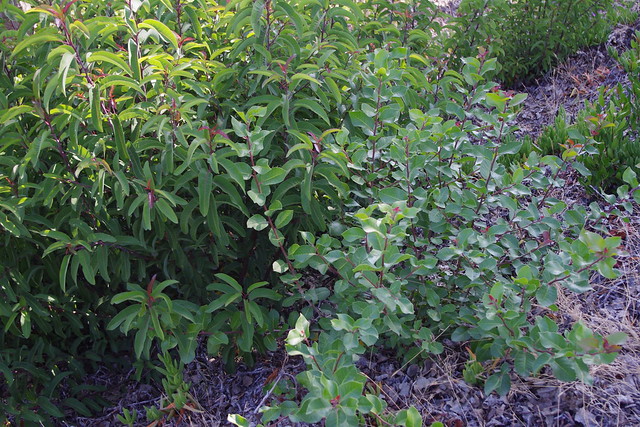
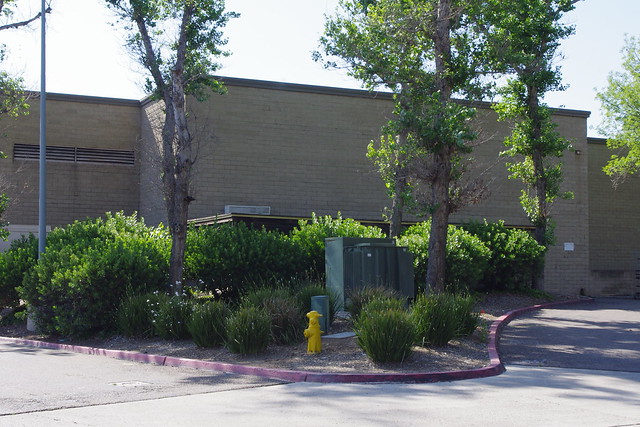
While venturing over to a rare colony of San Diego Coastal Cholla near Rancho San Diego, I couldn't resist taking these shots behind the Vons Store in the Rancho San Diego Village on Hwy 94 & Via Mercado south of El Cajon CA. After all I had to park here to be able to walk over to the Cholla colony. The Chaparral shrubs in this landscape behind the Vons are California Holly or Toyon (Heteromeles arbutifolia)  which are mature enough to produce winter berries and apparently reseeding themselves everywhere along with other Chaparral species of plants within this commercial complex's landscape. You might also take note that these trees are a hydrid cottonless Cottonwood variety from back east and they are struggling terribly. To be honest, many homeowners in general are incorporating native landscape plants in surrounding neighbourhoods as are other's into their commercial landscapes. Unfortunately, this should have been done decades ago. Originally this area caught my attention as I was driving through because of an adjacent large piece of still wild property along Hwy 94 which contains a massive colony of San Diego Coast Cholla (Cylindropuntia prolofera) which unfortunately is in one of those ever so gradually sloping properties along a major highway and ripe for development one day in the future. But the Chaparral plants were clearly fighting back with a vengeance as far as the vacant lot next to the Rancho San Diego Shopping Village was concerned. There are some simple reasons to the chaparral plant intrusion into this exotic landscape and the environmental reasons for the success should provide a valuable teaching lesson here.

Photo Credit: Mine!
Laurel Sumac (Malosma Laurina) aggressively making inroads on the Sea Fig ice plant bank. Much larger more mature parent plants of both the Toyon & Laurel Sumac in the background are no doubt donating the necessary seed base for the reoccupation of former wild native plant habitat.
Photo Credit: Mine
Here is a side view of the bank next to the parking lot with the immediate volunteering of Laurel Sumac retaking it's former prime real estate. Though you may not see them, behind all of these are several California Holly (Toyons) also making an aggressive run on the exotic commercial landscape.
Photo Credit: Mine!
This scene was a pleasant surprise. Two cousins, Laurel Sumac on the left and Sugarbush (Rhus ovataon the right. I have never in my life seen them growing side by side in the wild. Not that they don't elsewhere, I've just never seen it. Generally Laurel Sumac is associated with the lower growing coastal sage scrub, while the Sugarbush is mostly inland and mixed with taller bulkier chaparral shrub species at higher elevations. Very kool! I guess they have to meet at the border of their terrains somewhere.
Photo Credit: Mine!
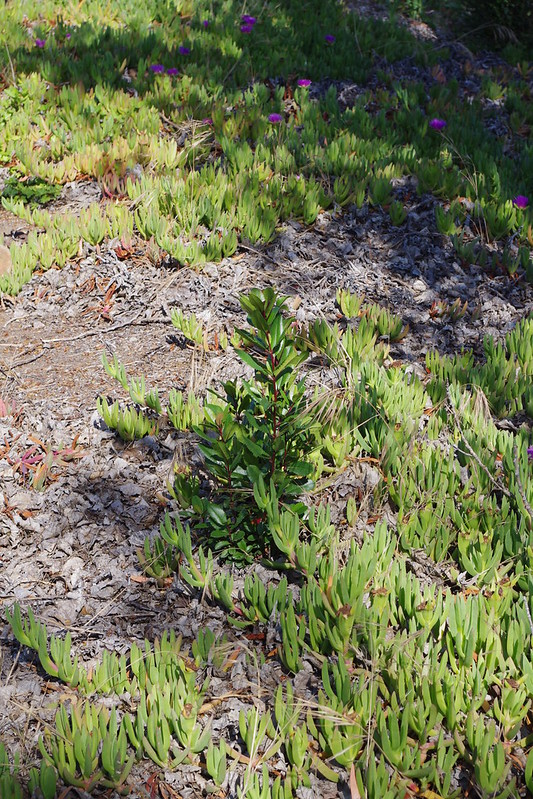
This is a young California Holly or Toyon (Heteromeles arbutifolia) seedling above appears to be in very healthy condition. It's beautiful and if the commerical property owners and their landscapers are smart, they'll leave it well enough alone. The main reason this Toyon sapling is gaining such a strong healthy looking foothold here is because water rates are outrageous in Southern California and as the drought lingers on will most likely increase water rates which will change irrigation habitats. Here the Sea Fig is incapable of choking out native plant competition. So the drought is actually helping the native plants to retake former lost territories. A smart landscaper will use that to hs advantag. Allow natives to grow, thin out some and sculpt the others in a natural artistic form to provide a pleasant nature landscape with will mostly be maintenance free and watering requirements to be greatly cutback.
Photo Credit: Mine!

Photo mine May 2014  

Coronado Hills in San Marcos
California -
Cocos Fire
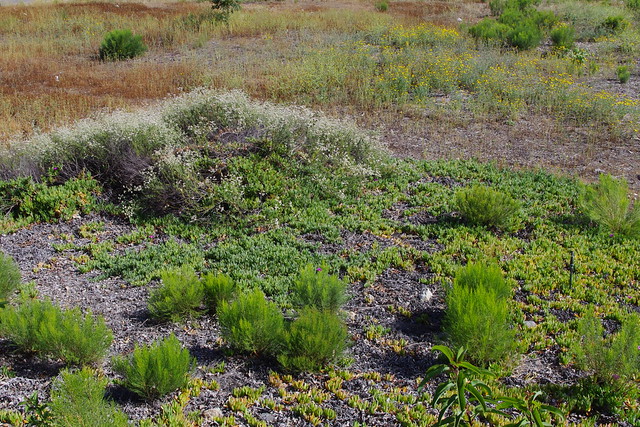
This is Coyote Broom or maybe Desert Broom both are able to make an aggressive come back and actually do well when humans disturb the wild sites. The little bright green shrubs sure are pretty are they not ? Here they are invading open patches of the non-native Sea Fig more often seen as a wild naturalized plant along the sea coast of commonly used on most all banks and hillsides of freeways and other commercial infrastructure. Generally Sea Fig in the landscape settings are more densely filled in, however because of the drought I believe this is why the Sea Fig is loosely thinned out which has allowed all these native to encrouch back into their former territories. Many call it Iceplant because of it's water storing succulent leaf design and structure. It has been used as a wildfire protection because of this water storing ability, but the reality is that it has given homeowners a false sense of security because it will burn ferociously, especially when it is decades old. This is because years of thatch have built up inderneath the top greener portions of the plant sprawl unseen to the average person. The photo on the right is from the (May 2014 Cocos Wildlfire in San Marcos) where numerous home were built on extremely steep hillsides on impossible accesses where the landscapes were planted with borders of Sea Fig in the illusion that this would be a good defensive border protection in case of wildfire. But finally, below is the main reason I came here. The parking lot scenaro was just an added benefit.

Image Mine - May 2013

Photo by James Gallagher, Sea and Sage Audubon
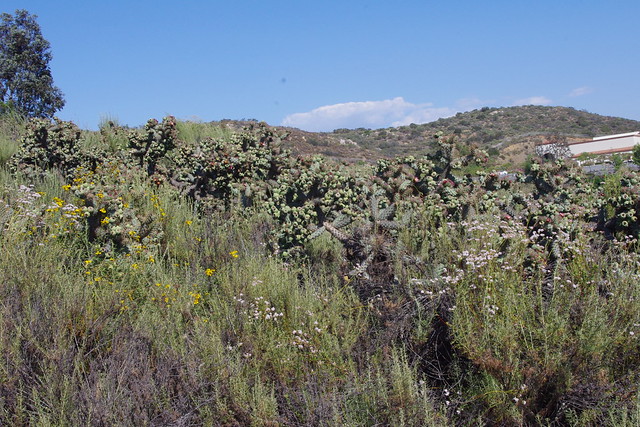
And here is the whole original reason I came to this parking lot in the first place. In search of documenting San Diego Coast Cholla colonies which are rapidly disappearing because of prime real estate development in and around all of the San Diego city & county areas. Interestingly, the Coast Cactus Wren like the one on the right have also become a rare sight as a result of habitat loss which must include cacti colonies. I did find one nest in the arms of one of the Cholla plants, but no birds. It may well have also been a Mourning Dove nest. But enjoy the Cholla post.
(Cylindropuntia prolifera) San Diego's Coastal Cholla Colonies Still Thriving on some Wildlife Islands within the city


Thursday, May 9, 2013

California Coffeeberry - Rhamnus californica tomentella - in Anza California

Remember where many of you first saw examples of Plant Sculpting at Disneyland's exhibit at "It's A Small World"

Credit: Bencito the Traveler
I never really enjoyed this ride at Disneyland. That theme song drove me nuts. But way back when it was the first time I had ever really been exposed to Animal Plant Sculpting of any kind. Of course various forms of hedges rows and barrier borders were always seen everywhere, but these types of creative plant sculptures were new. 

Credit: Mine!

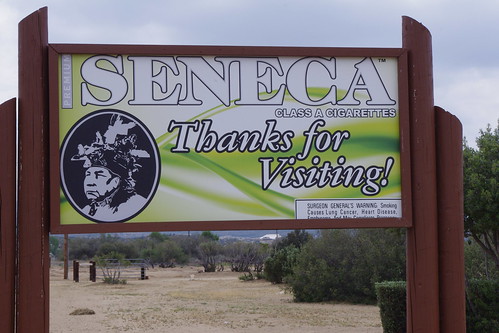
SENECA Cigarette Shack on the 
Cahuilla Rez at Cary Rd, Anza, Ca 
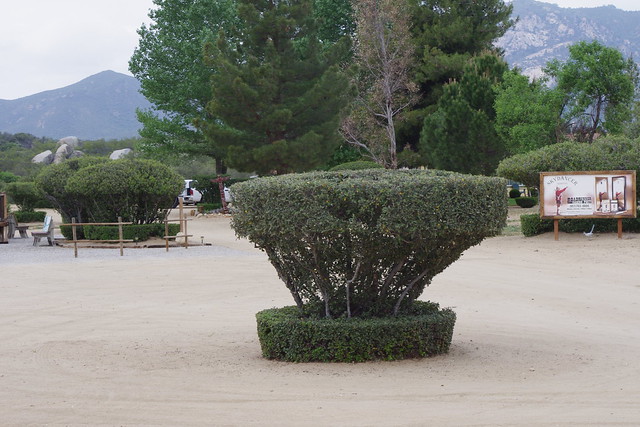
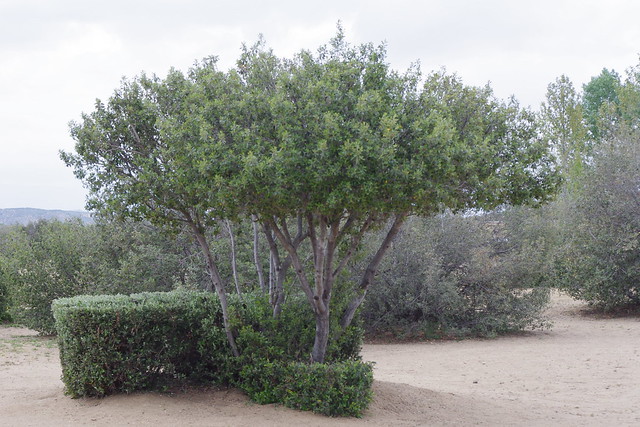
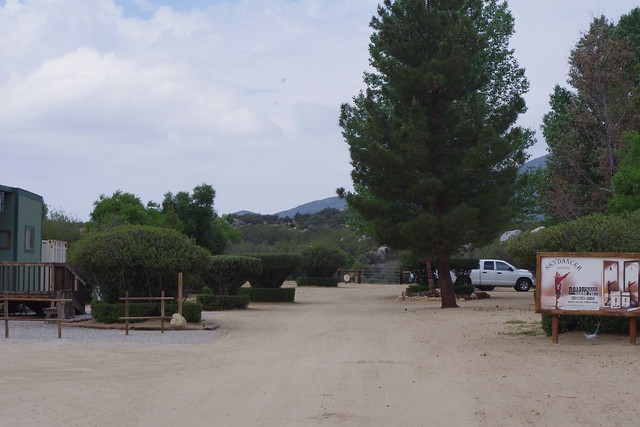
Many of the bad examples frequently show up on Billy Goodnick's  Crimes Against Horticulture: When Bad Taste Meets Power Tools  website. But there are the conventional hedgerow borders that we are all familiar with and the well known conventional plants that have been used for years and available at most Retail Plant Nurseries like Boxwood, Privet and Yew to name a few. But for Southern Californians, there are some good Native Plant choices for which when established will NOT require the water of the non-native store bought varieties. Before I left for Sweden over 7 years ago, I drove down Cary Rd in Anza and past a property where someone was experimenting with all manner of plant sculpting by practicing on two natives, Mountain Mahogany and California Coffeeberry. I went back to photograph these last week, but didn't see the animal figures I had seen before or the Mountain mahogany shrubs, but did see the California Coffeeberry being used for various shapes and patterns in the wild landscape on Cahuilla Rez where of all things a Cigarette Shack resides. These Cigarette  shacks were always common when traveling through Navajo Rez on Interstate 40 in northeastern Arizona, but former owner of Cahuilla Market, Chuch McKee, always said that they would end up on Cahuilla Rez in Anza one day and he was right. 

Credit: Mine! 

Rhamnus californica 'San Bruno'

This photo will be updated
next week up in Anza
The San Jacinto Mountains have a variety of native California Coffeeberry up there and in most cases I have always found them in the deeper sandy soils. Mostly on flood plains and alluvial fans, from Burnt Valley to Garner Valley. They are not necessarily the beautiful deeper shiny green of the various selected subspecies being sold at the native plant nurseries found around California. They have more of a dull olive green colouration about them. Many refer to them here as California Buckthorn. But they all have the same identical leaves, flowers and berries characteristics of all the other varieties of Rhamnus californica. So last Sunday I went with my brother and photographed these plants along Cary Road in Anza and below is a gallery of sorts of the sculpted Coffeeberry shrubs I saw. At the very least, it should get wheels turning as to how valuable and versatile those Natives can be used in the Southwestern Landscapes. I also went by my old place, but the new owners were not home. From what I could tell looking through the old stock gate entrance, the 25+ years old California Coffeeberry 'San Bruno' under the 25 year old Jeffrey Pine is still in great shape along with most everything else I planted years ago. I'll update these photos come next week if possible and write another post on the progress and update of the Table Mountain property.

Photo Credit: Mine!

Photo Credit: Mine!

Photo Credit: Mine!

Photo Credit: Mine!  

Photo Credit: Mine!
The other photos clearly illustrate the ability of this plant to form a dense healthy health for a nice sculpted wall or screen. But as with many chaparral species of plants, you can also trim them up to form a sun shade canopy for a private garden hideaway. Many Scrub Oaks, Sugarbush, Laurel Sumac and Lemonade Berry Chaparral Shrubs  will serve this purpose nicely. Plus not only the water bill savings and the lack of pest infestations if properly taken care of and maintained, but also the attracting native wildlife will be another reason for utilizing what's been around for countless centuries for free. The most any of these shrubs will set you back is around $8 or $9 ea for a one gallon pot. Now take a close look at this photo below of a California Mule Deer eating Coffeeberry foliage.
Image: Town Mouse & Country Mouse Blog

Next time you hear any of those "Just Add Water" justification stories for land clearing, forest thinning and/or control/prescribed burns because it provides foods for grazing wildlife, remember this deer and California Coffeeberry photograph. In all my hikes and journeying in the Southern California backcountry, I have more often than not found deer out browsing more than grazing. Yes, they are grazers, but also browsers. Many of their favourite game trail highways can be followed through dense chaparral. Watch out for Ticks though 😨
Great California Native Plant references and resources:

Tuesday, May 7, 2013

Hidden Secret; Queen Anne Cherries at Strawberry Creek

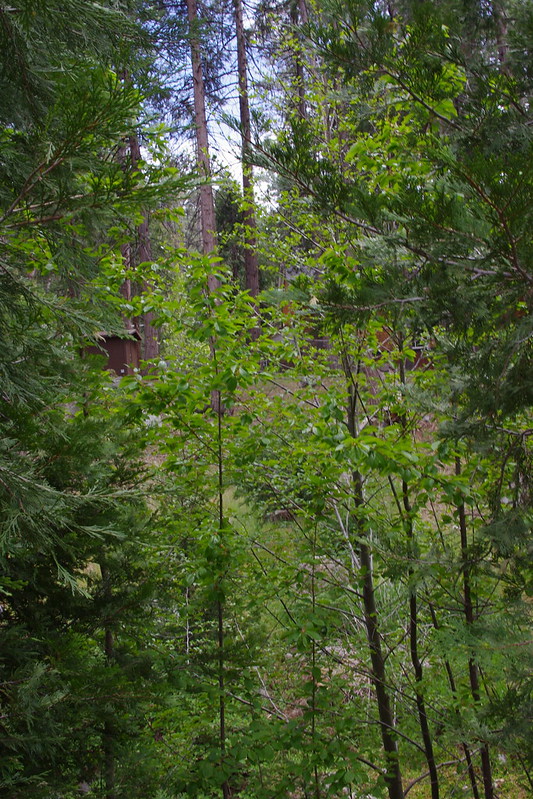
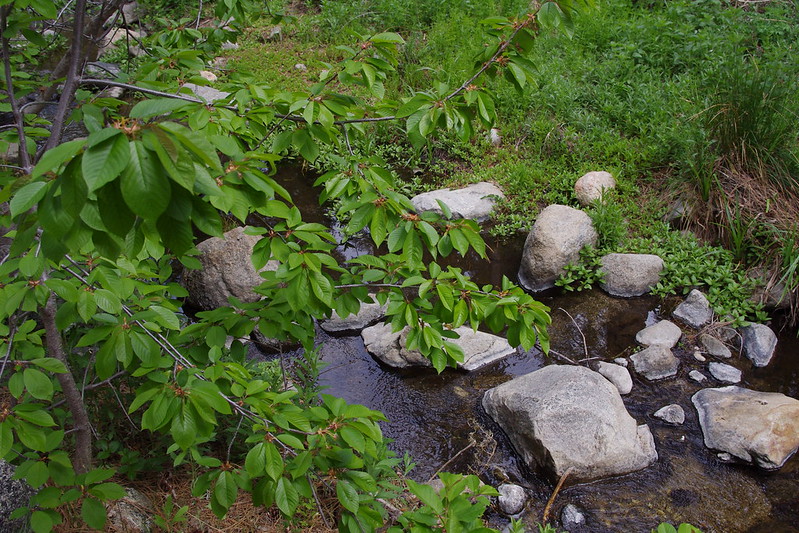
Queen Anne Cherry Trees growing wild along a creek running through the town of Idyllwild California.

Photo Credit: Mine!
In the old days after the controversial development which brought Idyllwild the Fairway Market, Hardware Store, new Post Office and other assorted businesses, the scene above was more of a sedge and Rose covered meadow. Now the trees have come back and replaced a lot of what once was meadow and bog.
Almost exactly a year ago on May 2nd of last year 2012, I wrote a piece on the advantages and successes of forest floor understory plants growing within the natural underground mycorrhizal grid. In my experience living in Idyllwild I noticed a few unusual but successful plant anomalies that seemed strange for their location. Here is that link from last year -  Forest Floor Plants That operate in the Grid Network  One of these was a giant Standard Red Delicious Apple tree which was growing successfully in the dark shade of an old growth Ponderosa Pine, White Fir, Black Oak and Incense cedar forest canopy. Incredibly, every year this tree produced numerous large healthy red delicious apples. Now, how could it do that if not in fun sun ? It was connected to the fungal grid. The forest itself above no doubt was helping provide the nutrition this tree needed for successful growth and development. Sure enough apples grow well in the Boreal Forests around my house in Sweden and produce Apples. Apples always were originally a forest tree anyway. Most folks don't realize this when they plant many orchard trees where they are told full Sun is not only necessary but imperative if they want good productivity. This tree proved them wrong. sadly while I was up there Sunday, I drove past the property where that tree was located on Village Drive and it has since been removed along with some of the old growth pines. In another sad view, many of the old growth Forest between the Strawberry Creek and South Circle Drive. As I was driving east and looking to the left before turning on Village Dr, I was taken back by the view of the Village Development which could never be seen prior to this forest removal which no doubt has some sort of Development motive behind it.
Credit: Cook'n Newsletter
There was also another interesting anomaly which caught my attention during my time living in Idyllwild years ago 1981 through 1983 and this was the volunteer germination of a Queen Anne Cherry tree along the creek below Gary's Country Meats Butcher Shop. While walking the creek and seeing this tree for the first time, I thought this 5 foot tall small tree was a  Pacific Dogwood tree (Cornus nuttallii) . Clearly it wasn't as I later found out, but I had never seen one before, so the obvious similar patterns in leaves and blooms under the dark forest canopy masked some of the trees similar  characteristics. Later as the tree grew huge and produced the Queen Anne cherry fruits, I realized what it actually was, but again I was surprised at it prolific fruit product under the dark canopy of the old growth forest. Was this not also an orchard tree that needed full sun like the vast Cherry orchards below in Beaumont and Banning ? But some time later while walking the Creek in 1983, I saw the fruit which revealed the true identity of this tree. Even a lone Stellar's Jay was rejoicing with one in it's mouth. Later that one tree turned into a small grove of Cherry trees along the creek banks.  I figured that some tourist was walking the creek eating Queen Anne Cherries purchased at the market, spitting out the pits and just one of them was viable and lucky enough to land in just the right location only to germinate and produce this beautiful tree.

Photo Credit: Mine!
The forest here is more open than before. Someone on the opposite side of the creek has cut down several large tall pines for no doubt some future development scheme. Still, it gives these Queen Anne Cherries at shot at more sunshine. They were productive before within the darker forest canopy, but I'm now curious as to the effect more sunshine will have on them. One the the curious and amazing things about a healthy forested environment is that many fruit trees don't seem to require as much full sun for food potential as they appear to get some of what they need within the underground mycorrhizal web which transports carbons and other nutrients along an incredible transportation grid. The new circumstance should be fun to watch over time.
Photo Credit: Mine!
This is the largest of the group of cherry trees here and I am assuming the original one, but I'm not quite sure. Nevertheless, you can make out some similarities to Pacific Dogwood which is native here and I have seen before, but only along permanent creeks or water seeps within the forest here in Idyllwild where moisture is always abundant and dependable. Even still, to find something you'll normally think of as something domesticated, and yet found up here in the wild and spreading slowly along the wilds of the creeks is amazing. No doubt helped out by the local Stellar's Jays.

Photo Credit: Mine!
Here is a much brighter and clearer shot of the Queen Anne Cherry tree's foliage with Strawberry Creek in the background. Beautiful garden fresh foliage and yet you have to keep telling yourself that these trees are all in the wild. It really illustrates how productive any ecosystem can be if the right underground fungal connections are firing on all cylinders. 
Photo Credit: Mine!
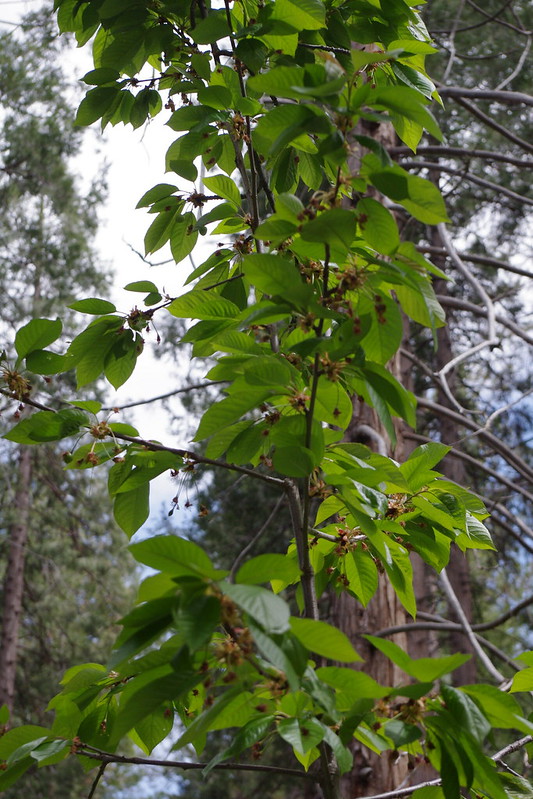
Here is an even closer view of foliage and notice that the tree has already bloomed and now setting some fruit. I was hoping for some flowers, but certainly any fruit in my mind would have been out of the question. What a pleasant surprise this was. Perhaps some locals reading will be able to collect some fruit towards the end of June.
Photo Credit: Mine!
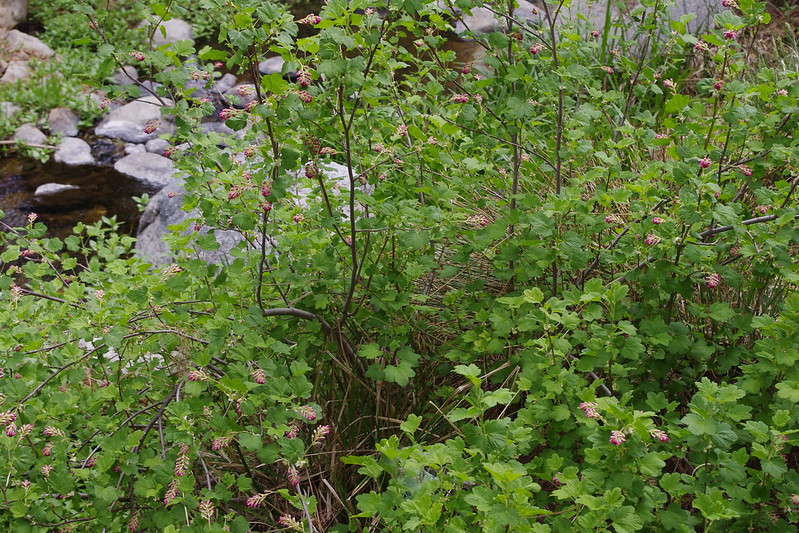
This is yet another photo of one of the examples of plants in the wild which benefit from the networking which goes on underground inside the Mycorrhizal fungal grid. This is Pink Flowering Currant (Ribes nevadense) which is also native along streams and creeks and also moves about by underground stolon and above ground vines
Photo Credit: Mine!
This is a close up shot of the pink compound clustered flower arrangement of this Ribes nevadense or Pink Flowering Creek Currant. BTW, the fruits are also edible if you can find some after the birds have been through.
Photo Credit: Mine!
Finally, this is a Mahonia or Oregon Grape, but I am not sure the variety. I also don't know whether they were deliberately planted here or another escapee from someone's garden. Anyway there were several. In closing, I'd love to see of anyone actually go up there when fruit is ripe on the Queen Anne Cherry tree and can photograph them. Share with others your Pics.

Monday, May 6, 2013

Saturday in Idyllwild viewing it's most gigantic Ponderosa Pine

Well, at least the biggest I am aware of after living there and exploring for 3 year between 1981-83
Photo Mine!
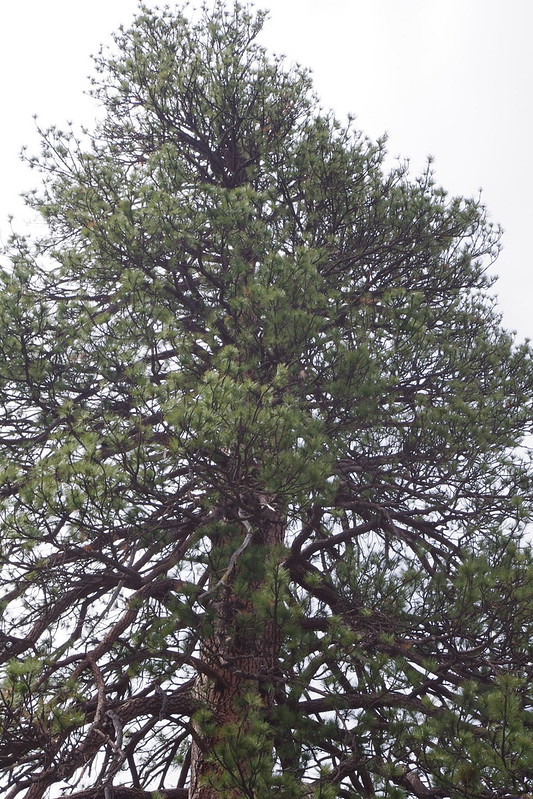
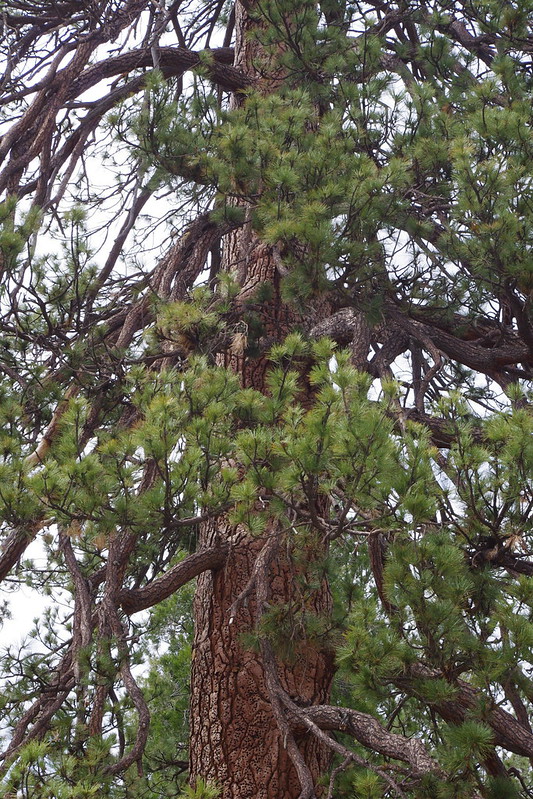
This is the largest tree I have ever found in Idyllwild that is still alive. Back in the pioneer old west logging days, these were very common. This tree is on Tahquitz Dr near the South Circle Dr in Fern Valley. I used to live across from this tree back in the early 1980s at Fern Valley Corners where Chart House and Baker in the Forest was located. I lived in an apartment above the old Town Crier Newspaper office there as well. Admittedly, I am a bit worried looking at the top of this tree which is showing signs of weakness due to drought which may effect bark beetles being present in the tree. 
Below I attempted to take a full view in three sections. Hmmm, how did I do ?

All Mine!
Yeah I know, it's not perfect, but you get the main idea!!!  *smile*
Sad Update April 18, 2017 on the Fate of this Majestic Ponderosa Pine - Idyllwild
Idyllwild California - The locally named and beloved Ponderosa Pine called "So Big" was finally felled after it had succumb to Pine bark Beetle in just a few months. However, after taking down one of the giant pieces, tree cutters found a surprise near the tree's top.

http://www.myidyllwild.org/collections
Image - Google Earth
Update June 1st 2018 Drone Aerial View Idyllwild
Drone Photo by Frazier Drake (June 1, 2018)

Tom Roberts
The above photo speaks volumes as to the dying forest within Idyllwild and the surrounding landscape of once lush and glossy green Strawberry Valley. This aerial drone photo was taken by Frazier Drake (June 1, 2018) & published in My-Idyllwild. Another couple of years and all of these trees are going to be wiped out for good. If the present system of things is allowed to continue, the entire Southern California mountainous ecosystems will all be converted to chaparral with only small pockets of woodlands where moisture is consistent to remind people of what once was. When I first moved here in 1981, it was some of the richest green I'd ever seen. The pine needles even shimmered from reflection of sunlight. Everyone use to comment on that. Hard to believe such a dramatic turn around has been possible. Oh and this guy in the photograph is former US Forest Service Wildlife Biologist, Tom Roberts, who lived and worked here in the late 70s through much of the 1980s. I had a conversation with Tom Roberts on 1982 at his office in the older US Forest Service office in Idyllwild (now home to the Idyllwild Town Crier). He said all the trees in Idyllwild were going to eventually die and the best replacement tree was going to be the Giant Sequoia, native to the Sierra Nevada Mountains. At the time I could not believe this because the forest within and surrounding Idyllwild was lush and green. I just couldn't picture it. There were numerous large health specimens of Giant Sequoia planted in downtown Idyllwild and in front of the elementary School. Tom Roberts was both right and wrong. Yes, the forest is all dying off by the 10s of 1000s, but so are almost every single one of those more resilient Giant Sequoia trees. Thomas Roberts too has died. Here is his obituary in Legacy.com. Sadly, it seems nobody even remembers Tom Roberts in Idyllwild anymore. Even the Idyllwild Town Crier has no mention of his passing. Most people I knew (like the forest) from there are long since gone. 


Utilizing Ornamentals of the Legume Family in Southwest Landscapes

These plants have great splashes of colour which brighten up otherwise drab areas. Some are native and others are not, but they truly do work in the southwestern landscapes.
Image from 2013
This was taken in downtown Brawley California back on my visit in 2011 at the beginning of July. It was located on the corner of a property belonging to a 7-11 (which BTW are also in Sweden) convenience gas store. Many older neighborhoods have numerous ugly utility poles and other utility infrastructure. Newer  neighborhoods also, even if the electrical conduits are underground will often have terrible junction boxes spaced out along a side walk between property lines. Finding a colourful plant that will create eye appeal and focus attention away from the Utility apparatuses call be a challenge as you want to hide them, but also allow for maintenance access. Same with the pic below. Mexican Red Bird of Paradise along a hot dry side street at the 7-11 with zero landscape options other than that ratty looking Oleander and no irrigation that I could observe when I walked around the planter.
Image from 2013 in Brawley, California
There is no arguing that such colourful striking plants can make an otherwise ugly piece of Utility infrastructure even look good. Whether or not this was the landscapers intention, it nevertheless resulted in such a aesthetic purpose and worked very well. They do exceptionally well in extreme heat situations. In this case and already hot climate in Imperial Valley along side of  street and parking lot asphalt pavement. Away from the coast and in the interior valleys of So-cal they do well, but leaf out and bloom somewhat slower and later than those in the deserts. Put in full sun and hot location in valleys west of the coast mountains. So I'd have to assume they used a water hose periodically.

Image is mine from 2013

 Mexican Red Bird of Paradise
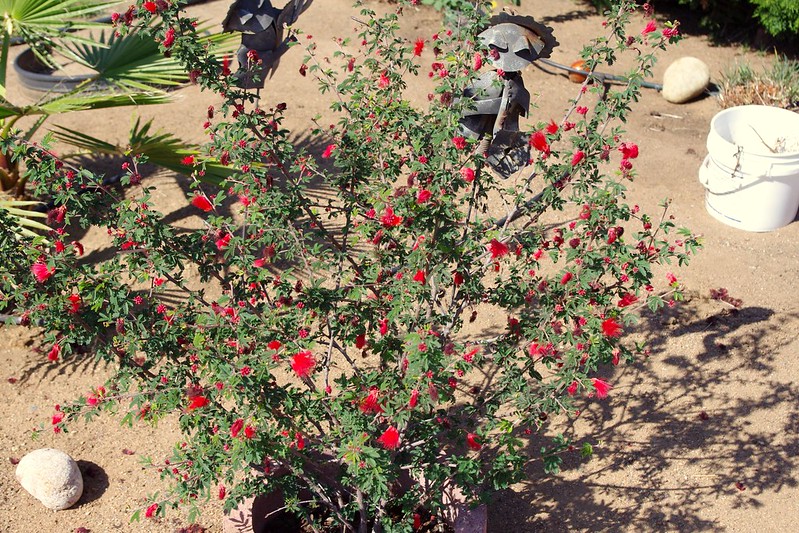
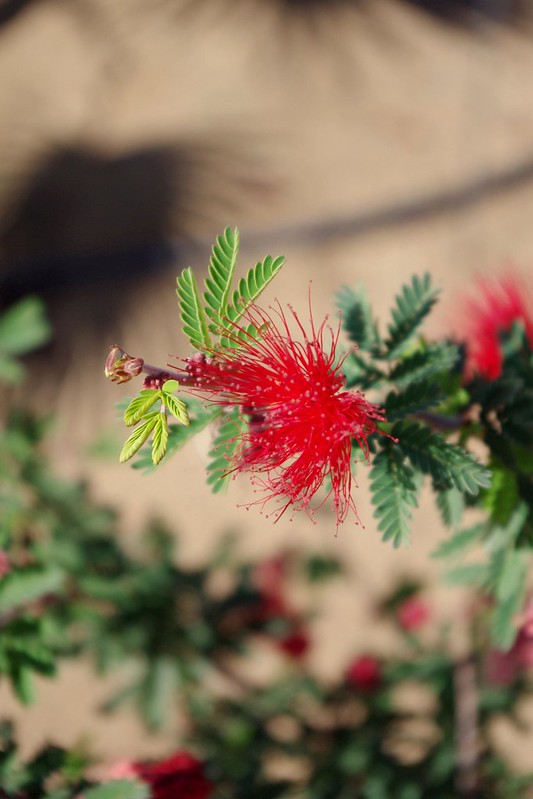
First time EVER I saw this plant used was back in the early 1980s along the Interstate 10 freeway landscape entering  Phoenix Arizona. Phoenix was never truly one of those places that was a final destination for me. Mostly a gas stop, but never for Motel or Food. Mostly is was a place on the way somewhere else either north or south, but never Phoenix. It was at this time that I actually did take an opportunity to stop and take a much closer look. I had never really seen them before, but they clearly had familiar characteristics that I was familiar with. There are many similar or like desert plants with those lovely compound leaves, colourful compound flowers and characteristic pea pods. As you can see from the Argentine Bird of Paradise below which I photographed in my mum's front yard three weeks ago. I've never seen the Poinciana (Mexican Bird of Paradise) naturalizing itself anywhere in the southwest, but the one from Argentina will do so, but not to the point of invasiveness that I am aware of or have ever seen. Traveling east of Ramona California on Highway 67 I did see a group of naturalized reseeded Caesalpinia gilliesii  along the highway. Both the Argentine Native and the native southwestern desert plant shown at the bottom here, Baja Fairy Duster, are a host plant for the Marine Blue caterpillar & butterfly ( Marine Blue (Leptotes marina) ),  although I've never noticed it on the "Mexican bird of Paradise" [Caesalpinia pulcherrima]  . Although it may be possible. Still, they all work well and attract both beneficial insect and hummingbird pollinators. 

This Bird of Paradise version is native to Argentina and Uruguay. And this flower itself is found in my mum's very own front yard. Notice the similarity with the flowers between both ? There are various common names, which often times will confuse. But clearly all are strikingly different. That's why there are scientific names to differentiate between them. This is true of most similar plants used in landscapes throughout the globe. I would have photographed the Mexican Bird of Paradise in my mum's yard, but they are slow to leaf out and bloom like all locations in El Cajon, but the Argentine variety everywhere is doing beautifully.
"Bird of Paradies" [Caesalpinia gilliesii]

You can see on the top of this plant the newer growth which also will have future blooms in a couple of weeks from this writing. Notice also the reseeded and naturalized smaller plant to the lower right in this photograph ? These really don't receive that much water anymore. They no longer need it and that should be the ultimate  goal for most gardens and landscapes in the southwest as water rates continue to skyrocket. At the bottom of the page here, I'll post a picture of what is truly illustrative of many southern  California gardens and landscapes which home owners have simply let go to ruin because of not only water rates, but also variable sewer rates which are based on water use, irrespective of where and how the water is used in the landscape. People need to be more plant and landscape smart and this means being educated on how the plant would in the southwest actually works mechanically as well as scientifically. 

Image is from 2015 & below is 2013

Image is from 2013
This is a very well known plant now, but not always the case to most people. It was never as available previously as it is now, and not just in the Native Plant Nurseries.  I see this everywhere now being used as a hedge and/or parking lot planter medians in commercial developments. Very tough little plant that thrives in heat, hence near and around black asphalt pavement is perfect. Baja Fairyduster is tough, native to the desert side of Baja up into the boulder strewn desert mountains near Ocotillo on the south. As you can see in the top photo above, the landscape has further matured in 2015 when that photo was taken as opposed to the 2013 photo at right which even shows a smaller Mexican Fan Palm.

These flowers are beautiful, though often not terribly long lived. I went ahead and inoculated it once again with a blended mycorrhizal mix from Mike Amaranthus company in Grant Pass Oregon called Mycorrhizal Applications Inc. The flowering greatly improved while on my entire visit there. However they appear to be very prolific at producing newer and newer blooms every day if healthy and colonized with mycorrhizal inoculum. They remind me of the southwestern desert's answer to the Aussie choice of  Dwarf Bottlebrush Callistemon citrinus 'Little John'  , which I actually love BTW. This is one of the easiest plants to grow antwhere there is heat and little water. Just use a good mycorrhizal blend at time of planting a one gallon container tree and NEVER use science-based fertilizers. Just add some decorative mulch.


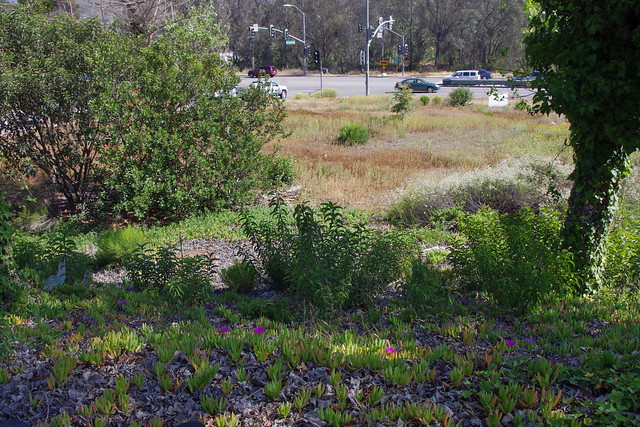
I took this at an intersection angle so as not to specifically identify the two residents here, but this is a common site throughout many neighbourhoods in El Cajon and other cities I've cruised through on my visit here. Skyrocketing water rates accompanied by Sewer fee assessment based on total water usage at the meter  has forced many to abandon and hope of a green landscape. Of course as I've proven many times over, you don't have go down that road. Apparently annual grass Foxtails have become the "IN" thing in El Cajon since I left. Interestingly, in the richer wealthier locations, these folks are unconcerned over water shortages and rates. Clearly, both set of circumstances need incredible amounts of education.
Friday, May 3, 2013

2003 Cedar Fire Recovery & Chaparral Plant Community's Natural Recovery

 . . . . . and the ongoing ignorant behavior & actions of Human Beings that sparks these reoccurring disasters !
Image - nbcsandiego.com (May 2013)
"Someone using a weed trimmer sparked a small brush fire in the Alpine area Thursday, the same day the region was on alert with a red flag warning."
~~~~~~~~~~~~~~~~~~~~~~~~~~~~~~~~~~~~~~~~~~~~
Let's be totally honest here about the weed trimmer incident in Alpine California, this was NOT your typical fishing line fed weed trimmer, this was a Brush Cutter which is uses steel blades for cutter tough dense woody brush trunks and branches like those of the chaparral plant community. These blades are used on the same weed trimming instrument which are normally used on dry grasses and other non-native invasive annual plants that have overwhelmed Southern California as a result of bad management practices of humans. But the fire started on Thursday (yesterday) in Alpine CA was NOT a mere weed trimmer. As earlier reported, this was a Brush Cutter which will often create a spark when it comes into contact with rocks in the rocky decomposed granite soils of the So-California  backcountry. The astonishing thing & question is, "Why would anyone be brush clearing this time of year and during a 'RED DAY' heat alert ?" This is more common than most people think. This actually is the very cause of fires especially in the Southern California rural areas, although you may not always here of these being reported. But in today's MegaFire phobia hysteria and Media feeding frenzy for anything to do with potential disaster, such reports may become more common, but the events have always been around. With the terrible science that has been fostering debate about Brush Management, one wonders why the News Headline doesn't read, "In what appears to be a defensive measure to save it's own life, an old growth Ceanothus deliberately started a fire after being threaten with a Bush Wacker." Okay, I know it sounds stupid, but given usual asinine version of scientific chaparral management programs being pimped as great science, this absurdity is perfect for illustrating Scientific Absurdity. But let's move on from here. Last week I drove up to Alpine CA to photograph the landscape between Alpine and the Descanso old hwy 80 exist off Interstate 8. I had seen some interesting things on my way back from Ocotillo to El Cajon almost a month ago and wanting to recapture them here. 


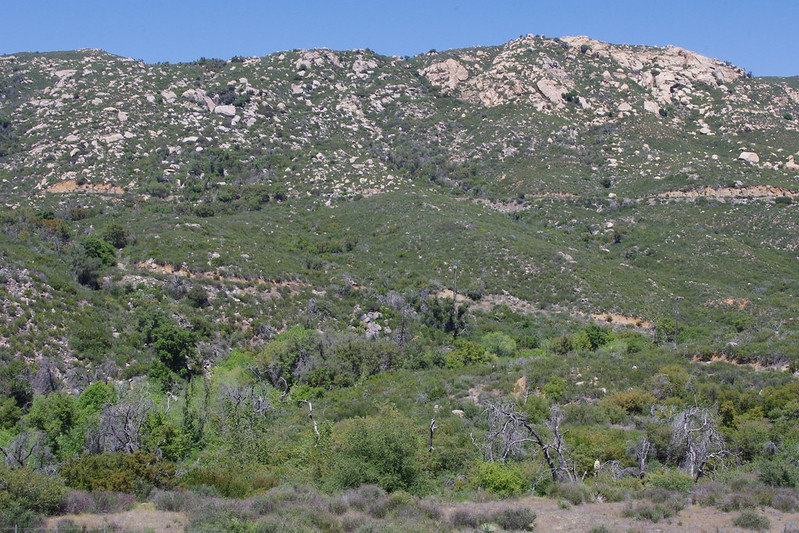
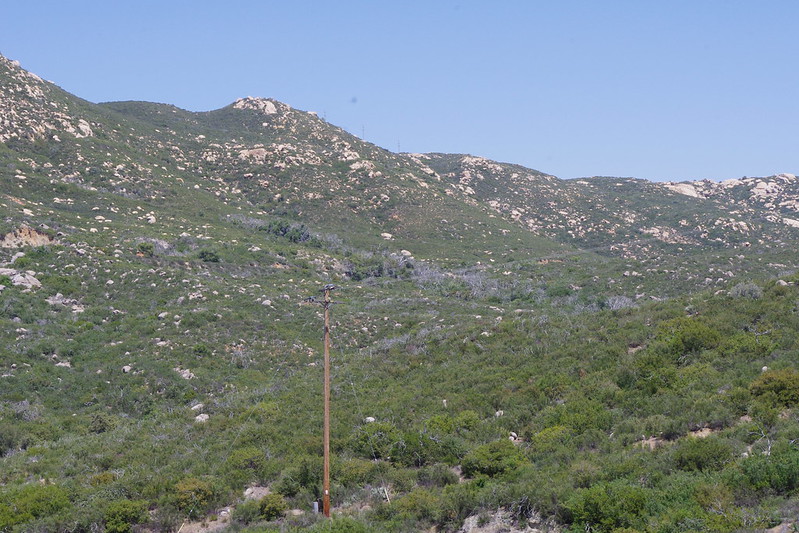
This is a look from the shoulder on Interstate 8 west of the Descanso Hwy 79 exit. The view is looking north towards Old U.S. Hwy 80 which is now abandoned. Several Oak, Sycamore and Cottonwood skeletons are visible even long after the 2003 Cedar fire. Lack of good healthy normal rainfall was never a problem in the past for recovery, but the idiocy in human management of this planet is calling into question survival for many things. Unfortunately for the Ideologues out there on both sides, this doesn't have a thing to do with a bunch of stupid politics. It's about doing the right thing.


Once again, a view of a chaparral plant community and the Woodland Islands & riparian ribbons struggling to make a come back almost 10 years after the 2003 Cedar Fire. The island woodland pockets (Oaks, Big Cone Doug Fir etc) and large ribbons of riparian plant life within the chaparral plant community are having a harder time of recovery as are many chaparral plants which normally rocket back after fire just after a couple of years. This was actually sad to watch and view, knowing what is once was and how beautiful and pristine it once appeared. But unfortunately this is becoming the same exact scenario all across the southwestern United States.In chaparral country, there are generally numerous pockets of woodland island environments which are separate and distinct from the surrounding chaparral plants. They are pockets of habitat for all manner of larger diverse wildlife and use to be more common. Now with the common mega-fires, even these old growth pockets of woodlands are disappearing fast. As time goes on, the generations of people who remember these special places will also disappear and the knowledge & experiences they have will go with them. The younger generations for the most part will have no clue as to what once was. Indeed, they are already disconnected from the real outdoor life by means of being reconnected to an artificial one indoors by way of the Electronic Addiction age.  Below is an example of a large Chaparral skeleton that would have been erased by the normal rapid growth of the newer chaparral vegetation so common just a couple of decades ago. 


photo: Mine!
This is the burned out woody skeleton of  Laurel Sumac (Rhus laurina) which is definitely struggling to come back 10 years after 2003 Cedar Fire. In the old days decades ago, such a new growth come back after only a couple of years would more than likely covered the entire skeleton of dead burned branches. The resulting extremely low rainfall since that fire exacerbated by global climate disruption no doubt is a contributing factor. There was really no way of preventing that disastrous event.

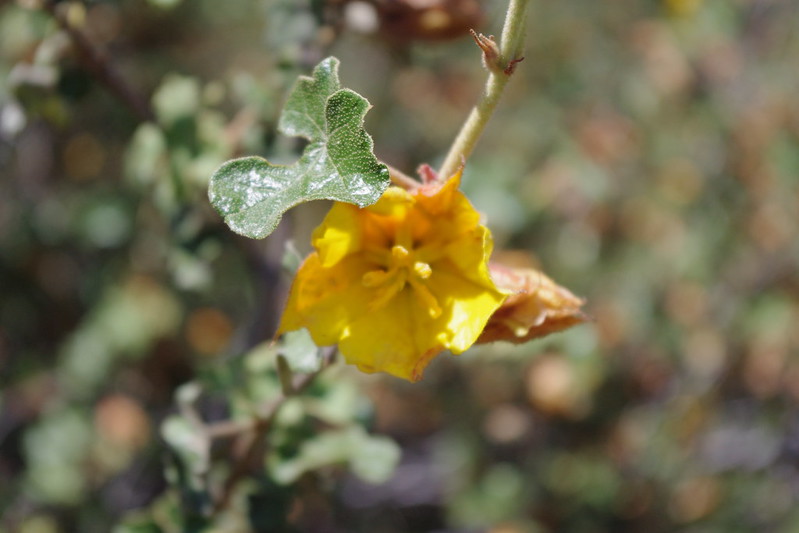
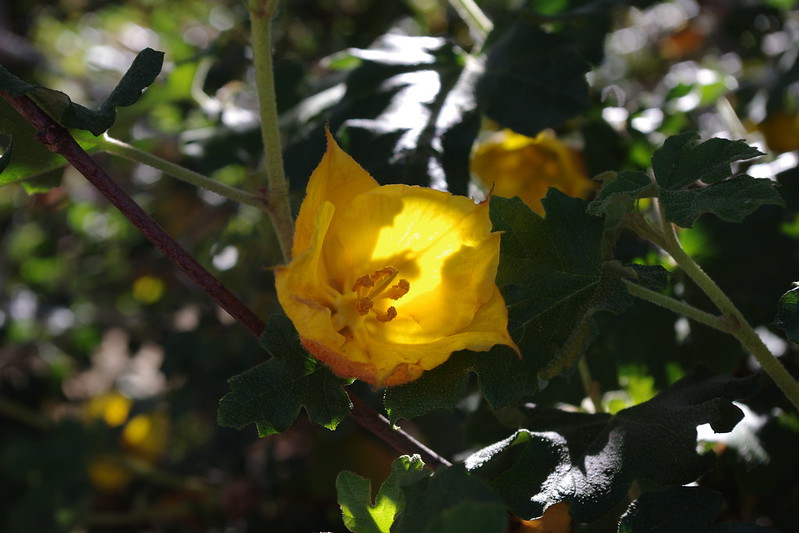
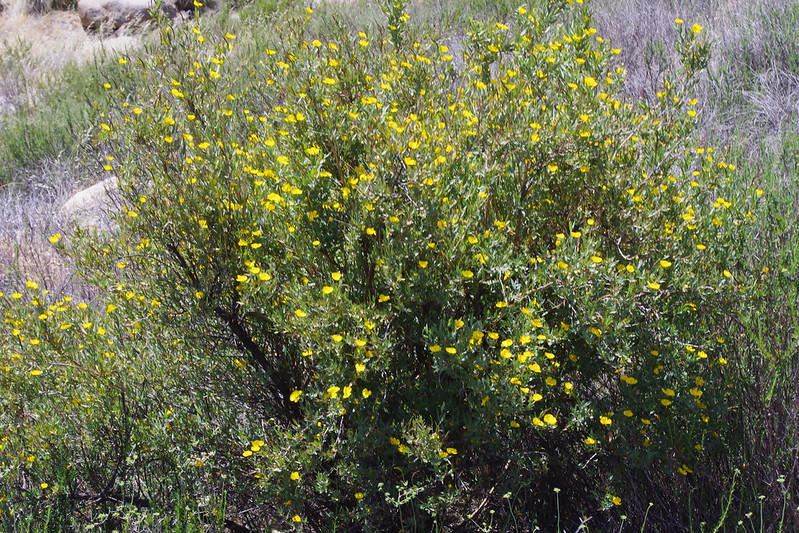
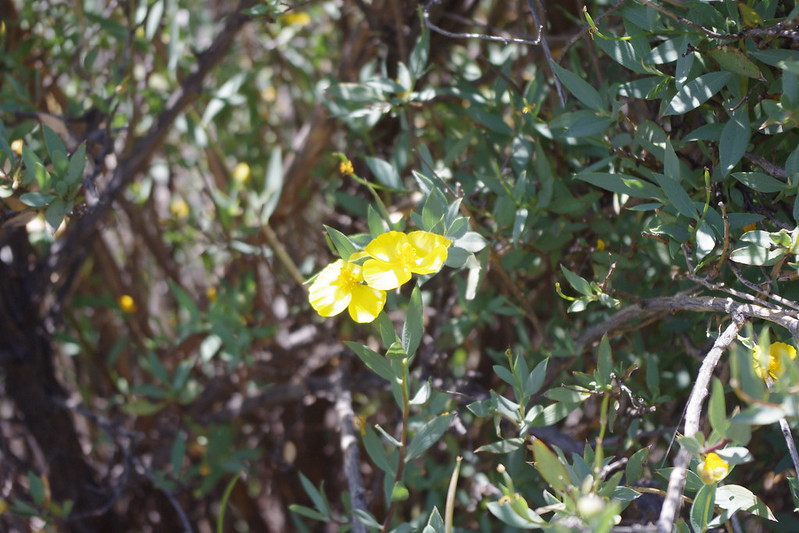
This is an example of the beautiful "Flannel Bush", so named for it's fuzzy velvety hairs which cover it's twigs and small branches. I have to assume being this close to the Mexican Border that this must be Mexican Flannel Bush  (Fremontodendron mexicana) which is associated with chaparral and Tecate Cypress forests in San Diego County. When I first drove past this particular bush on my way back from Ocotillo on April 7th, this bush was in full bloom. Now just three weeks late only a few flowers remain.
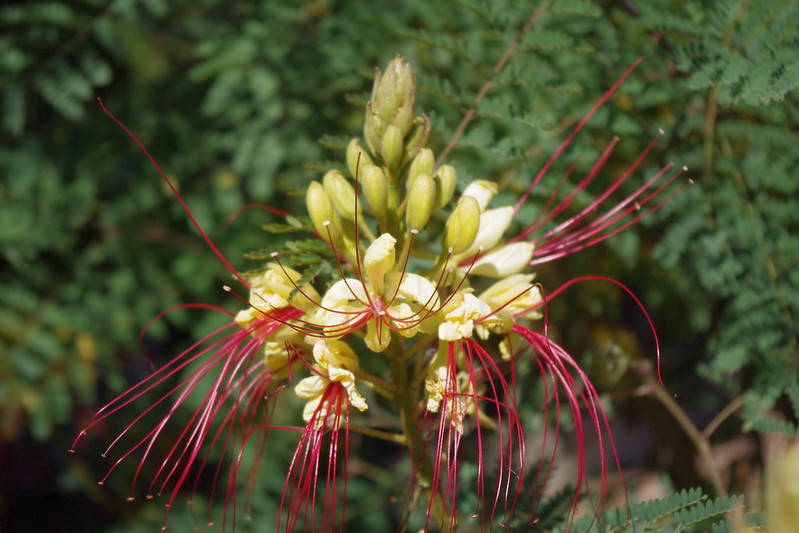
photo: Mine! 
These are an example of the Mexican Flannel Bush flowers. Now there are only a handful on this particular shrub to be found. The kool thing about these flowers is they often appear to be made of a thick yellow orange wax, even up close.
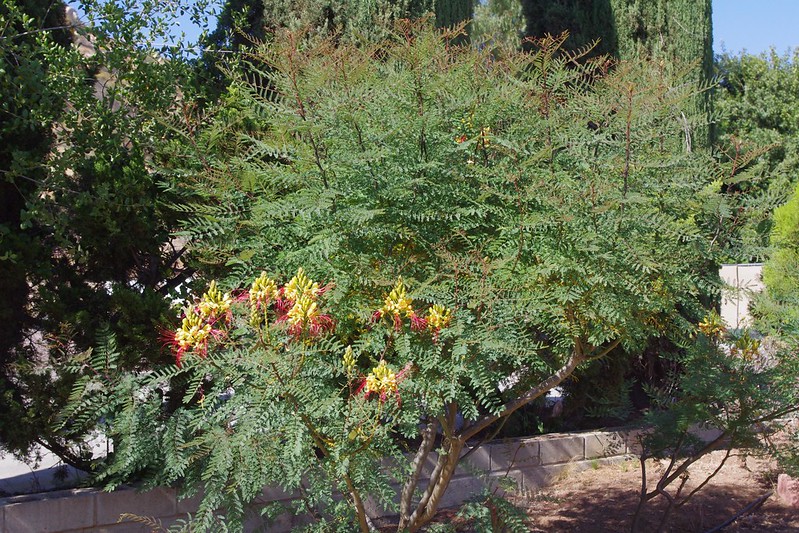
photo: Mine!
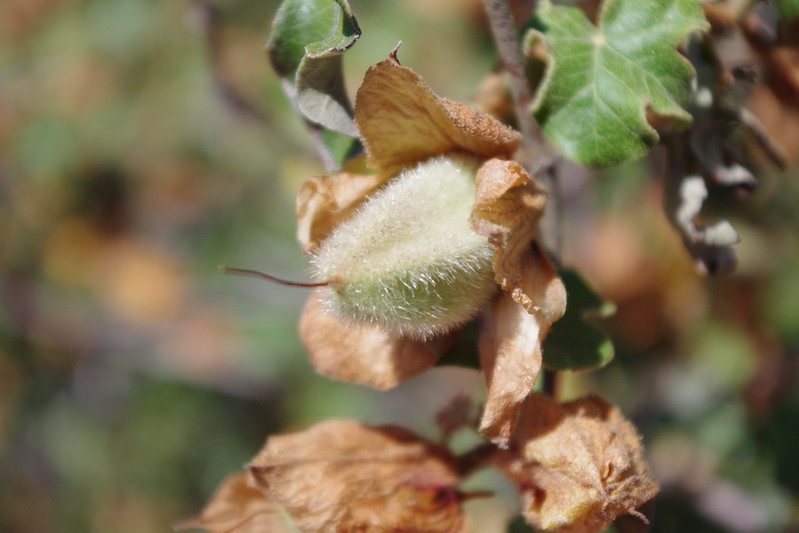
Now only the seed pods from which will mature and hold several medium sized pea shaped seeds with a hard black shiny coats are all that remain on this bush along the Interstate 8 freeway.

photo: Mine!
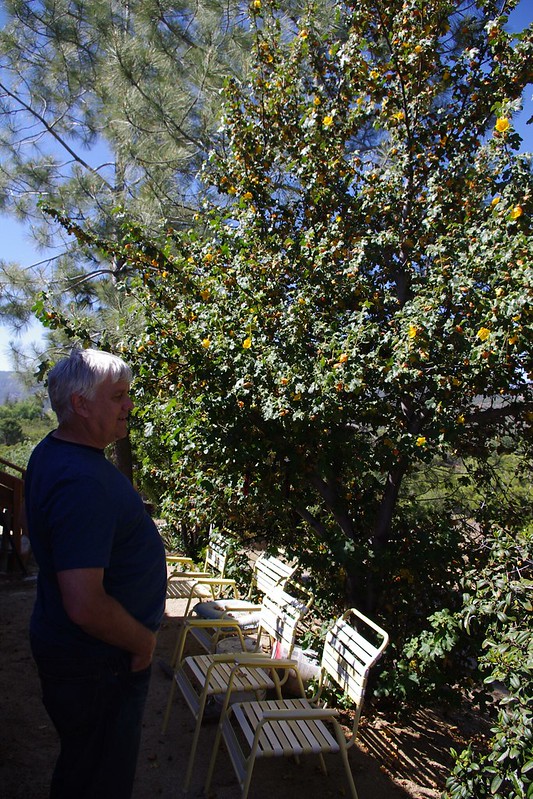
Just by way of reference in other varieties of Fremontia, this photo here is from 2011 at my old property in Anza California. This is Fremontodendron "San Gabriel" which I purchased from "Tree of Life Native Plant Nursery" in San Juan Capistrano. This form grows taller and more tree-like than the mounding shrub appearance of the Mexican Flannel Bush. 

photo: Mine!
For me on this 2011 visit in the summer of that year was the fact that this 'San Gabriel' Flannel Bush had reseeded it self on my old property after I sold the place. Above is an example of the cultivator Flannel Bush "San Gabriel" flowers.
photo: Mine! 
This is an abundant example along Interstate 8 of a chaparral plant called Bush Poppy (Dendromecon rigida) which was everywhere on these interior south facing slopes. In the San Jacinto mountains, you will see many of these as you drive west on Highway 74 leaving Mountain Center on your way to Hemet California.

photo: Mine!
This is a close up shot of the flowers from the Bush Poppy. There is a coastal form and even native to the coastal islands off Southern California that I believe is called Island Bush Poppy. It's foliage is larger and lusher and flowers bigger as I remember.This was pretty much what I had to share. Things haven't necessarily progressed in a positive way in the wilds after the 2000 decade fire events and from what we are seeing here this year, there are more to come. Keep in mind that human idiocy and ignorance are what are causing these fire events in more ways than you can imagine. Everyone has to take the logical precautions, but not to the point of harming the plant community around you. Before I leave, I have some good examples of what people should not do around their rural properties. In most cases they have made the situation worse. There were other photos i wanted to take in Alpine town community itself where land owners have trimmed up Sugarbush (Rhus ovata) and Scrub Oaks into small picturesque multi-trunked trees, but there was nowhere really to pull off the small neighbourhood roads to take photos without looking like some suspicious creep if you know what I mean.