Showing posts with label day hikes. Show all posts

Saturday, May 11, 2013

(Cylindropuntia prolifera) San Diego's Coastal Cholla Colonies Still Thriving on some Wildlife Islands within the city

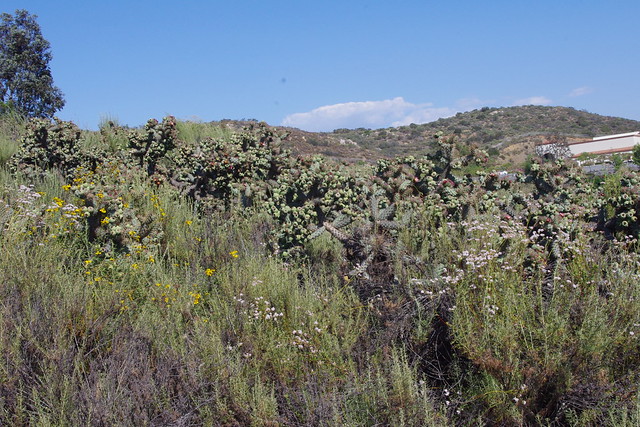
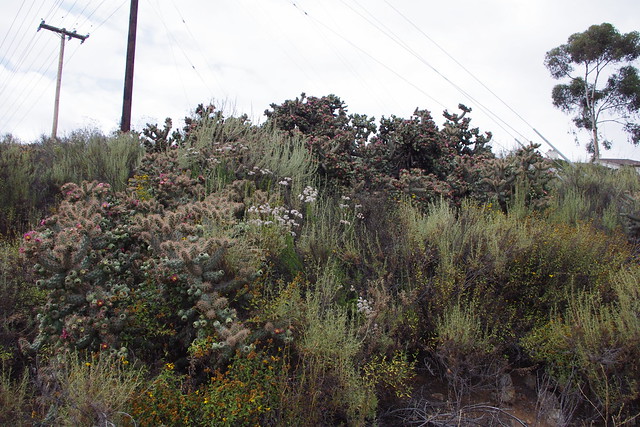
And so does all the wildlife who call the colonies home. This is a continuation of the day I spoke about where Native Chaparral plants were retaking their former home territory at the Vons Grocery Store commercial center near Jamacha Rd and Hwy 94 south of El Cajon in Rancho San Diego. Across the street is one of the largest Coast Cholla Colony islands I've seen with a developed Urban environment still untouched. 


Photo Credit: Mine!
Incredibly, the most predominant Chaparral scrub throughout this are was California Sage Brush (Artemisia californica) which I would have guessed to be 75 % of the main chaparral plant followed by California Buckwheat (Eriogonum fasciculatum). The California Sage Brush is the main reason you will generally find the endangered California Gnat Catcher. 


Photo Credit Mine!
Hiking/Walking through such areas is a tricky endeavor, especially when you are looking for fresh Cactus Wren Nests. You always have to have your nose to the ground as well as straight ahead. These areas are loaded with things that will stick you, stab you and bite you. For me it were all the 100s of Coastal Cholla joints which had fallen off the cactus plant's arms. This is the first major way I have ever seen them spread as opposed to seeds from the fruit. But still so Kool!!!


Photo Credit: Mine!
I'm always thinking in terms of taking many of my observations and making practical application into the landscape. One of the more interesting uses I have imagined for Coast Cholla aside from the usual Desert themes, is if someone has a large piece of land, they could utilize Coast Cholla as a formidable barrier security screen which would blend nicely into the landscape and put off any creeps who may have ideas of criminal activity. Seriously, take a long look at this. Is there a more intimidating obstacle to a criminal than a natural setting such as this ?

Photo Credit: Mine!

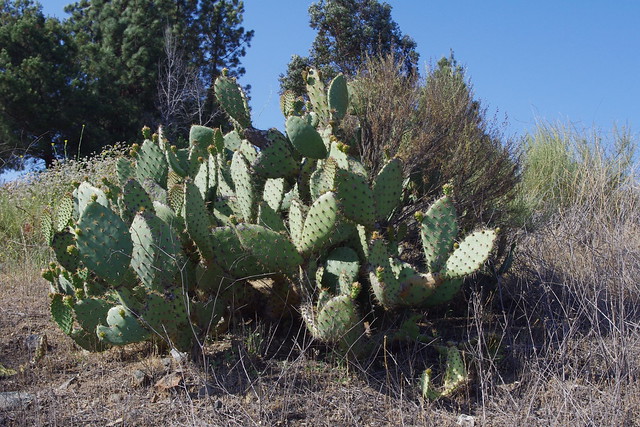
Of course Coastal Cholla is not the only Cacti out here in the back country. Prickly Pear Cactus is also present, though not as abundant as the Coast Cholla. I have often found nests in these plants as well. Okay, the next couple shots will be of the red flowering blooms which are still present and the greenish fruits (Apples or Tunas) for which I have never seen or heard of any animal, bird or human ever eating. Of course that doesn't mean they don't, but I've never even found wild evidence. Bet if I started a rumor that the taste and effects are like those of Peyote Buttons that might soon change. Let's see who bites!
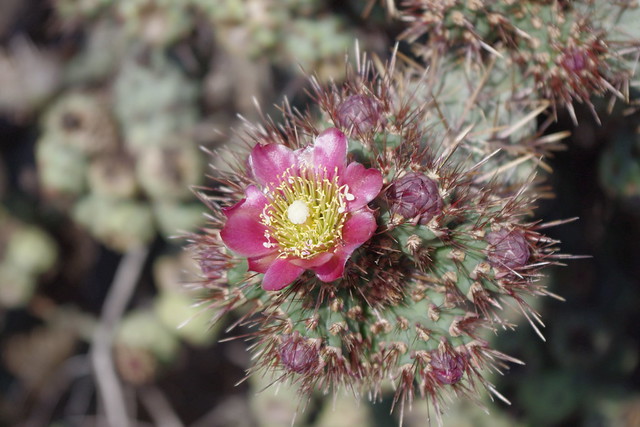

I have to admit that getting close and taking these shots was a bit tricky, not only from above, but also watching for Cactus arm joints and fallen fruits all over the ground below. Plus it was also a lousy idea to be strolling around these areas in short pants. Because of this, Star Thistle was also an issue on my legs. I was smart this time out. Before hiking, I put on long pant Jeans. Star Thistle has butchered up my legs too many times before. Dried dead vegetative skeletons of the Mediterranean Mustard are bad enough.
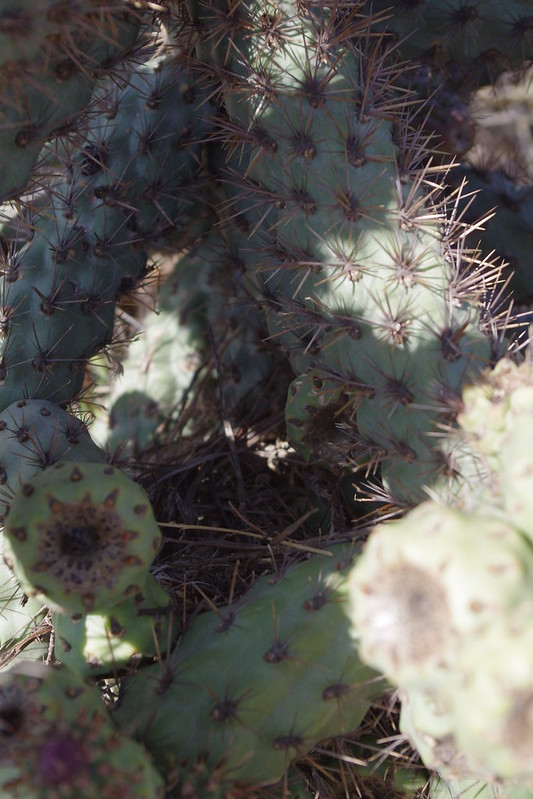
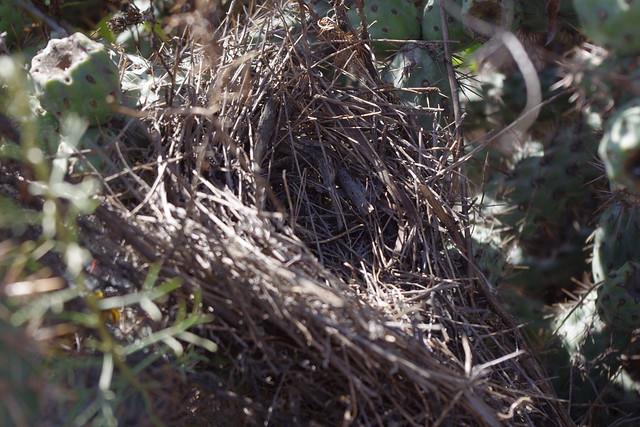


photo: Mine
The next above photo shots are of bird nests, though I am not sure if the nests belong to Cactus Wrens. Mourning Doves will also build nests in Cactus. Most of what I found were older abandoned nests used last year or even prior to that. This is reminiscent of the Cactus Wren nests I've found on Rattlesnake Mountain between El Cajon and Santee in and around the Coastal Cholla Colony I established up there in 1980 after the last huge fire. At least it was a complete, but pleasant surprise two decades later when I came back from a visit to find them a permanent resident.


Photo Credits: Mine!
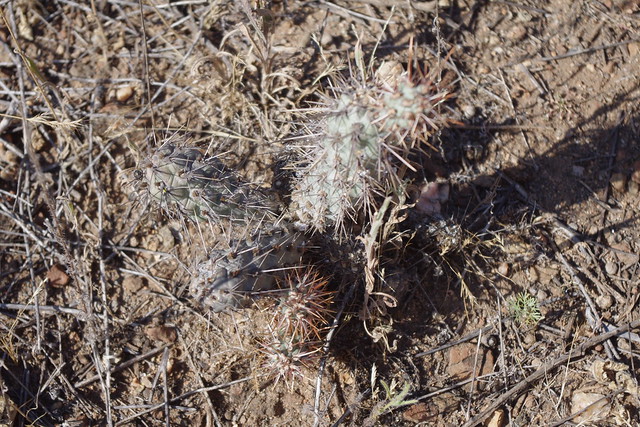
Getting back to things which are hidden and can surprise you while walking, these little young Cholla plants are everywhere, hence the need to be keenly aware of your surroundings and be watch.

Photo Credit: Mine!
Speaking of being watchful for things with sharp pointy thingys, you'll never know about what maybe lurking under cover of chaparral or cacti. 
Photo Credits: Mine!

These Black Harvester ants are also interesting and a necessary wild component to coastal chaparral Sage Scrub habitats. They are also another reason to be vigilant when out hiking. Stop in the wrong location next to their nest to observe some other kool eye catching object of your attention and they'll crawl up your pants leg and sting. Another fascinating thing about these ants that I have not really seen with the Red Harvester or any other ant is their bull dozing ability to cut pathways with their powerful jaws. Even if you stumble upon a trail like this that is not presently being used, you at least know they are nearby.
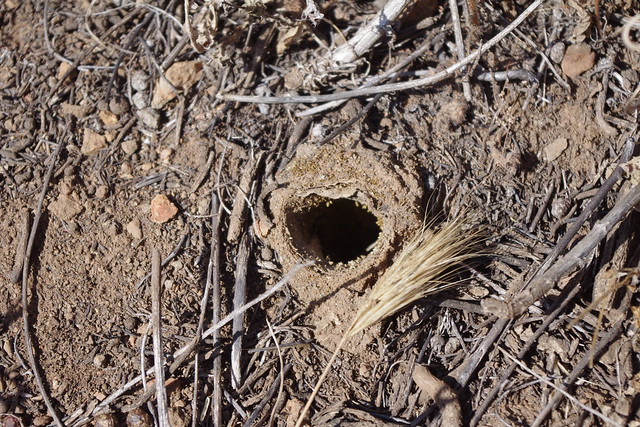
Photo Credit Mine!
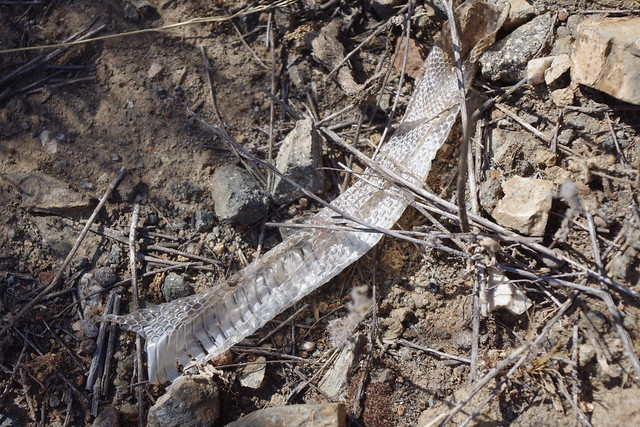
And now finally perhaps many here know what this hole in the ground is. Here's a hint, it doesn't have it's door and it was probably abandoned by the former occupant. That's easy enough to deduct as they would have built another door. Well, even with the door, many will recognize a Trap Door Spider burrow. Man I've really been missing a lot. Again, when out and about in chaparral plant communities, there are multiple reasons to keep your eyes peeled.

Wednesday, November 28, 2012

Cahuilla Mountain Wilderness, Anza California

photo credit: Wikipedia
"The United States Congress designated the Cahuilla Mountain Wilderness (map) in 2009 and it now has a total of 5,585 acres. All of this wilderness is located in California and is managed by the Forest Service."
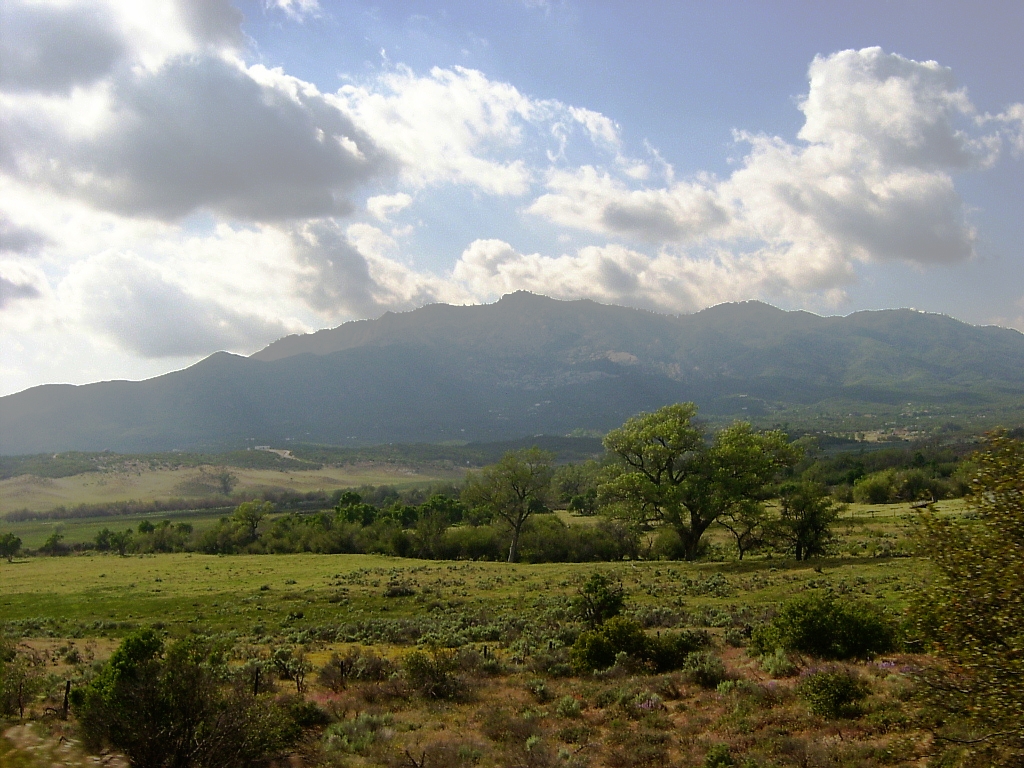
I'm mainly writing this as a supplementary to my cloud formation post on my other blog Earth's Internet. With this post I wanted to mainly help viewers and readers to appreciate a designated Wilderness area in southern California where most have never been to as a result of it's out of the way location and inaccessibility. It is a beautiful example of old growth Chaparral plant community intermingled with pure Coulter Pine Tree Forest along with numerous Black Oak, Engleman Oak, Interior Live Oak and several other large old growth Scrub Oak species. The dominant old growth chaparral species being Redshank or Ribbonwood, Mountain Mahogany, Manzanitas and various Ceanothus. There are a couple of individuals who post online who have hiked and documented much of what they saw and experienced and I thought I would post these links here for you. This first one is from a Sylvia Ender who I believe belongs to the Coachella Valley Hiking Group and here is a link to here Flicker Photo Stream which works as a slide show. 
http://www.flickr.com/photos/44209227@N06/sets/72157630020304296/show/

The next link is from a Anthony Jones website where he documents hikes and journeys he takes. He also has a photo stream and a 15 minute video which he also narrates.
http://s163.beta.photobucket.com/user/anthonysaudiojournal/library/Cahuilla%20Mountain?albumview=slideshow

Below is Antnony's video of his Cahuilla Mountain Trek with his friend John Nelson. In this video and actually both photo Slide Show Streams above, please take note of the the former old growth chaparral plant community and forested areas and the results of an Arson set fire which took place back in 1996.
http://www.veoh.com/watch/v20065892DNqMWqYp

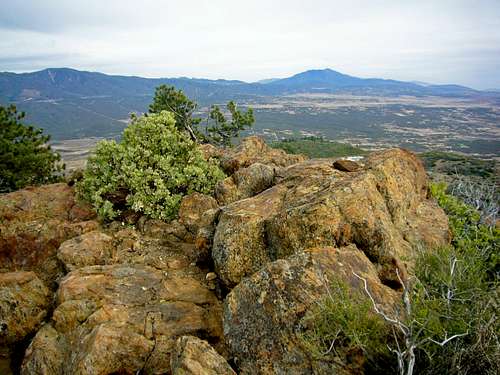
Credit Photo: summitpost.org
From Cahuilla Summit looking east at El Toro Peak in the Santa Rosa Mountains in the distance and Thomas Mountain in the distance on the very left side of the photo

This is yet another beautiful shot looking east from what I believe is the southern side of the Cahuilla Mountain where many residents of the gated community from Lake Riverside area will often ride their horses up that part of the mountainside. The trailhead below at Lake Riverside is at the mouth of a canyon which contains several large California Sycamore Trees. This is a rarity because the odd climate up there often has a late spring freeze which will irritate any gardener whose hard work gets thrashed by the late frost. On that note, for all gardeners who plan on growing a Sycamore up there, here is a photo I have published before on my blog, but have never pointed out the California Sycamore failure which unbelievably is almost 30 years old, but you wouldn't know this from the shape it's in. Take a look below at my photo again.
Okay, left hand side California Sycamore Tree. Notice the sickly condition ? What happens to  any Sycamore if it's genetic origin is from much lower elevations is that they will bud break early and the late freeze will fry the foliage. This poor  tree has had this happen almost every year since  it was planted in 1985.  Had I been smart enough or known more on location genetics, I would have  collected seed from local areas as opposed to a  Nursery Tree from San Juan Capistrano Anyway enjoy the adventure photos from Cahuilla Mountain provided by other hikers. Once again my providing this here is to not distract from my post on Earth's Internet on weather modification technology which is actually based on natural climate creation phenomena involving physics, chemistry and biological plant resources as the actual driver of climate on Earth. Take a quick look at an illustration from a company using WeatherTec innovations and the identical comparisons I make of Cahuilla Mountain. and follow the link below for further info on this amazing complex weather creation and maintenance system found in the natural world.
Here is the link:


An in Depth View of Earth's Climate Creation & Maintenance Mechanisms and the Synthetic Biology Science is Pushing as a Replacement Solution


Meteo-Systems AG © Copyright 2008 METEO SYSTEMS. All rights reserved.
Picture or imagine for a moment that the above illustration of that hill is Cahuilla Mountain. Imagine that rather than Meteo-Systems WeatherTec Tower, there is the pristine old growth mix of chaparral and forests. Now you know how cloud formation and rainfall are facilitated through something called orographic & convective cloud formation which incorporates physics & chemistry along with the biological components of an old growth vegetative system as the medium transmitter. Now you know how some of the summertime monsoonal rainfall is created and the reasons why it happens in Anza Valley. You also now know why the global destruction of these complex plant life ecosystems is degrading our planet's climate drivers. The next question is, why do this world's Climate Scientists continually focus so much attention on warming temps and rise in CO2s, when they should be teaching people how nature works and methods for rebuilding ? he answer has more to do with politics, ideology! Something we are indoctrinated into believing Science is immune from. Go figure!