|
| photo: Paul Slichter |
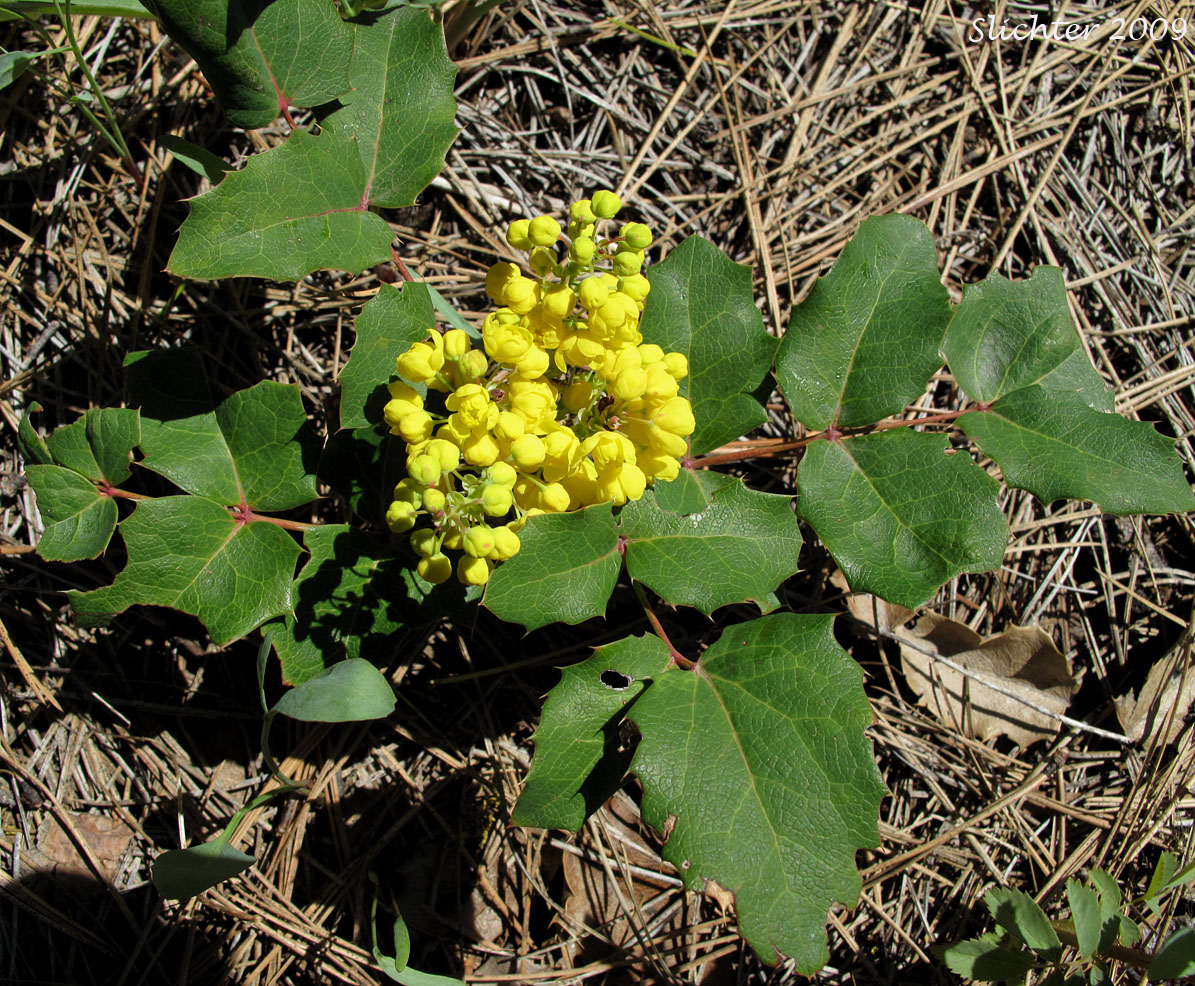
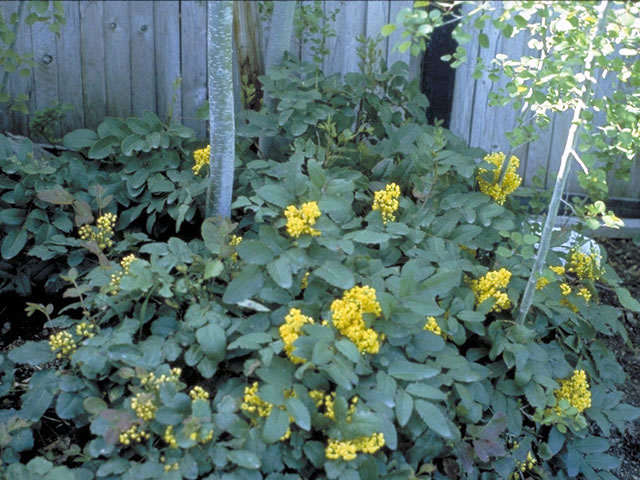
This is one of my favourites for placing under a woodland garden setting where not a lot of water is going to be used. Most woodland gardens we think of as a lush shaded cool spot with this long list of delicate moisture loving herbaceous plants like ferns, Meadow rue, etc. I put Creeping Oregon Grape in with a dry forest floor setting, though it'll take the moisture anyway as long as it's not a bog. It's name is a give away for it's habit for spreading slowly by underground rhizomes. For me it has always stayed low to the ground, but it'll get rather bushy to a couple of feet or so with just the right garden conditions. The photo above is how mine looked with a mat of pine needle straw which not only is decorative but also keeps the weeds down to that the effect is simply the beautiful living mat of the holly like leaves of the Mahonia repens. The fruit is blue much like that of the commonly tall planted Oregon Grape. Obviously it is not a grape but the clusters remind people of the look of concord grapes.
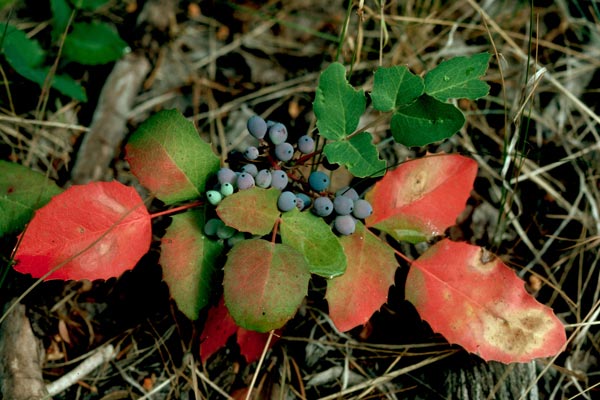
In the winter time they also add a new twist to the look as the leaves themselves will turn red to burgandy. Although some of the leaves will fall off in dormancy, many linger on the plant. Speaking personally I can really only relate to my experience with them at elevation 4500' where winters were freezing and had snow at times. And yet even in the summer they thrived in the heat underneath the Chaparral plant community canopy where I planted them.
 |
| Photo by Donald Kirk |
Here are the more mounding conditions if you have it under organically rich and maintained garden soils with regular water. Notice also that red leaf colouration I mention previously above. They look especially at home under conifers like Pine Trees. Notice also the contrast of the carpet of pine needles as a carpet under the Mahonia ?
Photo by Alder, Michael G.
For me however, I wanted them established with a mycorrhizal connections and eventually taking care of themselves when eventually connected to the grid I create underground which allows a plant community to take care of and maintain itself with little help from me. Take a look at some photos of what they look like and how they behave in their own natural settings. Often you can learn much by taking some mental notes from observing nature and replicating this in your own backyard. In the picture below, notice how it forms a nice carpet under the Ponderosa Pines.
 |
| Photo by Al Schneider |
Looking at such scenes above should get your mental wheels turning as to planning and other architectural goals when you choose to layout a landscape theme. Here is it's native ranges. The light green reveals where it is native and not rare. The dark green indicates where it has a presence in specific locations in the other states and the light tan indicates it's once historic range. Frankly, this plant can be grown just about anywhere.

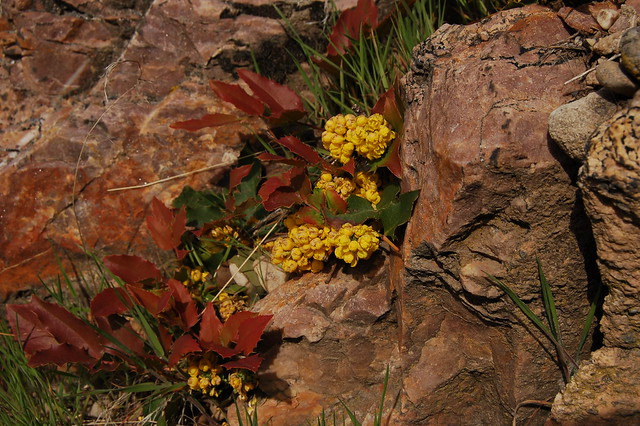
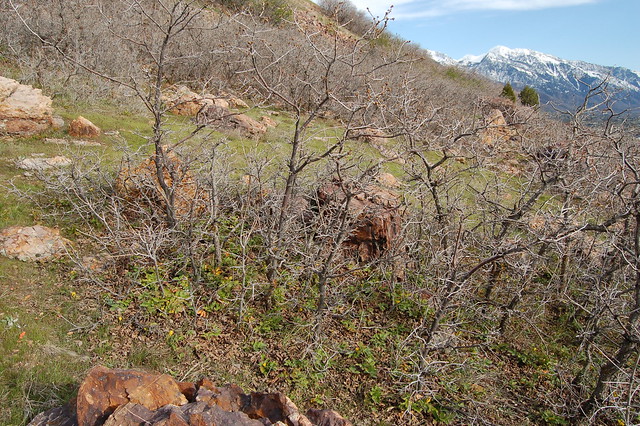
These next picture are strictly for the readers or gardeners to appreciate just how tough these little plants are and you need to realize that they wouldn't even exist here in these harsh settings were it not for mycorrhizae. These next pictures are also from the State of Colorado in the southwestern United States in and around the Colorado Plateau regions where extreme heat and cold accompanied by often dry conditions during any temperature range make conditions for any plant a challenge for survival. This should be obvious as you can to tell from these pictures of plant in the dry adobe red sandstone which surrounds these plants in the photos. Very little organic matter here.
 |
| photos: JR Hartman Universität Greifswald |
 |
| photos: JR Hartman |
This next photo to the right again shows the toughness and ruggedness of this plant's ability to survive not only harsh weather geographical and climatic conditions, but also spring back with a vengeance after a wildfire experience. reminds me of just how powerful this plant's ability is to spring back from even fire destruction of habitat. I have a personal experience with this. I did something one day at my house in Anza, California that was dumb, stupid, retarded, whatever. I heated my house with wood burning stove. It was winter, cold and windy from a typical Santa Ana wind from the east this day, but it was sunny. It was in the afternoon that I was going to start another fire for the coming evening, but first I had to clean out the ash drawer. The box was warm but not at all hot to the touch. I took the ashes out as I had done previously to spread a light coat of ash under some of the landscape for the purpose of returning something back into the ground. So I figured I was doing my eco-green merit badge deed for the day. Most of what I dumped was ash and there were a few dark chunks of charcoal.
 |
| photo: Mine |
I went around to the other side of the house where I was planting some trees and clearing some brush. I looked up and saw big white billowing puffs of smoke over the roof coming from the other side. I ran a round the corner of our house and found a fast moving though only a few inches high fire making it's way through the understory of the Redshank and New Mexico Locust. I ran and got the garden hose and turned it to full blast. Put the fire out and fortunately for my backside it came to an abrupt end at the dirt road, thought sparks were being carried over to the other side and I had to run over and stomp out with my feet a small bunch of dried foxtails. I dodge a huge bullet. I could imagine myself being in debt for the rest of my life, but only after I got out of prison. Not to mention the guilt of harming the property and lives of my neighbours for one moments stupid unthinking act. Only that road in the photo above acted as the perfect firebreak. The fire would have been on the right. *sigh*
 |
| Photo by Tony Frates |
But this photo to the right here should illustrate Mahonia repens ability to spring back easily from a fire. Unlike the chaparral below, all of my shrubs and small trees were untouched by the flames, though some small New Meixco Locust clonal saplings did get weeded out which was something I was going to do manually anyway. Yet even in this almost catastrophic situation I could also view and experience first hand how a small fast moving fire could clean out and maintain an understory even in chaparral.
 This next picture is the exact location of where this fire took place. The location where I dumped the ash is right there at the top of the drive and working down from there and to the left. You can see those same New Mexico Locust (Robinia neomexicana) and in the foreground amazingly is still a little Sugarbush (Rhus ovata) which also was untouched. The winds were blowing from right to left in this photo. The road it out of the picture, but it also is to the left. What an absolute stupid blunder that really could have been, not to mention the misery caused to my neighbours and others..
 |
| Photo by Plantentuin Esweld |
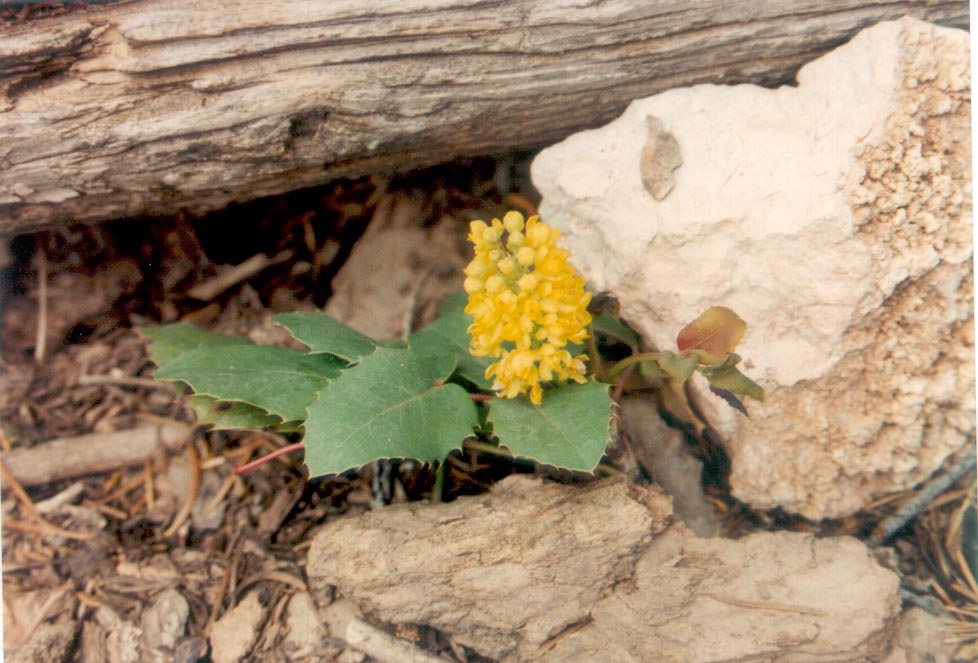
This next picture illustrates what I did as far as enhancing the understory decor as far as a natural forest floor look. I went up to Idyllwild, where I use to live and obtained some old Ponderosa pine and Incense Cedar logs for decorative special effects along with some rocks from the Pinyon area above Palm Desert, CA which are a flat grainy plated hard granite stone from the washes and quite attractive. Planting anything in and around objects and in niches and crevices gives added texture and eye interest.
Hope this helps some out who need ideas for small spaces. Common larger varieties of Mahonia (Berbsis) are nice, but can take up larger space if you don't have it. When you are out walking in nature, take notice of details of how things grow, what shapes them, what type of community of other plants they grow with and always think about what is going on underneath the ground to make it all happen above it.