This is a collection of articles dealing with organic gardening, ecology, environmental restoration, news items of interest, travel and just about anything else I find of interest and willing to share with others around the globe. - ENJOY!
Showing posts with label Earth's internet. Show all posts
Showing posts with label Earth's internet. Show all posts
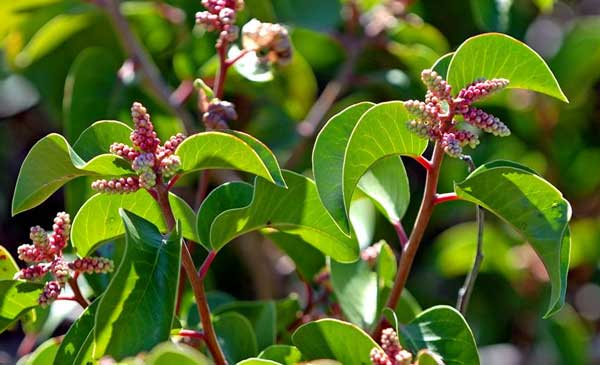
I have already written a much deeper piece on it's ecology in the wild environment, but it has practical applications in the home garden or landscape where you may be in an area with challenging situations. My first encounter was inRuidoso, New Mexicowhere our family went to a reunion and rented Cabins. My son Jared was about 4 years old at the time. I was actually pretty excited to find this tree as I had only seen it referenced occasionally in my monthly subscription to Arizona Highways magazine.It was a fun time because believe it or not it was 'monsoon season'for the southwest which is my favourite time of year when tropical moisture from Mexico works it's way north and creates those electrical billowing cloud thunderstorms you see across the wide open spaces. My son was excited and constantly pointing out all the Thunderstorm electrical flashes by saying to his cousin, "Hey Rebecca, did you see that YightYing"He was only four years old and couldn't pronounce his "L"s.
Needless to say I dug up a small inch high seedling which in actuality wasn't so much a seedling from seed as it was a tiny clone I cut out of some taller parent tree's rhizomatous root system. Yes they have a nasty habit of spreading underground and popping up with clones even 30' away from my own experience. Yet there is something kool about them. They look like they need to be kept in a lush environment, but can actually do well and be kept in check by an arid environment that is hot and dry. This was in summer of 1992 I believe and I'm thinking we drove over with my sister-in-law and her two kids. I remember because they were all including my wife bugged at me for pulling off and stopping at all these place I'd read in Marshall Timble's "Arizona Roadside History" & "Arizona Place Names".
Whatever!
Anyway, I planted this tree in among some of the bush-like small trees native to our area called Redshank or Ribbonwood (Adenostoma sparsifolium) which I had thinned out as they tend to grow in dense stands. I found the right spot and almost immediately this little 4" high tree began taking off. So much so that it grew over 6 feet in height the rest of that year. Suddenly I wondered what I had gotten myself into, especially the following year when it spread and suckered producing more tree clones of itself. But it never really did get out of hand. I did maintain several trees in the area as that was actually my intention, but the vigorousness of the thing was a bit spooky at first. It has never grown taller than I'd say 12 or 15 feet as of last checking. I don't live there anymore but my wife and I flew back over there last year from Sweden to visit and we stopped by the place. Here is what it looks like today.
Photo by Kevin Franck
In the above photo, look to the left and up. In the foreground below this is a native Sugarbush (Rhus ovata) which is another one of those interesting almost maintenance free shrubs that takes care of itself once established.
photo by Native Rival Nursery
Next, once again, look to the left of the photograph and you'll get a better look of the original tree I planted along with a few of it's clones in the background.
Photo by Kevin Franck
If you knew the type of dry rocky decomposed granite soil that it's in and realized it doesn't get any water other than winter rainy season and maybe perhaps some summer monsoonal moisture now and again, then you'll appreciate what such trees can be a valuable addition to any landscape with similar challenging soil conditions. They also spread along the mycorrhizal networks under the ground connecting up to different species from their own like theJeffrey, Coulter and Aleppo pines you see in the photo. In that scene below with the square rock wall layout is where I built up on a gradual slope a flat garden area with concrete mortar and granite river rock. The actually garden soil I trucked up from below. Seriously for gardens up there on that hill you need a lot of amendment if you want vegetables.
For a further deeper read on New Mexico Locust (Robinia neomexicana) please see my "Earth's Internet & Natural Networking"
The above animated illustration is something similar to the one that comes from Todd Dawson's website which I have already written about on my other blog where I profile a post on the man and some of his amazing research finding.
Clearly the average adult as well as young students need illustrative animations to allow otherwise difficult natural phenomena to be illustrated in terms they can graps and relate to in every day life. Hopefully we'll attempt to entertain with models that go well beyond that of mere 'eye candy'.
Todd Dawson is known for his work regarding a natural phenomena which occurs in forest soils healthy ecology called "Hydraulic Lift & Redistribution" where a specific key mature foundational older growth trees in any ecosystem has the ability to sink roots down to depths of water table or where large amounts of moisture are located in the subsoil and lift this water from deep subsurface levels in the earth and pull it upwards through their large vertical tap roots then proceed to redistribute along a plumbing grid horizontally which in turn releases moisture into amycorrhizal Fungal network which itself is connected to other shallow rooted plants who in turn receive the benefits of being a signed up customer to this elaborately constructed Water Co. What we gardeners can learn from the natural world helps us when constructing our own Landscaping layout when it's in the planning stages. Take a look at this video done by another researcher named Suzanne W. Simard Professor Department of Forest Sciences of the University of British Columbia who created this video explaining how interconnected plants are in a forest.
I love her honest intelligent approach to this observation of just how underground networks are really incredibly complex and defy the conventional modern day Darwinian outlook which actually shackles researchers from going farther to consider if there maybe is something more brilliant about the constructs of any forested ecosystem. Thus far, conventional Agriculture, Forestry, Landscping, and so forth have steadily ruined this planet and many such as Professor Suzanne Simard are opening their long held viewpoints to something more being here. Clearly the Science Based techonolgies of the so-called "Green Revolution" from the early 1950s where chemicals and the Big Scientific Based Industrial Bohemoths that manufacture them were some of the worst ideas created by conventional scientific understanding. Many modern day researchers are saying, hey wait a minute, this is how nature really functions, maybe instead of boasting about how we can improve on it, we show rather replicate it and work with it, not against it.
"These plants are really not individuals in the sense that Darwin thought they were individuals competing for survival of the fittest, in fact they're interacting with each other trying to help each other survive."
I actually take a close and a more in depth look into the technicalities of how Earth's underground Mycorrhizal Network actually functions, should be respected by us and replicated in and around our personal environments and beyond.
This is what I'm trying to get across to planners of incredible landscapes. To the modern home gardeners who want an organic approach that allows them choices that Industrial agriculture does not. Whether you are a hobby gardener or professional landscaper, taking the mycorrhizal networked grid into consideration will go along way in making a healthy success of your project without ever having to use chemical fertilizers or pesticides. That blog there addresses subject matters a little deeper than here. So enjoy the tutorial on "Earth's Internet"