Showing posts with label habitats. Show all posts

Monday, January 13, 2014

Burrowing Owls - Pay No Attention to what the Biologists Say About Your Home

Photo: Kathie Brown
Tucson, Arizona
I like Burrowing Owls too. But lately it just seems that everyone is on the save the Burrowing Owl bandwagon when it comes to News articles and blog posts. And that's kool too. Actually this trend of Burrowing Owl concern has been increasing since 2010, but appears to be gaining steam lately. Articles in LA Times and Lawsuits filed by various Environmental organizations like the California Chaparral Institute have brought the subject to the public attention again. I have not written previously about them, but that doesn't mean I've never encountered them before. Actually, I have watched and observed them for decades (since I've traveled so much) and even been entertained by their humorous antics which captured my attention in the first place. While traveling locally around Southern California, I have found them in San Jacinto Valley, especially between Hemet & Winchester, along roadside fences along both side of Hwy 79 from Warner Springs to Lake Henshaw, Ramona, and the list is endless. However the greatest concentration was always down in Imperial Valley and NOT in the conventional ideal habitat locations as insisted upon by the usual celebrity biologists. The conventional opinion demands places like prairies and other open space locales are where you will find them and where they need to be kept. Everybody who is anybody knows this, we that is except the Owls. In my own personal experience of observing these kool birds, it was mostly within city limits near humans and their busy activity. I understand this won't be taken as a kool observation, but this is nevertheless my observation. Much like all my other unconventional observations I've written about over the past year. *cough-cough* Fire Ecology!!!

Photo by Floris van Breugel
Salton Sea
Growing up in San Diego County, the only place I remember seeing them around where I grew up was over in Santee. Why sure enough, it seemed they do like wide open spaces and El Cajon even back in the 1960s was losing not only it's cultivated agricultural land, but also most of it's wide open pastures or fields. Even Meadow Larks were becoming scarce back then and I believe now even they are to the point of being extinct from most of their former locations in El Cajon. Santee however developed later by comparison and the central part of the city which now is sadly further developed has probably pushed most open space wildlife to the brink there as well. I remember long before Cuyamaca St was extended all the way to Mast Boulevard, a vast open prairie was still alive and well with many of these plains critters at an incredible abundance. The area mostly had it's eastern boundary at Magnolia Ave and western boundary where KCBQ Radio Station and Carlton Hills Boulevard and the northern end extending to other fields north of Mast Boulevard where housing & Santana High School now exist. Most of that is gone and if there are any left, they most likely would be in the grassland foothills to the north of the city of Santee. Now I'm not going to tell a story about how the Owls live, eat, and nest etc. This has been done over and over by others and I'll post links at the bottom of this page for that if you are interested. What I am interested in helping folks to understand is that most of my sightings of owls and their nesting habitat was seen within the city limits of El Centro, Imperial, Brawley, Westmoreland, etc or even along roadsides and Farm Irrigation ditches. Hardly the thing of Wide(wild) open spaces. I know, I know, it's not what the field biologists out there tell us with all their stories, but nevertheless they actually do very well in specific locations near and around humans. This doesn't of course take away from movements to save the wild habitats closer to the coast of California, like San Diego. However, look below at the gallery of what has been documented by others in these southwestern locations.
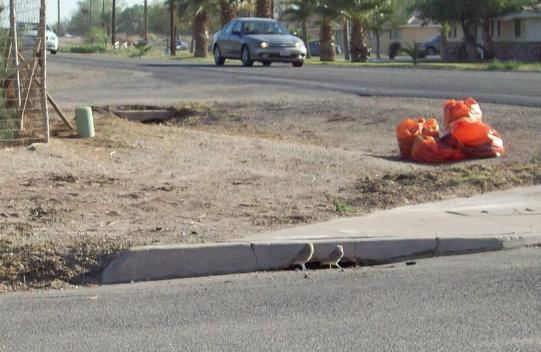
photo by Lineatus - dailykos.com
This photo above is or was common site around many of the desert cities and small towns around Imperial Valley. This photo I believe was taken somewhere around the Salton Sea, perhaps near Calipatria or Nyland. Storms drains and other culverts are great places to watch for these entertaining little guys.

Photo by Kathie Brown

Parking Lot Burrowing Owls by Kathie Brown
 The above photo was taken in Pima County Arizona, but is also illustrative of what could be seen in times past in and around Imperial Valley towns and cities. The attached link above has more photos of the parking lot habitat. 

Photo by Southwest Birders (Bob & Mary)

Somewhere near the Salton Sea near New River
and Brandt Road.

2010 Photograph by JOSELITO VILLERO
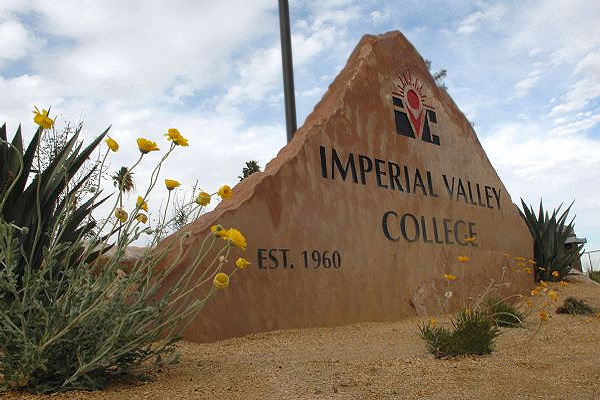
My most favourite place to walk around and view them was at the Imperial Valley College campus grounds. The last visit I made there was in the year 2000.  Burrows were everywhere, especially under concrete sidewalks in between the buildings and out near parking lots. Apparently the Owls never went to University to study about their prime habitats and where they SHOULD ONLY be found living. While I'm in favour of seeing the Owls out in the wild with natural settings, I have no problem with them adapting and actually thriving among humans, since we're not exactly going away any time soon. Good for the Owls. The little birds are feisty and protective of their burrow territory and  I remember seeing them fly up from the ground and attack the backs of a student's head if the student ventured a short cut through the School landscape from the parking area to the Student Union quad area. Back on September 10 2010 in the LA Times, there was a disturbing article about about their major decline in Imperial Valley which has the largest California population of Burrowing Owls. Here are some very important quotes from that piece:
 "An alarming decline in the number of burrowing owls in the Imperial Valley -- a Southern California agricultural area that had been considered a stronghold for the species -- has prompted calls for an immediate inquiry by state wildlife authorities."
"Surveys conducted by the Imperial Irrigation District show the burrowing owl population has dropped from about 5,600 pairs in the early 1990s to 4,879 pairs in 2007, and 3,557 pairs in 2008."
For me this is bothersome because these feisty little birds were thick as flies within city limits and so habitat loss wasn't exactly the issue. Seriously, in the quotes below it states that urban development has brought about habitat loss. NOT, in my 30+ years of traveling down there on a weekly basis, urban & agricultural development have always increased their expansion. I know I know, it's not ecologically kool to say that, but that is nevertheless my observation and 25+ years of experience down there. However something else may be the problem as the article made important mention:
"Statewide, the burrowing owl has been decreasing because of habitat loss by urban development, elimination of rodents it feeds on, pesticides, predation by domestic animals, vehicle strikes, collisions with wind turbines and shooting."
"Most of California's remaining breeding pairs of burrowing owls are concentrated in Imperial Valley, an area that makes up roughly 2.5% of the state's land, Miller said. "We still don't know exactly what is causing the declines in the Imperial Valley," he said, "but loss of suitable foraging areas from fallowing of agricultural fields due to water transfers and ground squirrel eradication programs may play a role." 
(Source)
Clearly some things could be eliminated as a possible cause for the Burrowing Owl decline down in the Imperial Valley if the L.A. Times article is true. As I've stated previously above, they were always thick as flies for decades down in Imperial Valley, so predation by feral or domestic cats and/or other animals, while certainly possible at times, to me would not be an issue. Their populations have been thick for decades down there and the past three or four years of decline if true would not really make much of a difference to me. Once again, these birds are feisty and defend territory fiercely. They certainly are not afraid to dive bomb the biggest and worst predator on Earth (Humans), so why would a bunch of Kitties suddenly be an issue ? No doubt they have been dive bombing cats or any other animal who get too close to the Den entrance and have successfully done so all along.
When Eco-Green really is a Red Light Warning

Image - SolUnesco
INDUSTRIAL SOLAR FARM IMPACT ON IMPERIAL COUNTY: HOW DOES SOLAR COMPARE TO OTHER LAND USES? IS IT REALLY ECO-GREEN ???

(Photo by: Kevin Cole)
The other issue mentioned was that the valley is experiencing  less agriculture which would limit food supply for mice (hence less mice) and other food sources like insects. Sure enough, Imperial irrigation district has made some dirty deals with San Diego to the west for more water. This means Imperial Vallet reduces irrigation water intake through the All American Canal and more water is allowed to be fed into the Aquaduct through the southern portion of the Mojave Desert and Joshua Tree National Monument which originates from Parker Dam upriver on it's way to San Diego. This is partly why the massive reservoir south of Hemet was built back in the 1990s to acommodate more water volume for San Diego. So less farmed fields because of less water and so-called eco-green alternative energy Solar Farms replaced crops. Less water and crops also mean less insects for lizards to feed upon. Lizards being another favourite food of Burrowing Owls. I've never really seen mice in the day time down there in the open, although I always did see plenty at night. Mice also are another one of those critters that never seems to have issues of being pushed aside for any reason. I don't think less fields being cultivated was an issue either. Besides, during the day time when I did watch them catching their prey, it was always grasshoppers, caterpillars and lizards. Anyone who has traveled through Imperial Valley any time, but especially at night has experienced a plethora of all manner of bugs hitting the windscreen and had to wash their vehicle of the zillions of little buggers plastering their car. So I highly doubt there are less bugs to be much of an issue either. 
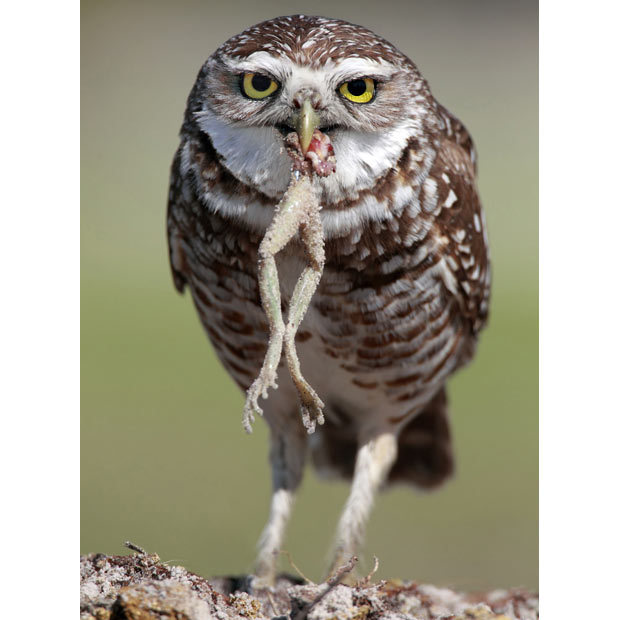
Photo: Megan Lorenz / Rex Features
Again, Frogs and Lizards are also on their menu and there are plenty of both in great abundance down there. And less water means less of these too. The article listed  Road Collisions and Humans shooting them no doubt are true, but those things have also always been around, especially the issue of Humans doing stupid things for sport, and while that no doubt has increased, I don't think it's a decline issue either. Such dangers have always been around. But also it just quite possibly might be the new class of Industrial Ag pesticide products which as we all know have  become more of an increased phenomena as of late. Along with GMO crops designed to manufacture their own toxic qualities and engineered to be deluged with their science-based chemical cocktail junk. If the Owl's food sources have become contaminated with this junk, then possible decline by these means would be my own best guess. Frogs & insects in and around the field drainage ditches where the excesses of irrigation water loaded with both chemical fertilizers and pesticides leaches from the fields into the drainage ditches on their way to the Salton Sea are the most likely another culprit. Again, all the other things have been present all along. The only increase in anything new would be that of the newer generation of chemicals contaminating the food supply and as we all know this has led to the decline of anything and everything beneficial to the Natural world. Ultimately, there is no answer for the control of pesticides. Giant Corporate business interests are going to do as they please as long as they load the coffers of all political entities. No one fingerpointing political ideology is exempt from doing whatever it takes to stay in power. Both sides do it despite what enviros want to blame. Going to bed with degenerate bedfellows would be considered a necessary evil to fight the good fight of worldview promotion. I honestly don't believe there is any humanly possible solution to changing these corporate giants as there are no long term historical precedents to put trust or faith in. Notice I said long term, as at times there have been some localized short term successes, but gradually memories fade and even these areas are once again in trouble. The collision with Wind Turbines mention while always possible is also most doubtful given the Owl's preference for ground, much like Quail, they prefer ground. I don't ever think I've seen them fly as high as a giant wind turbine - EVER. But it does add colour and sensationalism to any article. With all of this said, I would rather focus on what individuals can do to encourage more Owls on their own private land.
'Owl condos' are move-in ready and coyote-proof
Army mobilizes to increase Burrowing Owl habitat in Oregon
By Bruce Henrickson, US Army Umatilla Chemical Depot Public Affairs

By Bruce Henrickson, US Army Umatilla Chemical Depot Public Affairs

By Bruce Henrickson, US Army Umatilla Chemical Depot Public Affairs

By Bruce Henrickson, US Army Umatilla Chemical Depot Public Affairs

Speaking personally, I don't think it would be all that tough to find raw salvage materials from which to construct such artificial dens. This would be a fun project for anyone with the right type of  open landscape. Especially land that is too tough to develop or, garden or planting of  any trees because of the hard rocky ground like I had on one knoll on my old place. It would take some work with a long  steel or iron digging bar  , but I think the rewards would be worth it and the exercise and experience worth while from a health standpoint. Involving your kids would also go along way in appreciation which is radically lacking in today's modern society. Reading about something does NOT take the place of actual experience. I think the decline of the Burrowing Owls in Imperial Valley, if true, the experts are going to reassess what is believed to be the problem. Off hand they could interview people (especially old timers) who actually live down there as opposed to what official outdated text books and short sighted periodic field trips lead them to believe. Not only should the Industrial Ag Business products be looked into, but also the Ground Squirrel eradication programs by means of poison bates from the Imperial Irrigation District who have a sort of hate relationship for anything that would disrupt their precious irrigation canal banks.
More Incovenient Habitat Truth - But The Burrowing Owls Love It 😆
Mission Bay area in San Diego is a rich habitat for Burrowing Owls, but I have only found information about them from private nature bloggers and photographers or just your average citizen out for a stroll on a public walk and grabs a quick camera shot from their mobile phone. Let's focus on one particular habitat never really acknowledge by the nativists and that would be Sea Fig which is the most common ice plant we see olong California Freeway Systems. Most of the Facebook California Native Plant organizations and Eco-Groups hate it. They generally have an intolarance for most things non-native, but Sea Fig is one of those at the top of the list. Now the Burrowing Owls don't necessarily like it, however one of their best buddles love it. California ground squirrels (Otospermophilus beecheyi). They love to eat it and have made burrows everywhere in it. What attracts the Burrowing Owls are the Ground Squirrel Colonies where some old holes are abandoned.

Ground Squirrel Colony - Sea Fig
Photo - Fishbio

Sea Fig has naturalized along the California Pacific coastline and the native wildlife have adapted to it's presence with success. Much to the disturbance of the purest.


Ground Squirrel & Sea Fig - 

The California Ground Squirrel although native have often been demonized as an annoying pest themselves and been persecuted to the point of massive poisoning programs in many places. Like Imperial Valley where the Irrigation Districts ditches and berms have been kept clean of Ground Squirrels which has also hurt the Burrowing Owls.


Ground Squirrel eating Sea Fig
Photo - The Horticult

But the Squirrels do rellish the succulent Sea Fig stems


Ballona Wetlands Ecological Reserve
Photo - Jonathan Coffin

Then the Burrowing Owls take notice when they migrate back from places up north. They spot the ground squirrels colonies we miss and don'y sea. I have to believe they are many more Burrowing Owl colonies throughout the system, but most Freeway Sea Fid landscapes are just usually impossible access to humans and perhaps too dangerous for stopping and looking in many places. The photo above is at the Ballona Wetlands Wildlife Reserve up in Orange County where the environmentalists who champion the reserve's restoration have an all out war declared against the Sea fig. Sadly if successful in ridding the area of Sea fig, it will have a domino effect on the squirrels and then Burrowing Owls.

San Diego River Estuary - Mission Bay, California
Photo - Greg Gillson

This Burrowing Owl above was photographed by Greg Gillson of Greg in San Diego blog. He has since moved on up to Washington State where he and his wife have retired, but still photograph and document birds. This Burrowing Owl nest is near the San Diego River Estuary. The Owls do not dig nests, but they scratch our a wider den in pre-existing Ground Squirrel holes. Now where Greg and others have left off, perhaps other private citizen wildlife hikers and photographers can pick up the slack now that you know what to look for. Fiesta Island in Mission Bay also has a colony of Burrowing Owls. Below is Greg's blog about the Burrowing Owl and lots more photos.
Another Blogger Jo Quinn also wrote and photographed the same Colony of Burrowing Owls in 2016.

It's clear that the Burrowing Owls don't mind the supposedly unnatural settings that environmentalists insist they are not supposed to prefer, like artificial unnatural man-made constructs as opposed to the abandoned ground squirrel dens in out of the way wide open spaces. This doesn't by any stretch mean that no one should ever rally support for protecting historical colony habitats. They should. But it's nice to know the Burrowing Owls are not as sensitive as other wildlife who find it impossible to adapt to human intrusion. Of course, fortunately the Owls never went to University where such wild habitat legend myths are etched in stone are taught. Fortunately for their own survival, they don't know they are not supposed to adapt well around human activity. Pssst 😏, don't no one tell these little Owls that. 😉
~~~~~~~~~~~~~~~~~~~~~~~~~~~~~~~~
Further Reader References of Interest
COMMUNITY INSTALLS ARTIFICIAL BURROWS FOR BURROWING OWLS 
http://burrowingowlconservation.org 
http://burrowingowlpreservation.org
http://www.californiachaparral.org/burrowingowls.html 
Cuyamaca Woods Mountain Journal: "A Diversion to the Salton Sea: Our Annual Visit"
Cornell Lab of Ornithology - Burrowing Owls
http://burrowingowlbc.org

Friday, September 27, 2013

Nuthatches and Brick Porthole Habitats

image: Paweł Kuźniar
Nuthatch or Nöltväcka (Euraisan Nuthatch) is a tiny little tree creeper of a bird we have here in Sweden. I mostly notice them in the early Spring when they like so many other birds are into the Springtime nesting mode. That's when I notice them and other tree creepers doing their thing and darting in and out of some of the most tiniest of holes that you'd ever expect any kind of bird to move in and out of. They're an odd shaped bird and yet cute at the same time. When you walk in the woods here, it's a pleasant surprise to find one working and moving inside and outside of it's tiny hole. I say pleasant because they are so entertaining to watch for a few minutes. Amazingly, their odd little frame just seems to defy gravity which never seems to be an issue when they move all around a tree's trunk and undersides of branches. But it's that diving into a tree and disappearing into a tiny porthole of a nesting cavity that draws your attention at first.
Photo: Mine
I've taken numerous pictures of their nesting holes, but without catching one actually at the porthole. They are just that quick. But I can show one such porthole I took in the Oak woodlands we walked through when I wrote about Gunnebo House & Gardens in Sweden where I reside and where we spent the pleasant afternoon with friends. It's still incredible that anything other than a hummingbird would fit in such a tiny little porthole of an entrance. But they do. Interestingly, if they find a hole and like it for a nest, but find the entrance too big, they will build up a mud platform from the bottom up until the proper diameter meets their specifications for safety & security reasons. But they don't always choose tree holes for nesting. They will also seek out tiny crevices within rock walls here or cliffs and even small holes in buildings or bridge foundation structures. An out family's Gunnebo Estate visit they had a large pond which had a dry stone wall bordering all around it. As I was sitting there on a bench mesmerized by the movement of the water, suddenly this little tiny figure flitted into a tiny crevice. I suspected it was a Nuthatch and after waiting for a bit, sure enough a Nötväcka (Nuthatch) popped out. I have a couple of example videos to show here with the first being a video of a Nuthatch Nesting cavity with parents caring for their babies and also notice the mud platform build up at the bottom of the entrance.
Nuthatch Nesting Video
This next video is also very illustrative of the same behavior of the Eurasian Nuthatch's nervous foraging habit of investigating by flitting in and out of cracks a crevices of stone walls or rock piles. But this little bird is different, yet similar in some habits. It's called Gärdsmyg or common Wren. This particular video caught my attention because the Önskevädersgatan Trolley Stop where I wait to ride to city center, I wait at the rail along side a rock line drainage ditch and invariably there are these little Wrens popping in and out of the rocks near the water's edge. The Nuthatch will often to the very same thing.
http://www.youtube.com/watch?v=35tZUqKrh2g
What actually got me interested in writing a piece about this little bird was something I saw a Magazine article about creating a nesting cavity in a brick wall. As natural habitat components for cavity nesting birds become fast disappearing with more and more human development, many of these birds fall into decline. The designer is Aaron Dunkerton, a student at Kingston University in England, who claimed to have found solution and solve the problem with the Bird Brick, a fire-clamped cavity brick that could be built into walls and buildings to provide a sustainable nesting site for the birds. It was a perfect fit for these little cavity nesting birds and could be easily duplicated by anyone who is intuitive enough imagination to replicate such designs. But here is a quick view of what I'm talking about as far as nesting holes incorporated into a brick wall. The Bird Brick is a fire-clamped cavity brick that can be built into walls and buildings to provide a sustainable nesting site for sparrows.

Image: Aaron Dunkerton

The Bird Brick is made from five different bricks that assemble to create an opening for the birds. To clean the cavities, you simply twist the stopper and pull it out. Designer Aaron Dunkerton suggests doing this every two to five years, though sparrows typically take care of it themselves. I remember this was one of my concerns when I first was intrigued with this idea. How in the world could it be maintained and kept hygienic ? I was also curious as to how it could attract other birds like the one on my topic which are much tinier. While there are Sparrows here in Sweden, mostly they are in the cities and not overly numerous in numbers like they are in warmer climates. The other birds like Wrens and Nuthatches are everywhere around my house since we are at the edge of the woods. I really don't know if I've ever seen a sparrow in our yard period. Below is the illustration of the clean out. 

Image: Aaron Dunkerton

Dunkerton’s design consists of five hand-made bricks that assemble to create a small, round opening that’s plugged with a brick stopper. At the bottom of this post I've posted his website link for further details. The hole is 1.25 inches diagonally, which makes it large enough for a sparrow (or other smaller bird varieties) to nest comfortably, but small enough to keep out unwanted visitors. The idea is that builders would install a cluster of three or four Bird Bricks during the construction of new buildings. Ideally, the bricks would sit anywhere from 6 to 15 feet from the ground. Dunkerton says this about sparrow communal habits:  
“House sparrows are extremely sociable birds and like to nest in small little colonies.” 
But have you ever noticed that many of the cavity nesting Birds build nests in the oddest of places. I saw this very thing this past Spring when visiting a friend in Anza California. A family of Mountain Blue Birds had set up house in an old telephone utility box on a light pole that my friend Patrick never got around to using. Amazing, I should have photographed it, but we stood there a gazed at the for along while coming and going, both parents. This artificial nesting site set up was also mentioned by Dunkerton.
“You often find them nesting under loose tiles or in old broken vents in the side of buildings” 
But as buildings are patched up to improve insulation and green space disappears due to urbanization, sparrows are losing a sizable chunk of their nesting options. Apparently, over the last three decades, in the U.K. the house sparrow population has decreased around 70 percent as he shows on his website below, and the bird has found itself on the growing list of endangered species. Seriously, who ever thought Sparrows would become endangered ? 

Anyway, the idea he came up with intrigued me and triggered all manner of other ideas for creating artificial nest habitats. Not just for Sparrows, but all sorts of other birds. This set up would be perfect for garden walls and not just buildings. And of course the size of the hole could be made smaller to accommodate the tinier native Song Bird's like Sweden's Nuthatches. This larger size of course would be shortened up by the Nuthatches with mud, but still, Sparrows and Martins could get there first if the hole was just their right size. Nuthatches collect various nuts and wedge them into tree bark or in holes in walls and will even cover secret larders with bark or moss. Who knows, maybe some of these brick bird holes could become winter storage catches for them. They are just such funny looking birds besides their cuteness. 
Other people have come up with some more elaborate brick bird habitat Uptopias, but the one above by Aaron Dunkerton seemed the easiest to replicate and incorporate without being overly flashy by drawing attention to the area. Below is one beautiful but more complicated one and a link to this company. If a parson has the money and the creative time and patience, there is no limit as to what they can accomplish. Then below this image example, there are some other interesting reading references webpage links if further interested in more creative ideas.


designer Chooi-leng Tan.
Nature-Loving Bricks Bring Wildlife Straight to Your Walls

Nuthatches are endangered in many areas. Especially in the United States where people are obsessed with cutting down any snag for firewood. They are cavity nesting birds and only really need about an inch hole for entrance. Here below is another video of 10,000 Nuthatch Nest Boxes being built for the north Carolina Brown Nuthatch recovery programs there.

Pay close attention to this next video and notice as in the preceding video above, how a metal plate is covering the entrance so that larger birds do not invade and make the hole bigger to make it their own home.
https://www.youtube.com/watch?v=2DrVDf5B97w
 ~~~~~~~~~~~~~~~~~~~~~~~~~~~~~~
Some Interesting Reading References:
http://www.aarondunkerton.com/bird-nesting-brick/
http://inhabitat.com/pixelated-birdhouses-sprout-on-city-trees-in-london
http://vimeo.com/Brick Biotopes
Brick Biotopes: Micaela Nardella & Oana Tudose


Wednesday, August 29, 2012

Habitat Restoration: Science & Technology verse Common Sense

I love this illustrative scene of Science based Technology which is usually promoted as something that will save the world because it's smarter than humans verses an actual human who in reality has far more impressive abilities if only properly utilized and correctly trained. But this post is more of a subject about technological innovation verses the human qualities of compassion, intuitive creativity and common sense, then someone being outwitted by a computer and smashing it to bits. Scientists and other researchers often forget these simple concepts or qualities when doing research these days as everything must seemingly be so intellectualized to death that they often miss some very good common sense ideas which don't waste valuable resources and time.  A huge part of the problem is that science now days is mostly done in a Lab and through the Internet. In the old days they actually did things through field work and first hand observation. Personally I've always been a hands on learner when it comes to learning and retaining anything. It's never been enough for me to read some book. I've got to get my hands dirty. Not that this is not done today, but many things are taken for granted now and field work is commonly viewed as unnecessary because someone else has already done the work and therefore I can read about it in a textbook. Unfortunately times have changed and the natural world DOES NOT behave and act as it once did. Indeed it is deteriorating at an alarming rate. Hence this is what makes most of the conventional textbooks old and out of touch with the reality of the present natural world.

I've already given this very subject a mention sometime back with regards the Tecate Cypress germination project being done at the San Diego Safari Park. I'm impressed with what they want to accomplish and I truly wish them well for success. But I was critical in their old archaic outdated  conventional school understanding of germination which was around back in the 1970s when I first investigated specifically Tecate Cypress seed germination. Long time successful Native Plant Nurseries in and around southern California have known many of these things for years, but apparently much of the University grade understanding has not caught up with what even these people know. Of course Nurseries have to maximize their knowledge and what they techniques they use in order to make a profit or they go under. I know for a fact that the majority of the owners of these Nurseries actually try and replicate Nature to an exact science for sure success. Government or Charity Funded Research Programs often don't have the same financial needs for being a viable business or keeping from going bankrupt. They acquire grant monies whether they succeed or fail. So maybe it's a motivational thing. Anyway, if you've got the time, here is subject of the matter, Nature verses science.
Seed Germination & Old School Ideology vrs How Nature Actually Works

Coast Cholla - Rattlesnake Mountain
There have been some more recent developments in research projects done over there that I found exciting, but again I question a few of their methods. Take for example the Cactus Wren Habitat Restoration Project. I found that exciting as I inadvertently when recreating a Coastal Cholla Habitat up on Rattlesnake Mountain in El Cajon CA also created a haven for Coastal Cactus Wrens which as a kid I never knew existed around that area there before. But low and behold there were numerous Cactus Wren nests the last time I visited. Now here is an example of where human time and experience is being shoved aside for reliance on so-called computer technology as opposed to real field experience which can be more effective and recalled to mind in an instant if that mind is properly trained. The subject was where to create habitat, what constitutes prime habitat, etc. Here's the quote in the article (which was a great article BTW):

Photo by Jodi Takei-Peterie, May 26, 2016

 "To this end, we are already propagating cacti to enhance an additional 50 acres (20 hectares) of habitat throughout San Pasqual Valley and utilizing advanced technology such as Geographic Information Systems, spatial analysis, and computer modeling and simulations to help us determine high-priority locations for habitat restoration efforts to maximize the probability of success." 
Now right here, I don't see or understand this reliance on this modern day obsession with computer models. Not that computer models don't have a place, but when wisely spent time in the field which creates experience for someone utilizing their brain, meditating and pondering over those observations which ultimately burns the experience into one's memory banks for life. My years of experience tell me that the vegetation habitat for Coastal Cactus Wren Habitat for production of successful cacti colonies needs low growing coastal sage scrub  some of which the species were even mentioned in the article. California Sagebrush, California Buckwheat, Black Sage, White sage, Coastal Brittle-Bush, etc. These plants don't get overly large and will not necessarily out compete either Prickly Pear or Coast Cholla Cactus. That's only logical and can be easily verified by outright observation in the field. You also need as far as Geography a south facing slope. A north facing slope will contain other Coastal Sage Scrub large treelike Toyons, Lemonade Berry etc which will overwhelm and dominate the habitat by several feet, or even meters in some cases. Any Cacti would have a tough chance colonizing. But I know this from experience of being outdoors, not because I read about it in a book or surfing the Net. Of course then there is the problem of the habitat dynamics and imputing all that data in that computer. Things have changed and not everything behaves as it once did. Will those data factors be uploaded into the computer simulations like invasive weeds ? The list is endless with no assurance that it'll work except within the mind of the programmer who ever that is. It may have some elementary school value, but young people need to be disconnected from the electronics and shoved out into the real world to experience how Nature really works.

hikingsdcounty.com

Then there was the article on Ground Squirrel Habitat restoration and in particular they are determined that these little guys are going to inhabit grassland like they believe they should (whether or not the squirrels want to & for their own good). Great idea and I hope they can find solutions, but they were focusing strictly on grassland prairie type settings. The example was the grassland preserve up in Ramona California

Ground Squirrel at Torrey Pines State Reserve
They of course acknowledged that the squirrels will live or be found almost anywhere. True enough, my wife & I on our last year's visit found Ground Squirrels, not in a Prairie setting, but  both up on Rattlesnake Mountain and along the coast at Torrey Pines State Reserve. The ones we saw at Torrey Pines had burrows in the Sandstone bluffs as you can see below and their diet wasn't just necessarily grasses(which are a part of their diet), but instead here numerous wildflowers found there. No doubt pines nut menu too.

Torrey Pines State Reserve - California
Now here were some of the things they were considering in order to determine just what Ground Squirrels like for their Burrow Construction Habitat. For them this was a Dirt Dynamics thing because no self respecting Ground Squirrel would reject a grassland setting with all those seeds. Actually, there are any of a number of ground squirrel habitats with varying geological composition and makeup. But those old traditional paradigms are hard to shatter. Here are some partial quotes:
"But what determines where a ground squirrel likes to live? Sometimes it seems like they are everywhere: in parks, at the beach, alongside roads, and around our properties. But when it comes to grassland habitats in San Diego County, they’re not always present where you might initially expect them to be. Figuring out where ground squirrels can and prefer to live is especially important when you want to move them to places where they are going to be successful. After all, we want them to establish a new population in a place that will allow them to help the habitat as a whole."
So they are determined to restore this Ramona Grassland Preserve and Ground Squirrels need to live there and be a part of that. The idea is if ground squirrels are present, then other creatures like Redtail Hawks, Coyotes and Burrowing Owls will be able to make up part of this living breathing ecosystem also. First I must say that I'm not overly sure that this area was originally grassland in the historical past. I am more inclined to think it as being chaparral in earlier times before European arrival. Much of the original California plant communities were changed from Chaparral to grasslands as a result of human mismanagement in the first place since making a living dealt with raising Cattle. But no matter, if they can create such a well oiled natural community grassland prairie machine then more power to them. The one problem I see are the invasive plants up there at this Preserve. From the photos there are a lot of tall European Wild Oats, Mediterranean Mustard and Star Thistle to name a few. All this is rather tall and crowds out even many of the native wildflowers which Ground Squirrels love. I've never really seen these creatures eat many of these invasives, even the rabbits don't touch a lot of those things. But there were even more quotes.
" . . working on over the last few months is collecting data for the California ground squirrel habitat suitability model in order to determine what habitat variables predict the presence or absence of ground squirrels in a particular area."
"At study sites around the county, we’ve been surveying for ground squirrel burrows and collecting data on the surrounding habitat characteristics, vegetation type, and height in the area and any potential burrow protection observed."  
"In addition, we’ve also been taking soil cores to determine soil density and other attributes, which we’ll assess later in the lab. Because ground squirrels are fossorial, we think soil type has a huge influence on their habitat preferences." 
Now they do acknowledge the plant height problems. This makes sense since Ground Squirrels like an element of observational structure in their communal habitat. In some areas they utilize Elfin Forest lookout perches provided by Chaparral for their lookout Sentinel Post. For the Squirrel community, just like Prairie Dogs or even the African Meerkats, they have a Sentry on duty. Heavy dense tall grassland does not allow for this. Take a look at some of the observations of Prairie Dog Habitat preferences and why they are such. 
Black Prairie Dog - Landscape-scale habitat characteristics
"Black-tailed prairie dogs inhabit grasslands, including short- and mixed-grass prairie, sagebrush steppe, and desert grasslands. Shortgrass prairies dominated by buffalo grass (Buchloe dactyloides), blue grama (Bouteloua gracilis), and western wheatgrass (Pascopyron smithii), and mixed-grass prairies that have been grazed by native and nonnative herbivores are their preferred habitat. Slopes of 2% to 5% and vegetation heights between 3 and 5 inches (7–13 cm) are optimal for detecting predators and facilitating communication."

"Black-tailed prairie dog distribution is not limited by soil type, but by indirect effects of soil texture on moisture and vegetation. Colonies occur in many types of soil, including deep, alluvial soils with medium to fine textures, and occasionally gravel. Soil not prone to collapsing or flooding is preferred. Though they do not select specific types of soil to dig burrows, silty loam clay soils are best for tunnel construction"
So a couple of observed logical points here about the Prairie Dogs preferences. Vegetation must be short grass Prairie type habitat with slight slopes or other mounding type areas for observation with regards predators. They are not particular as to soil type, mostly it is vegetation and geography issues. This makes complete sense and there is no reason not to believe that Ground Squirrels look for similar circumstance. Tall Grasslands never work and I have also seen this. If and when I did saw Ground Squirrels as a kid in or around grasslands in areas growing up like El Cajon and Santee, the Squirrels and their community burrows were almost always without fail in the numerous granite boulder outcroppings which appear intermittently inside or around such Southern California grassland habitats. Not only is it burrow protection, but the boulders offered high perches for which to keep lookout for predators. If there were no boulder outcroppings, then at least there was a rise in the landscape as in a slight hill or large mound rising from the flat grassland. They always like the open areas for which to run, even when in mountains. Tall invasive dense weeds and grasses not only prevent this, but they are not necessarily a favourite food source. No amount of Dirt Collection and study in a Lab is going to change what the squirrel prefers or will force him to adapt. 

Oh and one more important point of note. They also are most numerous living in among human urban habitat developments. Go figure! I'm sure the main reason for the grassland project however was the benefit to birds of prey like the Golden or even Bald Eagles that reside up there. Although I don't normally think of Bald Eagles as preying on squirrels as much as aquatic prey. 

Photo courtesy of Dr. Roger Banner, USU Extension
Another example of a Science problem in the literature. There are continual flaws in photos and species listings and even critically bad reporting on the plant life itself. I often see such blunders in conventional Nurseries when looking for plants. I see it in municipa parks and preserves where specimen plants are brought in a a sitting or viewing area and mislabeled. But take the example of a draft I have here on Bush Food edibles and the subject of the native plant called Coyote Melon (Cucurbita palmata) and the photo of it on a University Cooperative Extension site. The above photo is not of a Coyote Melon, but a similar vining plant in the southwest known as Buffalo Gourd (Cucurbita foetidissima
http://extension.usu.edu/rangeplants/htm/coyote-melon-gourd
photo by Cal-photo - Coyote Mellon
Now I have no idea who is at fault here, the good Doctor or the University of Utah, but someone clearly didn't get the plant ID correct. Coyote Melon looks like the photo to the above left. It has smaller star shaped leaves as opposed to the larger triangular leaves of the Buffalo Gourd. Then there are also some bad description of the plant which are also commonly misapplied to chaparral plant community as well. Of course I have the same pet peeve with some retail nurseries which will have a Sycamore labeled as California Sycamore, but it has the leaves of a London Plane Tree. Oh well, take a look at what was said under the subtitle "Uses and Management"
"This vine can be invasive"
Really ???? How can a plant become invasive in it's own natural habitat ? Generally if there is some increase it is the result of disturbance or land mismanagement of a Human, not the plant. The other problem with the way things are done within science is that it is biased and heavily influenced by ideology, philosophy and politics in many cases all three categories being blind faith in a sort of religious nature.

Image - Wikipedia User: Geographer

I'm here to say that fire is NOT necessary for these trees to actually move and spread their boundaries into wild uncharted new habitats among the chaparral. It is true and you will find the literature everywhere that says Tecate Cypress and Knobcone pine will keep their cones for decades upon decades before releasing seed after such a fire disaster. But as I wrote before from personal experience, there are other factors the experts never think to consider or observe. Like climate and animal or bird foraging.

Image by Chris Mallek 2015 (Flickr)

But I have personally been to areas of habitat for both these trees and found in very very OLD GROWTH habitat that there were seedlings of both these trees under chaparral and other trees which were only 3 or 4 inches high. Now where did that seed come from ? There wasn't a fire to open the cones anywhere recently or the adults would have been absent. But oddly enough you will find some open cones on these trees here and there. Also there is the factor of foraging wildlife like Scrubjays and other birds or even squirrels looking for a meal. And who knows what extinct animals like the California Grizzly Bear may have contributed as a role to this in the ancient not so historical past. The total tonnage of stuff that science doesn't have a clue about in the way the ecology of many plant & animal communities may have once worked in the pristine past is astronomical.
Image - Chaparral Institute
One area of Tecate Cypress old growth where I personally have collected seed from is Guatay Mountain in San Diego County California. Now this mountain for as long as I can remember has always had the reputation of not burning even in recent major Mega-fire events. The area is truly an example of old growth luck in having the good fortune of not having such a catastrophe. Yet up in those pockets of Tecate Cypress woodlands you will find all manner of different aged trees everywhere. Even few years old seedlings. That of course doesn't mean they all make it to adulthood, but they are present even if not easily seen from the road. So why is there this seed release and germination anomaly if there has been no fires in a few hundred years ? Sometimes hot weather events trigger this as well. Sometimes bird peck and split open the cones, but you won't find these things promoted in the literature.

Here's a sum up and I'm out of here. Common sense in our modern society is often over ridden by the ideological flavour of the times. Nobody considers questioning some of the nonsense the modern leadership is spouting and I don't care if we're talking politician, scientist, business or religious leadership. When something doesn't remotely seem right, investigate for yourself. Unfortunately Newer Students lack much life experience and are vulnerable to bad influence. They are not taught to use their brains and thinking abilities as much as they were in the past. Of course this also depends much on the instructor. A type of laziness has set in with the introduction of the electronic age. People in all manner of life look like Cyborgs who appear as if fragile to the point of death if you even attempted disconnect them from their electronic devises. People were more likely to enjoy the outdoors before the early 1990s and be interested in ecological issues. That has rapidly waned since the turn of the century. While there are a handful of people concerned about environmental issues, if you have an apathetic public, they are easier to control what information they are fed and will accept. Hopefully some here have become wiser at least on a few local issues.


My sister told me I should create a Facebook Account and write these subjects on Note Pages for people to read and I can receive 100s if not 1000s of "Likes". Seriously, what in the world is a "Like" anyway ? Who wants "Likers" who lazily and passively acknowledge, 'Oh yeah that sounds great, somebody should do something' 
The Earth needs Doers who get off their DuffersThese application examples can be found worldwide, not just in So-Cal. 

BTW, I really do like the San Diego Zoo and wish them success in their hard work. The point is I don't want to see them lose! I enjoy many of their projects and reading about them. So I'm critical of things I believe will hinder that success. I just want more logical common sense input and action while dumping some of the old school thinking. This is why outdoor observation and developing exact techniques which adhere closely to biomimicry of Nature is so important.