Friday, March 30, 2012

Canary Island Pine (Tenerifie)

Visting the places where plants are native to is a real information boost towards your experience in Life


In Southern California, you've all seen them. Canary Island Pine (Pinus canariensis) Long and Leggy when young. Then they fill out a little later on as they reach maturity. Common in many commercial Landscapes as you can see below. Mostly they are a pine that can handle drought dry conditions with very little water and seem to fend for themselves once planted.


So we see them everywhere in the arid landscaping regions of the west. Other than Torrey Pines (Pinus torreyena) they are one of those pines that can tolerate lowland conditions of arid climates. Especially so if they have a mycorrhizal symbiosis connect going on below the ground connected to their root system, but then this is true of most pines. Most pines we only think of as living high up in the mountains somehwere. Okay, so well maybe they do in the West that's how folk think. But in it's actual for real native habitat (not the local Nursery)  the tree endures, yet thrives in some of the nastiest soil I've ever seen in a high mountain environment. Yes, the Canary Islands have very large high mountains, volcanic mountains and an area still active. Here are some pics of their habitat and associated plants when we visited there this past February 2012.


As you can well see, the soil is absolutely nasty looking, or maybe not sine it works for them. But to a gardern/landscaper by no means. The soil however should tell you something about their requirements. Those pics are on the side and foot of a volcano cone which itself is in this giant super-volcano caldera the size of say the Southern Californian communities of El Cajon , Lakeside and Santee all put together.

I've always wanted to visit the Canary Islands to see the native environment where so much of our Southern California Landscaping material in the way of adaptable plants work for Southern California. Another one which is also rather historical as a landscape icon for So-Cal is Canary Island Date Palm ( Phoenix canariensis ) which is also a familar site one So-Cal boulevards and landscapes, especially in the older nieghbourhoods. Take a look.


One difficulty faced with having this tree in your landscape is they tend to be messy, especially if you have the female that produces those dates. Birds also nest in them, especially pigeons and sparrows, but also I've seen numerous Hooded Orioles who build these amazing intricately woven sock-like nests with deep pockets for rearing their young and they use the fiberous Palm Frond strands to accomplish this.  Take a look.


Her's what the Canary Island Date Palms look like in their native environment in the Canary Islands where they often grow on the steep mountainsides on clusters or groupings.


Get a load of this next picture. It's a popular destination for tourists traveling on the steep scary narrow roads which look like film locations for those old James Bond chase scenes along the Mediterranean somewhere. This place is called Masca and when I first saw it, it remended me of the Peruvian Andies Inca hideaway city in the sky Machu Picchu . We weren't able to stop because there was no parking, but We briefly double parked and took some snapshots and shaots as we slowly drove past as we avoided being knocked over the edge of these insanely narrow roads by Public Bus transport. Spoooooky but kool.


Here is a picture of the high mountain city of Machu Picchu, see if you agree the setting is identical.


Well those are my thoughts on visiting sites where common plants we all use in the landscape come from. There's an entire gigantic natural world out there still waiting to be explored, not through the pages of National Geographic or Arizona Highways, where someone else explains the adventure but you can do it for real. 

Thursday, March 29, 2012

Wildflower Viewing Time of Year

Well, maybe it is for some folks, but not here in Sweden

 The high mountain community of Anza , California will be holding a nature flower viewing walk sometime soon. Though I'm not really sure there will be much in bloom. The month of March always reminds me of looking for wildflowers down in Borrego Springs or somewhere else in the Deserts of Coachella Valley. But just in case, here is some of what they may be looking for


This one above is Western Wallflower  
(Brassicaceae (Mustard Family) which around there usually grows one or two flowers on a single stalk through tall bunch grasses. I always found them around the pine meadows.


This next one many will recognize as Indian Paint Brush ( Castilleja ) and of course you can take your pick as to which variety. But they really stand out, usually in several stalks to a single plant and most always in the company of other grasses and meadow plants. 


Another common springtime wildflower in Anza is Purple Owl's Clover ( Castilleja exserta ) and closely associated with the flower above it in the pictures. Same habitat and community as the other two as well.

 And finally last but not least here is one of my favourites, especially when it's in association with thousands of others.


California Poppys


I love these flowers. When I see scenes like this I realize how much time I no longer have to enjoy such pleasurable outings like this. I'll be glad once one day when such things become the norm in my life again. Like everyone else I've got a busy lifestyle trying to get by and handle other responsibilities. I also find it stressing when I watch or hear the News Reports of just how much this world sucks as a result of human stupidity, greed, selfishness and downright ignorance. When I lived all those years up in the mountains, our place was literally on the edge of wilderness and TV reception was almost nill. Hence we found other things creative to occupy our time with. Like many nature walks and off road exploring.

If you've never experienced being right somewhere in the midle of the blooming season, then once in your life you have to visit such an area as the Antelope Valley Poppy Preserve. Take along a pair of sunglasses because you'll be blinded by the brilliance.  One other area that used to be loaded with them were the steep mountain slopes along Interstate 15 from Lake Elsinore to Corona California. 

Wednesday, March 28, 2012

Attracting Birds & other Benficial Foragers

There are many small wild animals and birds in the back country of Southern California Property Owners that live and actually thrive on/in the dander or mulch under the bushes and trees. Many Southern California native birds live off the a great variety of  the native living in the dander or mulch underneath trees and shrubs. Many of these are hard to find in the cities or other outer border areas of the Urban bedroom districts. They prefer a wilder setting and are therefore shy. But back country folks should encourage them with the correct native plants in the landscape. No doubt most of you in So-Cal have seen many of these. One that I've seen everywhere is the common California Towhee. Here's what this bird looks and sounds like:


Photo credit 'sgrace'

http://www.allaboutbirds.org/guide/california_towhee/sounds


They always reminded me of a fat little chubby bird that was a little too lax in it's lifestyle. Perhaps a little to trusting of other creatures around it. For this reason it is an easy little target for cats ferral or domestic. We had an orange tiger striped Tabby cat like the one pictured below.


The Towhees were a favourite meal. We got the cat because we had mice issues up there in the mountains. The cat came from a litter of kittens whose mum was a good hunter. Needless to say we got rid of our mouse problem , but inherited an animal who was so proficient at capturing and killing birds and other creatures like lizards and Chipmonks that it was a sort of trade off. So consider that if you want to attract birdlife, then a cat may be a slight hinerance. Again, the Towhees never seemed very bright, yet the cat's ability to continually catch them didn't seem to effect the numbers any.


Photo by GingkoChris


Quail were another one of those birds you need just for the sounds of the wildness of the backcountry. Cat could never get anywhere close to them as the big male patriarch of the clan was always on guard in a dead branch or some other high look out point and would call alarm the very instant he suspected danger or the cat in the vicinity.What I miss most about the Quail is their sound. Not really what you'd call a song, but more of a signature call unique to them. Below is a link to various Quail calls and their meanings. Enjoy!


California Thrasher was another interesting bird I loved to see in the spring. Mostly it's calls and beautiful singing reminded me alot of the Mockingbird which was common in the cities around San Diego areas. Yet the bird looks nothing close to a Mockingbird with it's much larger brown body and large long curved bill used for probing the mulch under the shrubs.


         California ThrasherIrvine, CA  - © Brad Singer


And of course the beautiful sound of their melodies.

http://www.allaboutbirds.org/guide/California_Thrasher/id


And of course, though not ground mulch loving birds, I appreciated the Humming birds we could attract. All of these sounds together were beautiful music. Add to that the aromatic scents given of  Cleveland Sage which is native to the southern California mountains, especially on a warm or hot day and the entire experience was a pleasent delight. Just some musings from the back of my memory. Lower image of hummingbird attracted to Cleveland Sage photo is taken by Bert Wilson of  http://www.laspilitas.com/


photo by Bert Wilson of Las Pilitas Nursery


photo by Bert Wilson of http://www.laspilitas.com/


Again, my main point here in this post was to attract ground loving birds that like to forage under shrubs and tree mulch for insects and small critters of all types. What made me think of them when I moved back to El Cajon was that when I planted my mum's yard before I left, the mulch was loaded with critters. so much so that the Chandler Strawberries I love to plant in native woodland landscapes where they can thrive since in nature they are found in just such an ecosystem, I had problems with sowbugs and earwigs making tiny meals of my berries. What I remember as a kid at my parents house growing up is that we had very few of these things in large numbers, though they were around. The main reason they were kept in check was because we had lots of Bantay Chickens running around loose everywhere and they picked and scratched through the mulch and cleaned up all they could find. Sadly, many home owners can't have these within the city limits anymore and therefore if possible, attracting wildlife birds to the nieghbourhood that to love scratch and pick under the landscape can be a better and more fun alternative.

Now, while it's true that these ground loving birds here referenced live where I use to live, clearly there are other parts of the earth where these readers have observed specific species that love scratching through the mulch under trees and shrubs native to your area. By all means please encourage them. There are preventative measures for ridding of nasty pests or at the very least cutting down the numbers of pests you will face in your organic gardening or landscape project. Plus as an added bonus, their fun to watch and listen to. Please share with us here your own native ground bird stories.

Further Update here:

The Top 10 Best Birds for Your Garden 

Find out how to attract these helpful birds—and why.


Bluebirds, Chickadees, Nuthatches, Native Sparrows, Nighthawks, Phoebes,  Swallows, Vireos, Woodpeckers, Wrens


Enjoy!


Tuesday, March 27, 2012

Death Valley Desert Pupfish News

Pupfish, Downfish: Subterranean Tsunami Caused by 7.4 Earthquake in Oaxaca, Mexico Gives Vertical Shakes to the Water-Hole Home of Endangered Fishes

Watch never-captured footage of a seismic wave rocking the whole pool at Nevada's famed Devils Hole. 


http://www.scientificamerican.com/article.cfm?id=earthquake-at-devils-hole 


VIDEO LINK: http://bcove.me/idy9mmov


 But the above isn't exactly the first time this has happened. Back in April 4, 2010 there was an Earthquake located in magnitude 7.2 El Mayor - Cucapah Mexico earthquake. in Baja California. The result was a never before recorded video of the event, but foruntately the University of Arizona caught it on tape as it happened. 


Here is a link to those events of 2010:  

http://www.usgs.gov/newsroom/article.asp?ID=2448 

 'Tsunami' Video Sheds Light On Struggling Pupfish ScienceDaily (May 11, 2010)

I hate the idea of anything happening to these little endangered Desert Pupfish, but the seismic phenomena is really Kool!

Monday, March 26, 2012

Wildlife Gardening/Landscaping (Toyon)

California Holly (Heteromeles arbutifolia)

Photo by Joyce Docent

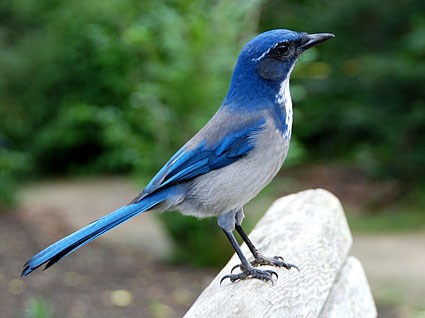
 This is another one of those interesting plants and easy to grow if you want a low maintenance. It's also a perfect wildlife attracting plant for your landscape. Unlike some other Hollys which are inedible to us and perhaps toxic to kids, this one is a safe choice and there are some recipes out there on the Internet for making jams and I've personally used them as a snack with brown sugar in the oven. Birds are the first wildlife that come to mind like Blue ScrubJays, American Robins, Mockingbirds and even Cedar Waxwings. In fact the very first time I ever saw or even knew Cedar Waxwings were even in Califronia was when I was at work on a coffee break and a hedge row of California Holly which looked more like small trees than shrubs, had three of them feeding on the berries which hang on the shrub till well into late winter. It was really exciting to observe them actually living there.


Photo by Lorcan Keating


Photo by Jay Thesken


Photo by JR Crompton


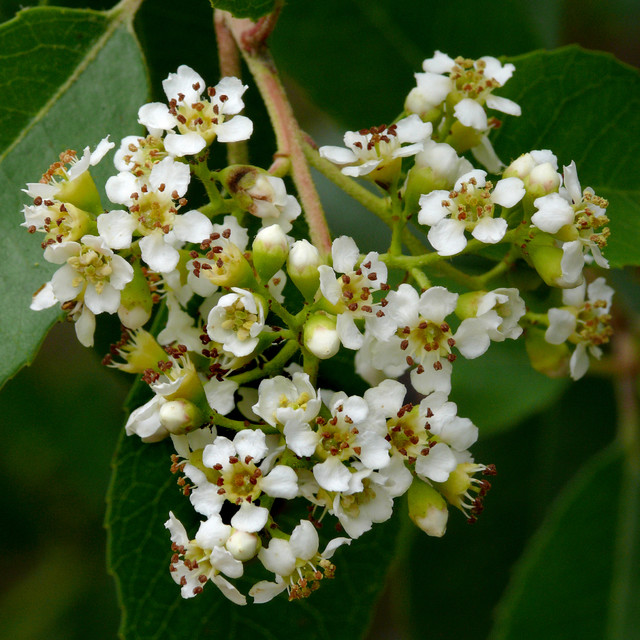
Not to be overlooked is this shrub's potential ability at attracting beneficial insects which also help out in the landscape maintenance and which eventually leads to natural pest control. If I remeber correctly, these flowers didn't come out until late spring or early summer, which was great. Most of your Lavendar Plants  flower in summer as well and attract benefical like preditory wasps which target worms, grubs or catapillers which make a meal of your landscape where you don't want them. In this way they have the same benefical function besides beauty as the California Coffeeberry (Rhamnus californica)  I mentioned in an ealier post last week.


Some of the other important colour the flower blooms bring to your garden are the Monarch and Swallowtail Butterflies.


This is also another plant I have found near Native American archeological site where you find evidence of their past presence by those Metate Gringing Holes drilled into hard granite rock slabs or boulders where they crushed Acorns and other grains or seeds into flour for baking bread. There are a great many plants that I use to identify for actually finding archeological sites. The Native Americans name for California Holly is actually 'Toyon' which is also used today by gardeners, landscapers and Native Plant Nurseries. Other associated plants and shrubs of note when looking for these Indian Kiticen sites are the native Prickly Pear Cactus and Mexican Elderberry. It could be said and there appears to be evidence that these plants were diliberately planted by the natives themselves as a convenient part of their pantry, since almost every site I've ever visited or discovered had all these plants present.


Friday, March 23, 2012

Hydraulic Engineering of All Forest Ecosystems

Hydraulic Lift & Redistribution!


 "Earth's Internat Blog -  Dawson's Lab 
The above animated illustration is something similar to the one that comes from Todd Dawson's website which I have already written about on my other blog where I profile a post on the man and some of his amazing research finding.

"Earth's Internet" 

Clearly the average adult as well as young students need illustrative animations to allow otherwise difficult natural phenomena to be illustrated in terms they can graps and relate to in every day life. Hopefully we'll attempt to entertain with models that go well beyond that of mere 'eye candy'.


Todd Dawson is known for his work regarding a natural phenomena which occurs in forest soils healthy ecology called "Hydraulic Lift & Redistribution" where a specific key mature foundational older growth trees in any ecosystem has the ability to sink roots down to depths of water table or where large amounts of moisture are located in the subsoil and lift this water from deep subsurface levels in the earth and pull it upwards through their large verticle tap roots then proceed to redistribute along a plumbing grid horizontally which in turn releases moisture into a mycorrhizal Fungal network which itself is connected to other shallow rooted plants who in turn receive the benefits of being a signed up customer to this elaborately constructed Water Co.  


What we gardeners can learn from the natural world helps us when constructing our own Landscaping layout when it's in the planning stages.  Take a look at this video done by another researcher named Suzanne W. Simard Professor Department of Forest Sciences    of the University of British Columbia who created this video explaining how interconnected plants are in a forest.


I love her honest intelligent approach to this observation of just how underground networks are really incredibly complex and defy the conventional modern day Darwinian outlook which actually shackles researchers from going farther to consider if there maybe is something more brilliant about the constructs of any forested ecosystem. Thus far, conventional Agriculture, Forestry, Landscping, and so forth have steadily ruined this planet and many such as Professor Suzanne Simard are opening their long held viewpoints to something more being here. Clearly the Science Based techonolgies of the so-called "Green Revolution" from the early 1950s where chemicals and the Big Scientific Based Industrial Bohemoths that manufacture them were some of the worst ideas created by conventional scientific understanding.  Many modern day researchers are saying, hey wait a minute, this is how nature really functions, maybe instead of boasting about how we can improve on it, we show rather replicate it and work with it, not against it. 

I love some of the opening lines in that video clip:


"These plants are really not individuals in the sense that Darwin thought they were individuals competing for survival of the fittest, in fact they're interacting with each other trying to help each other survive."

 I actually take a close and a more in depth look into the technicalities of how Earth's underground Mycorrhizal Network actually functions, should be respected by us and replicated in and around our personal environments and beyond. 

This is what I'm trying to get across to planners of incredible landscapes. To the modern home gardeners who want an organic approach that allows them choices that Industrial agriculture does not. Whether you are a hobby gardener or professional landscaper, taking the mycorrhizal networked grid into consideration will go along way in making a healthy success of your project without ever having to use chemical fertilizers or pesticides. That blog there addresses subject matters a little deeper than here. So enjoy the tutorial on "Earth's Internet"

Wednesday, March 21, 2012

Attracting Beneficial Insects With Beautiful Landscape

California Coffeeberry (Rhamnus californica) 'eve case'
photo by Garden Coach


When ever I plan a landscape, it's almost always with natives to the area and for the purpose of helping out the native wildlife in the process. While I certainly want an appealing eye candy pleasing to the senses look, i also want to provide food sources, housing habitat and other foraging and cover componants for which numerous critters can compliment and actually take care of your landscpae or garden for you. Here's a picture of one from my old property in the Mountains above Anza , California. First this variety of Cal-Coffeeberry is listed as 'Mount San Bruno' or even another one which is a little bigger and known for producing alot of beautiful berries is 'eve case'. This variety is known for being a low grower and remains small in form. The one in the picture below under a Jeffrey Pine (Pinus jeffreya) is approximately 24 years old. Not bad for a little shrub. It has a bigger brother high up on that same bank, though I'm not sure you'll notice it.


Photo by Kevin Franck


I chose this shrub and it's larger variety at the top for the obvious reasons. It's evergreen and from it's appearance at the top photo, you'll notice it has the characteristic berries which ripen unevenly throughout the season giving varierty of colouring with gold, green, red and purple. Any shrub in the backcountry of Southern California helps out the ground loving birds like Quail, California Thrashers, California Towhee, Hermit Thrush and Even the common Scrub Jay. The Scrub Jays apparently love the berries. I didn't realize that at first, though I had seen them in the bush. It was one spring when everything was blooming that I notice under a couple of my Manzanitas that there were multiple Coffeeberry Seedlings which had germinated under the dander(or mulch layer) of those Manzanitas. I thought to myself, 'how kool', but before I could transplant any of them, the pathogen which causes damping off kept the understory of the Manzanita weed free and they all died at the root collar. No matter, it was an interesting and educational experience none the less. 


When planting your natives no matter where you are, take into consideration the "Earth's Internet" (mycorrhizal networked associations)  which will allow your plants to benefit from the mycorrhizae grid network. I have never planted these past two decades a native or any other ornamental plant without first providing an inoculant of endo-mycorrhizae inoculant into the mix. I also never amend the soil. It's not necessary. Simply apply a generous layer of compost or mulch around the plant's immediate perimeter. This prevents water loss and weed control for the young plant. also, when you visit the Nursery, resist the temptation to purchase a 5 gallon over a one gallon plant just because you want instant landscpe. I understand the impatience, i fight it all the time as well. But a small one gallon will eventually out perform in my experience.


One pleasent surprise I wasn't counting on at all, were all of the insects for which those not so showy flowers(as you can see from the top pic) were attracting, specifically in the knat, fly, bee, wasp, mosquito, beetle and some butterfly families to what are not at all again a showy flower. What I did notice was a sticky substance around the leaves of the flower cluster which for the most part are a dull inconspicuous green. Nothing at all fancy or attractive about them. Well not to a human anyway.  There must have been some type of aroma or fragrance given off by the plant that drove those critters nuts because they were climbing and fumbling all over themsleves to get a turn at the feeding trough. I couldn't smell it though. What was unusual was to see the phenomenal numbers and the variety of insects that didn't seem to normally hang out together, let alone climb all over each other in such masses. One bright spot I noticed were the numerous tiny parasitic wasps, not the usual giant mud wasps, paper wasps or ground dwelling Yellow Jackets we all flee from (they were there also of course) , but it was those tiny fellows, the ones that lay eggs on the backs of grubs,  worms or catapillers and keep their numbers from decimating your vegetable gardens. Here's an example of the type I'm refering to.


Okay, you get the picture now, but this below is what they can do for your garden.


As everyone knows, Tomato Hornworms can be devastating to any garden if left unchecked. On that note I have seen where commercial agricultural ventures like Vineyards are now planting rows of Lavender Plants to allow for pollenation and food sources for these benefical insects during the summer months and it's working. Several Vineyards in  Northern California have reported not having to use pesticides anymore.


The bottomline is, when planning for garden or landscape, remember such plants as California Coffeeberry which is a native. There are surely other ecosystems and plants that work equally well in other states or even countries of the world. Where ever you live, be observant of the nature around you when you're out walking and ask questions of local experts or nurserymen. Ask friends or nieghbours who you know for sure are adept and prolithic at greenthumb gardening. I'm sure with the info available these days, they most assuredly are up to scratch on the latest organic methods.


Teach Your Kid's About Nature's Electronic Network!

Incredible Symbiotic Relationships Connecting Plant Communities

Okay, sounds good, but you may have to educate yourself first. And nothing teaches kids better than fun cartoons. Yet many adults may even need a little encouragement by use of animation to get a full understanding of what goes on under the ground in the natural world, like this pic below which in real life you may not be able to explain in simple attention grabbing language or terms which will capture and hold that child's short attention span.


These relationships Allow Plants to absorb Water & Nutrients by over 200%


The Australian government to the rescue through it's "Australia National Botanica Garden's website and an animated "A Pictures Says a Thousand Word" explanation of just how interconnected the biological underground really is under the Earth


It is definitely a challenge these days to get young people interested in anything like a garden, let alone going on nature treks. The competition is huge and you're outnumbered, what with things like computer gaming, cell phones, I-Pads, Smart Phones, Blackberries, CD Players with Headphones, Flatscreen Televisions, etc. When I was a kid we spent most of our time outdoors. We dreamed up our own adventures using our minds, since there wasn't some industry out there doing it for us, not that what existed then wasn't trying. During the 1950s - 60s kids were involved in all manner of conservation glub programs and summer kamps to teach kids how fun and adventurous nature could really be. Most of those well known programs and clubs are just about extinct and the sad state of the planet's natural world shows it.

Primary fault for this lack of interest in gardening or nature and responsiblity for guiding your kids is on you the parent. Unfortunately this world runs on a pursuit of materialistic excesses mentality. Family structure no longer allows for close families any longer since both parents often work to provide material goods well beyond what are really the necessary basics. Those electronic gadgets unfortunately have been used as convenient babysitters. Hence if you want to develope any interest at all in many of the oldtime wholesome activities which were normal to family life decades ago, you've got your work cut out for you. 

Then go ahead and take advantage then of those technologies - ideas and use them in constructive ways. Here's the weblink to that Australian site and maybe it will give you some creative ideas for teaching your kids through some type of cartoony clipart media.

  "Australian National Botanic Gardens - Mycorrhiza"

A Thousand Words 


Take advantage of some other electronic technologies like Videos. Kids love videos, but when it comes to something educational, only if it's short videos. The video clips are short and they  match their young short attention spans. I ran across an educational nature website for teaching kids nature.  Click on the videos link. One of my favourite is about those "Banana Slugs" from the pacific northwest of North America. My wife purchased a tape of children's songs for our son Jared dealing with the subject of nature and those slugs had a song made about them.


"The Vista 360° Program  Environmental Science Magnet School Program"

http://pves-nvusd-ca.schoolloop.com/program


Enjoy and good luck with those distracted kids. Oh - and in the process, you too may even learn a thing or two that's valuable too!


Further reading and ideas on how you can teach kids to appreciate the microbiology that works under the ground. Great Link:

The Microbe Zoo: digital learning center for Microbial Ecology 


Some Updates here on this one:

Children often act the way a scientist is supposed to. Toddlers are able to express basic aspects of scientific understanding: finding cause and effect by experimental method. These were the findings of Alison Gopnick who performed experiments with children ay play and became convinced that, contrary to popular beliefs that children act irrationally and chaotically, the basics of scientific reasoning are present in their brains even at a young age. 


"Scientific Thinking in Young Children: Theoretical Advances, Empirical Research, and Policy Implications"


http://www.sciencemag.org/content/337/6102/1623.abstract

Absrtact:

"New theoretical ideas and empirical research show 
that very young children’s learning and thinking are 
strikingly similar to much learning and thinking in 
science. Preschoolers test hypotheses against data 
and make causal inferences; they learn from 
statistics and informal experimentation, and from 
watching and listening to others. The mathematical 
framework of probabilistic models and Bayesian 
inference can describe this learning in precise ways. 
These discoveries have implications for early 
childhood education and policy. In particular, they 
suggest both that early childhood experience is 
extremely important and that the trend toward more 
structured and academic early childhood programs is  
misguided."

Full Article:

What looks like play may really be a science experiment

Child’s play is science. [“Playing Doctors” by Frederick

Daniel Hardy (1827–1911); image: Stapleton

Collection/Corbis]


Schematic representation of the

 ping-pong ball experiment. The

 experimenter showed the infants a

 box full of white and red balls. Then

 she closed her eyes and randomly

 took some balls from the box and

 put them in another small bin. If the 

sample was truly random, then the 

distribution of balls in the bin should

 match the distribution of the balls in the box. Infants saw a 

sample that either matched or did not match the distribution, 

and they looked longer at the non-matching sample. In a

 control condition, infants saw just the same sequence of 

events, but the experimenter took the balls out of her pocket

rather than taking them from the box, and the looking-time

 difference disappeared.


The blicket detector 

experiment. Children saw 

that the machine did not

 activate when B alone was

 placed on it, but did 

activate when A was placed

 on it and continued to do so

 when B was added to A.

 Then they were asked to make the machine stop. Given this 

evidence, the correct causal interpretation is that A alone 

activates the machine, and the children should act on A and

 not B.

The main responsibility for a child's learning and development is PARENTS, not the State. Deepen your child's learning ability by allowing their curiosity to work for them, not against. 

Enjoy!