Showing posts with label Native Americans. Show all posts

Saturday, December 15, 2018

California's glorious Spring wildflower displays are almost gone

😲 Really ??? Gone forever ??? 😞 Well, not quite ðŸ˜’
Image taken off Google Earth

Clearly a radical change is needed or the entire planet's various ecosystems will collapse and fail for good. Oh no, I'm not talking about another one of those mythical 6th Extinction faith affirmations constantly chanting on social media sites. Rattlesnake Mountain once had a plethora of native wildflowers which for the mst part no longer exist up there. The photo above is where I grew up in El Cajon, Californa and this mountain is that mountain known as Rattlesnake Mountain. Today it is awash in non-native invasive annuals from the Mediterranean like Black Mustard, Wild Radish, European Oats and Yellow Star Thistle. Believe it or not the native wildflowers in the photo below use to cover Rattlesnake Mountain every Springtime year after year. In fact most of the native coastal sage scrub has been choked out as well.

This photo on the right was taken by Jay Beiler. I'm not sure of the date, but it's reminiscent of the intensity of the wildflower displays which were once common for me when I first moved to anza in 1981. Interestingly between the dates of 1978 to 1983, Southern California had experienced one of it's longests and wettest El Niño weather events, in fact for many of us it was the first time we had heard of that term. But that El Niño event followed a milder drought period back in the 1970s and provided the energy for an explosion of wildflower growth. The early 1980s was a magical sort of time for nature lovers armed with cameras. All maner of native wildflowers like the iconic state flower California poppies, owl's clover, lupines, tidy tips, gold fields, etc. Everywhere you went out on a drive was every bit as breath taking as the scene above. Other areas like Aguanga, Sage, Hemet Valley, Winchester and further on down south to Warner Springs in San Diego county all reflected this same magnificent brilliance on a massive scale. But then of course things weren't as extensively developed in those days. Sadly that's all gone now. Take a close look at the radical contrast below. How quickly the local peoples forget.

Image from Cahuilla Creek Motorcross

Image from Google Earth
Fast forward to the present and this region has a whole new different look. The photo above is the exact spot today where the wildflower displays were a common sight years ago. And amazingly, this all takes place on the large Cahuilla Indian Reservation. This is not about picking on Native Americans and their wish to prosper economically. I mean I get that. But aren't these the very people the environmentalists have told us are by their very nature were always one with the land and whose example we need to follow ??? Funny thing is, I remember back in the 1970s & 80s how much of a target the Native Americans were by most all Environmental organizations with Greenpeace taking the lead. Not only were they targeted because some Tribal groups encouraged less than eco-friendly businesses with risky & dangerous polluting types of industries onto their reservations because the Rez lacked regulations, rules, and red tape, but also because some tribes had traditions of hunting Whales, Seals, Salmon fishing right privileges at sensitive locations, etc. Actually Greenpeace still has a beef with many tribes for whale hunting and they've recently engaged in a vicious threatening pursuit against one young Native American teenager in Alaska over a whale hunting affair just last year. Still it is interesting that such a business as a motorcross track would be allowed to be placed in one of the most beautiful spots on the whole reservation known for it's spectacular native wildflower displays which has now disappeared forever. Of course it's their land and they can do with it as they wish. Still, it's puzzling. This Google Earth image at upper right, can be clicked on to provide a bigger picture of the exact location and the extensiveness of the destruction and damage of the former wild meadow. I guess it's also the general shock for me every time I visit Anza Valley seeing ALL of the negative changes which have taken place everywhere, including my own former acreage on Table Mountain which has been stripped of most of it's native chaparral vegetation and turned into an industrial Marijuana Farm complete with massive industrial greenhouse infrastructure by some Asian business interests. Unfortunately for me I'm cursed with the memory of what my place once was. 😞
But there's something more Serious here than large corporate targets with deep pockets ðŸ˜²
Image from a Temecula Real Estate Co.

This picture above could be any property for sale up in the Anza & Aguanga area. It is representative of your average land speculator, developer or average weekend ranchette property owner who purchases land and eventually strips it of all chaparral vegetation. The only exception would be if the shrub were a Manzanita or beautiful scrub oak. People make biased judgements about what plants to remove by mere outward appearances much like they do with each other. But why strip the land down to bare soil ??? In almost all cases invasive non-native weeds will move in and take it's place, especially land in the deep soils of the Valley floor. Now take a look at Anza from this Google Earth from a Satellite point of view.


Image - Google Earth

Image - Salton City (eyetwist)
Many of the more well known Environmental organizations are fond of targeting large corporate business entities because of their ability to cause wholesale damage on a grand scale within any environment, not to mention the other important fact that they also have deeper pockets to satisfy "sue & settle" strategies. But there are also the individual small land owners who often go unnoticed on the eco-activist radar, yet collectively these small land owners can ruin much larger regions of land far more than any single corporate giant. It was one of my pet peeves when I lived in Anza for almost 20+ years. People buy raw land and the first thing they do is hire the local Joe Sixpack and his mighty tractor to strip their property bare of most all of it's chaparral vegetation. I've often wondered why ? If that was their original goal, why not purchase raw dirt (literally) cheap land in somewhere like Salton City for pennies on the dollar which is already devoid of plant life ? But this degradation goes completely unnoticed and is absolutely never discussed by the eco-activists. Click on the google earth image above for a larger view and see how much land has been stripped of vegetation so far at this point. Don't pay so much attention to those larger tracts of farmland being cultivated, they've been there for ages. Focus on all the smaller 2, 5, 10 to 20 acres parcels together collectively.

Image Anza Electric Coop

Image - Calflora
Now this photograph above I found on the website or Facebook page of the Anza Electric Cooperative. The photographer's location is taken from the top of Hill Street up at the foot of Thomas Mountain north of Mitchell Rd. The valley below way in the distance is actually an ancient lake bed close to the Terwilliger area on the Cahuilla Indian Reservation, but it could be more accurately be described as a giant vernal pool in wetter years. When the Spanish Expedition of Juan Bautista de Anza came through here in 1775 along with Frair Pedro Font, they named this ancient lake, "Laguna de Principe" and paid special attention in their writings about all the spectacular wildflower displays seen for miles in every direction you looked. Check out a 2013 post I wrote on Anza's accurate account of his Spanish Expedition through Anza. They really were in awe of this area's raw untouched unspoiled beauty and they also described the even larger more vast the wildflower displays of Hemet Valley a week later after arriving from the mouth of Bautista Canyon. The photo below here is the area of west Hemet near the Auto Mall along Hwy 74, from Hemet the elevation only drops one inch all the way to Winchester. So quite often massive shallow vernal pool lakes use to form every Spring and that is prime habitat conditions for Goldfields. While a single Goldfield flower is pretty, the tiny flowers are barely noticiable on their own, but in company with millions of their friends, they create a spectacular golden display so bright, they are often too tough to observe without squinting or wearing sunglasses in the powerful sunlight. Hence the plural name Goldfields. Sadly, most of those former prime flat habitat areas which historically have had the best vernal pool habitats in Southern California are also prime flatland for commercial land development.

photo - Richard Cummins

This is probably the last brilliant photograph of the Goldfields to be display in western Hemet Valley that people will ever see. Those expansive vernal pool fields are now weed infested with cheatgrass, foxtails, mustard, etc. Also while visiting there I noticed recent housing tract encroachment and major commercial development everywhere in west Hemet and further south of this location. Add to all of this the extreme drought pattern which has become the new abnormal in SoCal and the newer improved flood control infrastructure the authorities have installed to quickly expedite rainwater out of Hemet Valley on it's way west to Canyon Lake and no more mass vernal pools will appear ever again which Goldfields in this area thrived best in after they dry up.

Satellite Image W. Hemet - Google Earth

This google earth picture above provides the exact location of where those large masses of Goldfields you see above at the foot of the Saddlback hills in the background. But like I stated previously, that brilliant blindingly beautiful Spring wildflower display of Goldfields will no longer appear here ever again. The field now is just too weed infested and another unfortunate change will be the rerouting of water runoff through newer flood control infrastructure which will now limit the vernal pool formation.


Hwy 74 Roadside View - Google Earth

Note there are some patchy remnants of Goldfields here, but they are overwhelmed by the invasive weeds brought in as a result of increased human activity. The Hill on the left is the one seen in the beautiful photo above. Take note of the housing encroachment.

Image - EPA

View is looking west from the Hemet Automall
The Vernal Pools of South and Western Hemet (Anza Expedition extra)
The San Jacinto River Valley that Juan Bautista de Anza saw
The other big problem ??? 😕 People are just simply loving Nature to Death 😔
Image - Billy Savanh / Flickr
The original photo at the top of this post was not a well known protected preserve or tourist area for viewing wildflowers. It was a dot on the Cahuilla Reservation map. But other not so well know location are getting publicity exposure through social media now days. The Vance Creek Bridge in Washington in the photo on the right is a favorite with celebrity Instagrammers. This too was once an off the beaten path location which is no longer well hidden. Such secret hidden areas do however run the risk of ruin because of modern technology. Why do I say that ? Well here's one example, read this article: INSTAGRAM IS LOVING NATURE TO DEATH. As the article put it plainly,
"Lesser-known lookouts are suffering under the weight of sudden online fame. Five years ago, Horseshoe Bend saw only a thousand visitors in a year. But this year, over 4,000 people a day have come to see the bend, take selfies at the rim, and dangle their feet over the exposed edge. Social media gets blamed for everything — but this time, it really is Instagram’s fault."
You should know that the region of Horseshoe Bend referenced is on the Colorado River and is also right next to the Bears Ears National Monument, a place which almost no one outside of the area really knew about prior to the original debate publicity in 2016. Now almost everyone knows about it and the increased traffic jams are living proof more and more are finding out about it. With industrial recreational corporate giants like Patagonia, Black Diamond and North Face on the prowl nothing is sacred or secret anymore. Their goal is not so much about preserve as it is to promote. Seriously folks, the business schemes of all industrial recreational giants are growing. Add a greenwash label to your industrial receational business model and you're declared righteous by environmental groups because you're not like those conventional dirty oil, gas and mining companies. Eco-Tourism is now being hailed as a planet's saviour. But interestingly, these dirty industries have no interest in Bears Ears National Monument. But industrial recreation also ruins the landscape. If you think this will never happen to California's designated wildflower Preserve areas, think again.

Photo - Andrew Cullen
Spring 2017: "Southern California 'Super bloom' wildflower trail closed indefinitely after photo-seeking visitors trample flowers"
In the Spring of 2017 thousands of people descended on Southern California's wildflower fields (most of these were the protected preserves), where the disastrous environmental impact was evident as large swaths of wildflowers were flattened by selfie-seekers, instagram celebrity wannabes who blazed new trails through the wildflowers on a daily basis. Why would nature lovers do such a thing ??? For one they've been encouraged by leaders/owners of environmental non-profit organizations who post pretty little photos on their Facebook & other social media accounts and reassuring their followers that all was well with Nature because it's still resilient even after five years of devastating megadrought in California. Another factor is that the majority of viewers also want instant Facebook, Instagram, Google Plus or Twitter fame. And finding that one perfect shot may require lots of trampling. But hit that perfect shot and post it on your social media site profile and you're an instant viral photo celebrity. Take note of the damage that  results when over aggressive nature enthusiasts go overboard in the pursuit of that viral photo which will provide them with social media celebrity fame in this very well done illustrative video.

When it comes to onlooker reactions to spectacular videos or photos, a good example comes from an earlier video of a Firenado  filmed this past July 2018 on Youtube taken in Blythe California and there's one comment under the Youtube video by an anonymous user which illustrates perfectly what motivates so many to pursue the same goal:
"This..... is.... AWESOME!  C'mon, when does one capture such quality images like this... once in a lifetime. Simply wow."
But What About Those Protected Wildflower Preserves ? Aren't They Safe havens too ? ðŸ˜³
Image from Mike Rich

Lately the Eco-Activism groups have been up in arms and on the warpath again. Their collective voices are outraged once more. Why ? The mission this time is to stop those evil Oil Companies from drilling for gas and oil on the Carrizo Plains. Others are up in arms over keeping the Tejon Ranch from building a housing tract complex known as the Centennial Development. Of course the area is a well known wildflower viewing region with the most famous spot known as the Antelope Valley California Poppy Reserve State Natural Reserve. Tejon Ranch is just west of this California wildflower reserve by about 15 miles or so. But is the threat to such protected areas really coming from conventional development schemes ? Both regions (Carrizo & Antelope) are heavily invested (or infested) with massive alternative energy schemes known as Solar Farms. These often are given a free pass. But there is also another even more sutle danger and you can see it here in the socks and hiking boots of the Nature lover above right who may come visit. Cheatgrass stickers and seeds of other invasives annual non-native plant species are an even bigger threat as you can see from the very top photo above where cheatgrass encroachment is flowing into wildflower habitat like an overwhelming montrous unstoppable Tsunami wave.

But the wild beauty that brought so many here to these wildflower locations in the first place will soon be gone. Social media certainly gets blamed for many things these days, but this time, it really is their fault for encouraging this kind of stardom behaviour. Even if the natural attractions aren’t suffering from social media crowds, they still have to keep a lookout for the infamous social media Graffiti Artists, offroader stunts, etc. But rather than continue on with my rant about this anymore, I'll admit that I'm not really trying to discourage anyone from enjoying the outdoors. But here's a good piece written about what Jackson Hole Wyoming is trying to do to encourage responsible behaviour in the wildlands.

Image & Article by Larissa Faw, November 19th 2018

"Wyoming's Jackson Hole Travel and Tourism Board (JHTTB) is launching what it calls a first-of-its-kind campaign to educate people about how social media, specifically Instagram, is causing travelers to unintentionally abuse precious natural areas in pursuit of the perfect image. 
The Tag Responsibly message, developed with Colle McVoy, provides Instagram users about to geotag Jackson Hole’s pristine natural amenities with the alternative, generic location tag: "Tag Responsibly, Keep Jackson Hole Wild."
You can read the rest of the article in Media Post:
"Jackson Hole Seeks To 'Tag' Social Media Travelers"
Other similar Articles with the same Wildflower viewing Theme
Country Living: "The Tragic Way Social Media Could Be Killing Wildflowers"
Selfie stampede - Destroying California's super bloom for the Likes


Saturday, February 15, 2014

What is meant by the word "Natural" when it comes to Land Management?

We are now living in the times of definition shell games, terms being muddled and where gray areas and a world of no absolutes are championed. Mostly I find all this later day murkiness to be a mere marketing ploy, not only of business in the conventional sense which we all understand, but also religious institutions and political entities when it comes to push or wanting to justify various doctrines, schemes or policies. Funny how that word natural can be manipulated and promoted as having meaning beyond it's original creation, purpose and intent as it has been traditionally understood for ages in the real world. Take for example the illustration at the right here. Would you find it absurd, maybe even asinine if an obese man justified his condition as being natural, rationalizing that obesity can also found many places in the Natural World ? Interestingly, many with hidden agendas do manipulate that term for selfish reasons. The word natural has been further exploited in other ways by the addition of unique words to exaggerate or embellish the original meaning. "All Natural", "100% Natural", "Natural Fire Regime" etc. Take a look at this very humorous and illustrative play on the word "Natural" by our world's big business interests. You can click the link (HERE)


Or you may click the play button on the video in this image above
The manipulation and advertising of common words/terms through game playing by the giant Corporate Industries in our world I think we all understand well, but it's when the Scientists who work for or with them is where much of this goes wrong. These are actually the very people who should know better, at least from the higher educational backgrounds we are constantly told they have, hence deserving of our respect and trust. The big problem is they have screwed up so many times lately, that like religion and politics, they appear to be on the same lower level of suspicion. Take the Industrial Science-Based agricultural giant located in the San Joaquin Valley called Harris Ranch Beef. They have an interesting motto or clever statement on their website.
Harris Ranch Beef Company, "Beef the way nature intended it to be."
(SERIOUSLY ???) The way Nature intended it to be ? Anyone who has traveled Interstate 5 in the San Joaquin Valley on the west side and driven through Coalinga is well aware of dust cloud hell you have to endure with no relief for at least 15 to 20 minutes of fast driving. It's almost impossible to breath and how that dust gets into your car with the air conditioning turned on to recirculate is beyond me. Yet not only is Harris Ranch's business model promoted as natural, but also sustainable, which is yet another one of those interesting seemingly fuzzy words with definition problems. Montana Ranchers for example find the existence of Wolfs, Mountain Lions and even Buffalo as things which make their business model unsustainable. Seriously, a quote from an article yesterday in Yahoo Financial News about the government having to "Yellowstone bison slaughter begins" . A quote in that article says it all:
"But Montana's livestock industry has little tolerance for bison because of concerns over disease and competition with cattle for grass."
There is also a similar attitude from another science-based agricultural entity like the Industrial Forestry (Timber) business model which has an intense hatred of the western landscape's native chaparral. In their irresponsible scientific worldview, they mistakenly promote Chaparral as impeding the regrowth of what they consider proper plant species worthy of being called a forest. A forest which they intend to harvest for future profit. They also manipulate words in their irresponsible land management policies and programs to promote their industry and livelihood. They also no doubt manipulate political ties to get what they want. In the land management industry there are also other business entities when it comes to mastication and control burning and you can bet there are a significant amount of profit to be had by folks who are hired by that industry as this photograph from 2012 shows: 


Mark Henle/The Arizona Republic

Logging contractors, like this one thinning a forest near Mormon Lake in late May, create openings that slow a fire's advance. The nation's largest such thinning project, the Four Forest Restoration Initiative, is off to a slow start.
Interestingly, "Pioneer Forest Products" did not live up to the original agreement and barely thinned 1000 acres and did not have the finances to build that promised sawmill for producing wooden products which would have supposedly boosted the local & state economies. However last summer 2013, another company called "Good Earth Power" was said to be in line for the new contract. See link AZ Central: "New forest-restoration contract, same old problems" . Unfortunately for Nature and the environment, this company is huge and powerful with large business venture operations in Africa and financing is said to be coming out of the Middle East and China. Bottom line is, it's all about the money and to justify the money angle, the word term "Natural" and play on the emotions of the public is the usual strategy. They've come up with a term or phrase called "Natural Fire Regimes".  In so using this term, many large Industrial Forestry people and US Government land managers are utilizing a ongoing romanticized myth about Native American use of fire for land management and how much the natural world will benefit from this regular burning practice. Of course were are talking about the modern practice of "Control Burns" or "Prescribed Burns" which are more of a political hot potato solution solution to appease an otherwise upset public concerned with our present later day climate change enhanced wildfires. Actually, the debate is however whether Indians (Native Americans) should be considered as a part nature. I have previously written about Native Americans here in a post called: Dances With Myths: Indigenous Native Peoples and Fire Ecology and my opinion of course is that they are as equally human as any other peoples around our globe. But many fire defenders don't have that exact view of them. Why they were considered the ultimate eco-greenies when it comes to sustainability and conservation. But were they really ? Yes they no doubt they knew how to live off the land, but interestingly not all were successful. The most successful were those in large groups who cooperated with each other and that wasn't always the case. There is also another proposed movement which is now championing many of the much larger native civilizations empires throughout the Americas who are likewise romanticized today for their sustainable agricultural practices and how this art and ancient knowledge has been lost. (As a side not, there is presently also another kooky proposal scheme to story tell how this ancient knowledge was given them by ancient aliens, but I'll not go there. Many know what I'm talking about with the major so-called science entertainment channels) Does anyone out there appreciate that these civilizations are long extinct as successful Empires ? For example, I never ever hear this next subject brought up in discussion. From several centuries BC up until the 12/13 centuries, both the Anasazi empires of the western USA and the civilization which built the huge pyramid-like Cahokia Mounds in the eastern USA were far more advanced than the Natives the first Europeans encountered when they finally came to North America centuries later. So what happened ? Isn't the story told of how for 15,000 years the North American Natives were simple wildlife conserving cultures with an almost uncanny ability encoded within their genetic makeup to be the ultimate in everything eco-green ?  Why it's in their blood. The true facts reveal more and more that those Native American Empires overused and abused their surrounding lands and in so doing brought about a miniature localized climate change in the form of sustained droughts which led to their downfall. They also had problem with distrust and carrying on war with each other (hmm sounds very European to me) and no doubt would even used fire to war on their enemies. As European influence made inroads into the North American landscape, they actually influenced the natives who took up European technologies. Rather than rejecting the foreign invader's less than eco-green policies, they actually embraced them. Horses were not natural to the natives, as they hunted and chased prey on foot. So observing the huge advantage the Spanish brought with them, they adopted and traded for the ways of the horse. Please consider this, what native would have been willing to turn back the clock and chase Bison on foot in championing a more eco-green cause ? Hardly! What natives would opt for leaving the Winchester Repeating Rifle and going back to more eco-green hunting tools made from natural earth friendly materials like Spears, Bows  Arrows in the cause of their genetically encoded Eco-green preferences ? Again hardly! Why ? Because the early Natives were Human Beings equal to the Europeans they encountered and that is what all humans do. They advance to make room for more comfortable living conditions and survival a little easier. Eco-World had nothing to do with it. So there is no doubt they used fire just like every other culture on Earth had used it for thousands of years. No doubt there may have been some intent for creating better forage of berries (as the website below suggests) and possibly to facilitate an easier time of chasing herbivores on foot over cliffs with fire, but such strategies are not necessarily conservation nor does it explain fire's ability to create and maintain as well as other more *cough-cough* "Natural" components rarely mentioned.

Now for a change of thought here, take a look below at some of the more iconic picture comparisons being used from one website showing how natural it is to employ fire as a conservation and preventable wildfire practice. The website is http://www.cskt.org and has this to say about it's backers.
"A People of Vision... The Confederated Salish and Kootenai Tribes are comprised of the Bitterroot Salish, the Pend d'Oreille and the Kootenai tribes."
On another page under the subject of "Fish, Wildlife, Recreation and Conservation" it has this to promote about it's people. 
"The Confederated Salish and Kootenai Tribes have always been good stewards of the natural resources. Today we strive to achieve good stewardship through excellent Fish, Wildlife, Recreation, and Conservation Program Management."
"Our efforts include continuing our cultural traditions, interdisciplinary consultation, setting high standards and professional qualifications, providing due process and public involvement as part of the regulation development process." 


Photo: Brady Hall
One major cultural tradition which is greatly referenced through story telling is the Native use of fire for conservation. The US Forest Service champions fire as the great ecosystem molder and creator of healthy wildlife and plant habitat creation. Why ? Because that's what the Indians did and no one was more one with the land as the Native Americans. It dedicates much photos and storytelling behind them to paint a picture of their great understanding of the natural world. But never once does it touch on animal influences on an ancient pristine landscape nor does it attempt any honesty with regards human error when it comes to lighting fires. For example, as humans, we all have our own predisposition to making mistakes. But no reference is made to this on the website. Things like Waring with neighbouring tribes who were considered enemies by means of fire, or irresponsibly leaving a campfire improperly left unattended with the possibility of an afternoon Santa Ana-like wind phenomena kicking up a wildfire which got out of control only to burn itself out eventually or at least until seasonal rains came back. Times would be similar back then to modern humans now. No mention of kids playing with daddy's flint stone to try and see if they too could make fire behind that hill outside the camp, only to get out of control. You all know kids, right ? The reasons for fire are many, just like today, but only the myth of conservation is dealt with on that site. Any idea of the effects of mistakes on the ancient landscape back then ? They also seemed prone to embellishing the Fable about themselves on that site. Now for any who wish to go down the road of , well you are making fun of them and therefore a bigot, seriously, don't even try and go there. I have a great fondness for their history and a strong dislike for the hand they were dealt by the Europeans. But I am also a realist, I view Native Americans as human beings equal to all other human beings on Earth, even those native Americans of the historical pre-European encroachment era.
Update (2015) - The image below and text quoted from the Saltish & Kootneai website can no longer be found. The text and many images used in the glorification of regular use of fire for management have been removed.

Photos: cskt.org

http://www.cskt.org/fire_history.swf


(Photo: Grant Rolf/Higgins Storm Chasers)
Personally, I don't find either of the two fire pictures settings  above to be natural. However I would define the one to the right here as a natural occurring fire ignition event often found out in Nature. I have to admit the website was interesting and in some cases compelling in it's arguments, but there were also some other clear flaws. For example, many of the historical photographs were from the 1920s and 30s and were compared with today. One has to keep in mind that by the 1920/30s, the Europeans had already had a major out of control natural resources obsession impact effect on the landscape's environment. These were also times when for the most part there were no rules as to conservation and rehabilitation with regards the landscape. Early white pioneers were out to make a killing financially based on rumors of the west and would have done what ever irresponsible thing they could to obtain that goal. Could much of those bare spots in the photos been European influenced ? Unfortunately we cannot go back much beyond 150 years to get an accurate visual of what the natural world was like or what influence the Natives had on a pristine landscape centuries prior. Hence at best all we have is story telling in the form of myths and fables to go by and taking things on faith. There is also clearly no way to defend a practice which 150 years ago did not have the climate extremes we experience now with climate change or shifting. The website brought out the regions which seem to show more open grassland ground than today's present denser tree and chaparral cover in the same locations. The site claims that they did this to provide grassland grazing areas for their herbivore prey. 
Possible historical alternative to wildFire as an Ecosystem maintenance component and ecological landscape creator

illustration: Karen Carr Jefferson

image: Smithsonian
One of my major problems with much of this justification for such the continual usage of fires for modern conservation is that animals are never taken into the equation as landscape modifiers or transformers and they clearly were a HUGE factor as modern outdoor lab examples testify to. Especially where the now extinct Mega Fauna are concerned. Questions arise everywhere like, "What roles did very large herbivores like Giant Ground Sloths play in the maintenance of chaparral ecosystems ? In every single artist conception of the Giant Ground Sloth the animals are always browsing trees and shrubs. From mummified dung samples taken from caves it is apparent that they were heavy browsers of Chaparral shrubs, forest trees and other high desert plants like Joshua Tree and Mormon Tea, some of the most rangy fibrous foliage that could be consumed by any creature.

These animals among other mega fauna lifeforms like Glyptodon (Giant Armadillo), Mastodons etc etc etc who were not grazers, but heavy browsers of leaves, branches, twigs etc. Take a look at the photograph of fossil teeth below comparing a Mammoth tooth to a Mastodon tooth. Modern Elephants and Mammoths have low, highly enfolded teeth for grazing, while Mastodons have high crested teeth for browsing tree and shrub branches, twigs and leaves. The modern Elephants and Mammoths are tall, while the Mastodons were shorter and stout with more massive bodies which could easily allow them to move through ancient type of chaparral plant communities, much the way the now extinct California Grizzly Bear once did.

image: Lakeneosho.org

http://www.lakeneosho.org/More20.html

Clues from modern day examples of how animals shape and maintain ecosystems which conflict with the "Burn Baby Burn"  mentality as a cure all solution.

Credit: OPB

Probably one of the greatest examples of a major factor other than fire as a plant community maintainer is the prime example of the Elk effect on plant life within the National Park called Yellowstone. It is said that in the early 1990s Elk numbers were close to 15,000. The countryside was more open and Alders, Willows, Cottonwoods and Aspen woodlands were kept in check by these large browsing animals. Wolves were introduced back then and the numbers are now said to be around 9,000. Now the young aspen trees are just finally recovering in the Yellowstone National Park, after wolves that were re-introduced in 1995 which helped to limit elk browsing that had been killing young trees. The older trees seen here date to the last time there were wolves in the park 70 years ago. Seriously, watch this video of how wolves changed Yellowstone's landscape. The researchers also noticed how when Elk and Deer numbers dropped and behavior changed, the narrator pointed out that most of the bare of bald spots in Yellowstone changed to a heavier vegetation cover than previously. This is the exact opposite of what the storytelling myth or fables invented by those in charge tell us on some of these use of fire conservation websites who credit fire as the fix it all answer. 


Okay, once again, the main point of those before and after photos on that Native American website is that the open space was the result of consistent regular Native American Control Burning with Fire, for which the website is a champion. However from this video you just watched and listened to, the modern "Natural" example in Yellowstone and the effect on vegetation by large browsing herbivores, is it not more clear that it was they who had a much more profound effect than admitted or discussed by anyone when it comes to the Prescribed Burning Policy. The subject of wildlife being used in land management is never brought up in hardly any discussion and it should be. If we are to believe the other scientific literature about not only Elk, but also Bison and Pronghorn Antelope, these creatures are said to have each numbered into the millions before the Europeans came. Ponder this for a moment!  What possible effect did these millions animals have in shaping the landscape ? If 15,000 unhindered unmolested Elk had a major effect on the Yellowstone ecosystem (creating open bald regions), what did millions upon millions of these herbivores have on the whole of North America ? Unlike Domestic Herbivores, the Pronghorn will eat many chaparral species of which many are toxic to the domestic cattle who won't touch them. Again, nobody ever factors this into any equation.

image courtesy of

http://www.bear.org
Ponder for a moment the devastating megafires happening everywhere in the west. While climate change certainly contributes, others also blame the rampant unbridled killing of forest trees by various bark beetles. But could the elimination of thousands of bear (both Grizzly & Black Bears) who hunt and forage a number of downed trees and rotted logs for ant colonies and pupae and grubs from bark beetles have perhaps provided one measure of checks and balances which no longer exist ? Even if their didn't dine on every single grub from a ripped up log, other scavengers could have come after and cleaned up what was left over. Did this potential scenario  provide a type of checks and balances for forest bark beetles populations which appear to now be exploding out of control ? Who knows, but the beauty here of the Yellowstone example is that it is not something from way back in history where the need for myth manufacturing or fable fabrication needs to be employed as an embellishment or exaggeration to justify a belief system used for promoting an idea, policy or flawed program of land management. It actually did happen before the eyes of many modern day human beings present today who can read and watch what has been documented just a mere decade ago. It truly is an example of a real life natural occurrence of how nature's various mechanized components work in harmony when restored properly to their former position in the Natural World's cleverly engineered ecosystem system irrespective how ideologues of both sides of debate believe they got that way in the first place. Remember the old time saying, "If it's not broken, then why fix it ?"

Especially when Chaparral Biologist Richard Halsey brings all these points up to public debate. Surprisingly, he's often attacked by even his own followers who otherwise support his California Chaparral Institute's mission for bringing up this very subject. There are clearly those who just cannot give up this old time cherished religious dogma, hence the use of the terminology such as "faith statements" by those championing such control burn causes based not on actual science but rather a flawed gut felt myth motivated by heart felt belief in and reverence for an unfortunately mistreated people and culture. The main point behind Richard Halsey's research is very simple, Observational Science backed up by utilizing a discipline called Biomimetics resulting in Biomimicry or replication of Nature for restoration ecology. That is what we can truly call "Being Natural" 

Photo - Richard Halsey


By all means please read the very informative article referenced above from the Chaparral Institute's website. Now for another change of thought. I'd now like to straighten up a couple of other points here. I am not totally against using fire as a necessary tool and for that matter neither is Richard Halsey, if it's respected as only as a tool and used properly. The general problem I have always observed with the US Forest Service's attempts at forest restoration is they attempt to bypass several "Natural" rules in forest re-establishment by cutting out several necessary progressive steps and accelerating tree growth which will be used as future profit. I also find most programs which are use as an attempt to re-establish trees after a catastrophic wildfire are as a rule done way too late, often times 3 or 4 years after the event. Anyone know how long "Nature" takes to repair and mend the environment after any kind of disruption ? That's right, immediately! Unfortunately most Forest Service projects wait until scientific environmental impact studies can be done and starting times are at best two or three years later. At that point chaparral has grown back and suddenly war is declared on this plant community as if it were an alien invader. The fact is Nature actually start trees off immediately during the first winter rainy season. In fact most seeds germinate in the ground long before Spring with seedling emergence quite often pushing through snow. That's called a clever head start. I know, because I experimented with various pine seed by actually outplanting them in the soil on my own acreage at the beginning of winter up in Anza California to see what would happen as opposed to Spring planting year old seedlings. They out performed by means of the head start because of a more advanced already in place functional root structure prior to the onset of summer. The companion chaparral that also sprouts up with it is actually an ally not the enemy. It could well be considered a nurse plant or mother tree. Without going into much detail again, an excellent example of successful nature-based reforestation where trees live along side and within chaparral was a 1982 fire event where the results of nature-based reforestation came off successfully at Mountain Center California south of Idyllwild. Nobody replanted anything nor cleared any chaparral. The area which is mostly private land was left to it's own redevelopment.


The result is more trees than previously and larger by comparison than many of the land stripping programs in Garner Valley to the east where chaparral was obliterated and also soils are much deeper. Yet even the trees from the Forestry sponsored plantation project up the road on Hwy 74 near Keen Summit which is forest land from Mt Center are not nearly the size of the same age trees. They actually stripped acreage for a sterile planting bed and maintained it a couple years after by use of a water wagon, I know because I commuted past there for almost 20+ years. See the article: "1982 Mountain Center Fire & the Forest's Regeneration" (Article Link) also see the article I wrote about a similar 1983 project I did utilizing biomimicry in forest establishment which left about 40% to 60% of the native chaparral down in lower elevation Terwilliger CA where rainfall is even less. This was a property I care took for free rent. The chaparral plants are the main heroes for this success, not me or the property owners. I also inoculated the trees with symbiotic fungal spores found in higher elevation forest areas which also enhanced the root infrastructure under the ground. Many of these trees are larger than even the Garner Valley tree plantation sites and some equal to the Mountain Center trees. See the post: "Establishing a Forest where the Experts said it would Fail" (Article Link)

Old Dawson Place Terwilliger CA
Now in the event of wanting to establish forest using fire, fire should be used responsibly, along with the site remaining untouched and unmolested of it's native chaparral that following rainy season. In other words, don't remove these plants by further mechanized  or chemical destruction of all other plant roots, considering these as competitors. Then plant already pre-existing nursery raised trees immediately not waiting and wasting precious months or years as has been the conventional method. I have also written about pesticides and herbicides and I while do have a strong dislike of them, I also have used them properly and only under desperate circumstances to create and immediate eradication of an overwhelming scenario of weeds or pests, then you can establish a healthy ecosystem whether it's in the wild or urban landscape utilizing beneficial bacteria and fungi. Once the successful system is established and in place, the future need of such chemicals will be unnecessary if maintained properly through replicating the Natural World's version of maintenance. 


Does the chaparral habitat scenario above really look to you as an overgrown brush wildfire hazard that we are all treated to in News Reports which is promoted as an example needing eradication by fire in order keep folks safe and provide better habitat for wildlife and livestock ? Hardly!

Sad to say many myths about Fire are hard to erase from people memory and deep internal psyche. I read comments by average citizens in News item articles on the subject where fire is championed as necessary for Nature to survive, exist and/or even reproduce. Why is that ? Because the average person not familiar with such natural mechanisms take it on faith that our world's modern day experts actually know what they are talking about. Especially are such question important in why such ignorant talk comes from a group of people like Scientific Researchers who are promoted to the public as above all of such ignorance ? Below is an interesting couple of articles you should take up and really read which came out last years which beautifully examine what is at the heart of irresponsible belief systems and wrong understanding of our natural world. The first article is how scientists tend to employ story telling as a tool to educate, but often times go to far with embellishments and exaggerations which tend to mask the reality of the natural world. It was published in Nature magazine in October 30th 2013 and titled: "Should scientists tell stories?" Here are some excellent quotes:
"Everyone loves a good story, and writers of many kinds use narrative techniques to get their message across. A recent Points of View article (Krzywinski and Cairo, Nat. Methods 10, 687, 2013) described how techniques of storytelling, such as a structured story arc, can effectively guide the presentation of scientific data in figures. But as pointed out in a Correspondence by Katz (p. 1045, this issue), the notion of communicating scientific information by storytelling can be taken too far."
(source) 
Sadly this is where myths and fables about Native Americans have been etched in stone and hard to eradicate. But again, why the scientists ? Seriously, of all people, why Scientists who are supposed to know better ? We all get an easily manipulated and ignorant public believing this stuff, but why Scientists ? This next article from the website "The Conversation" published back in December 13th 2013 posted an excellent article titled, "Scientists falter as much as Bankers in pursuit of Answers". Here are some awesome quotes:
"Bankers aim to maximise profits. Scientists aim to understand reality. But Mike Peacey of the University of Bristol suggests, based on a new model he has just published in Nature, that both professionals are equally likely to conform to whatever views are prevalent, whether they are right or wrong."
In the past decade scientists have raised serious doubts about whether science is as self-correcting as is commonly assumed. Many published findings, including those in the most prestigious journals, have been found to be wrong. One of the reasons is that, once a hypothesis becomes widely accepted, it becomes very difficult to refute it, which makes it, as Jeremy Freese of Northwestern University recently put it, “vampirical more than empirical – unable to be killed by mere evidence”.
(source) 
 “vampirical more than empirical – unable to be killed by mere evidence” 
Isn't that a beautiful quote ? I tell you, I just eat this up with a spoon. It doesn't get more illustrative than this. People everywhere need to train up their powers of perception. For human beings they don't come naturally. Blindly believing any word out of some Expert's mouth because they claim to wear some self-described badge of authority isn't good enough. You have to determine what is truly "Natural" otherwise known as the  real world and what is artificial and manipulative. I don't have anymore references to post as you have plenty above. Please read the references and make it real by burning it down into your memory through practical application of what was said or learned by means of reading. It will actually take getting your back side outdoors and making practical application. Practical experience is what helps you understand the truth of what is and what is not "Natural".
Maybe this is a good time to consider Murphy's Second Law: 
“No matter what the experiment’s result, there will always be someone eager to: (a) misinterpret it, (b) fake it, or (c) believe it supports his own pet theory.”

Monday, March 26, 2012

Wildlife Gardening/Landscaping (Toyon)


Photo by Joyce Docent

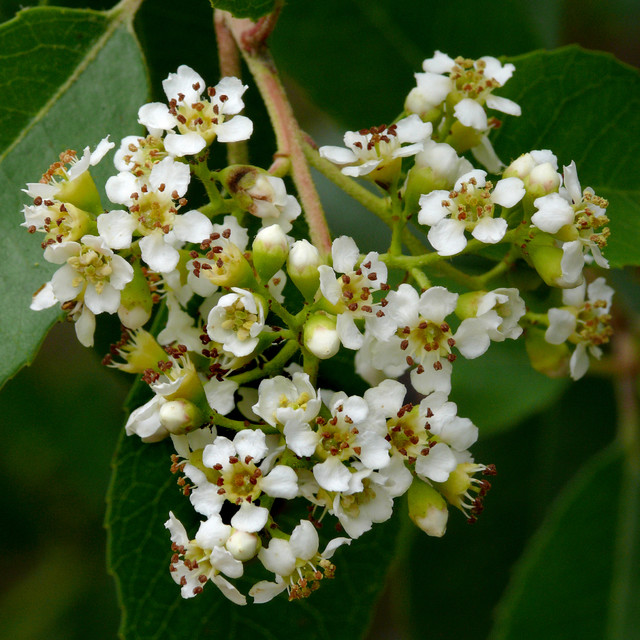
California Holly (Heteromeles arbutifolia)

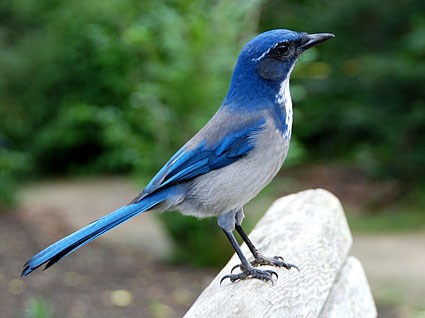
This is another one of those interesting plants and easy to grow if you want a low maintenance. It's also a perfect wildlife attracting plant for your landscape. Unlike some other Hollys which are inedible to us and perhaps toxic to kids, this one is a safe choice and there are some recipes out there on the Internet for making jams and I've personally used them as a snack with brown sugar in the oven. Birds are the first wildlife that come to mind like Blue ScrubJays, American Robins, Mockingbirds and even Cedar Waxwings. In fact the very first time I ever saw or even knew Cedar Waxwings were even in California was when I was at work on a coffee break and a hedge row of California Holly which looked more like small trees than shrubs, had three of them feeding on the berries which hang on the shrub till well into late winter. It was really exciting to observe them actually living there.


Photo by Lorcan Keating


Photo by Jay Thesken


Photo by JR Crompton
Not to be overlooked is this shrub's potential ability at attracting beneficial insects which also help out in the landscape maintenance and which eventually leads to natural pest control. If I remember correctly, these flowers didn't come out until late spring or early summer, which was great. Most of your Lavendar Plants  flower in summer as well and attract beneficial like predatory wasps which target worms, grubs or caterpillars which make a meal of your landscape where you don't want them. In this way they have the same beneficial function besides beauty as the California Coffeeberry (Rhamnus californica) I mentioned in an earlier post last week.


Some of the other important colour the flower blooms bring to your garden are the Monarch and Swallowtail Butterflies.


This is also another plant I have found near Native American archeological site where you find evidence of their past presence by those Metate Gringing Holes drilled into hard granite rock slabs or boulders where they crushed Acorns and other grains or seeds into flour for baking bread. There are a great many plants that I use to identify for actually finding archeological sites. The Native Americans name for California Holly is actually 'Toyon' which is also used today by gardeners, landscapers and Native Plant Nurseries. Other associated plants and shrubs of note when looking for these Indian Kitichen sites are the native Prickly Pear Cactus and Mexican Elderberry. It could be said and there appears to be evidence that these plants were deliberately planted by the natives themselves as a convenient part of their pantry, since almost every site I've ever visited or discovered had all these plants present.